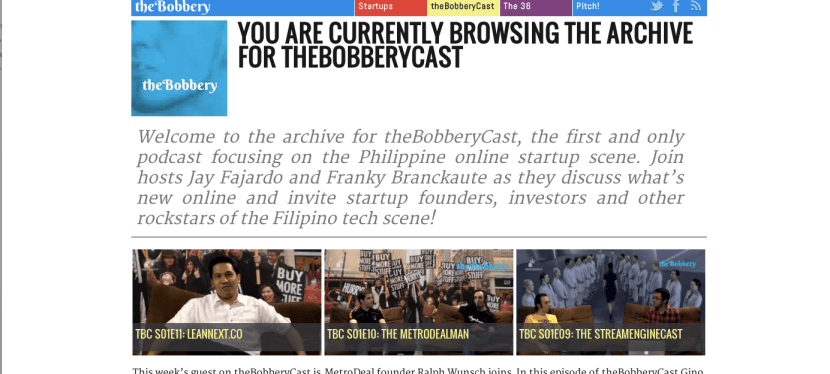
I had a grand time chatting up a storm with Franky and Jay at theBobberycast last night!
With a Battlestar Galactica backdrop, we talked about Juan Great Leap, the role of the academe in the startup ecosystem, how to get more students interested in startups, the startup Bottleneck, the sudden boom of the Philippine startup scene, how funding can help the 30-something would-be-entrepreneur, my Chikka experience, and so much other stuff.
Last night, we hit 250 people registering at the event. We’ve now got around 20-30 people in the waitlist as well.
Considering we’ve got a bigger space we can work with than the last conference, some people who got tickets and reached to say they cannot make it (thank you so much!) and how it just would be a shame if we limit the number of people who can participate, we’re releasing 70 more tickets for the event.
For those who already got tickets, I do implore you – since the tickets are free AND limited, you WILL be screwing over someone who might truly want to go if you reserve a ticket and flake. If you do find that you cannot make it on Saturday for some reason, do email me at peter@juangreatleap.com or matt at matt@juangreatleap.com so we can free up slots.
This will be the final time we’ll be releasing more tickets, so I advise clicking the link below NOW if you haven’t yet.
Hey, if you aren’t too busy later at 6pm, do tune in at thebobbery.com where I’ll be having a LIVECAST with the always-awesome host of thebobbery, Franky Branc. Of course, we’ll talk up a storm about startups and entrepreneurship.
If you haven’t checked it out, do take a gander at thebobbery.com – it’s a great site where you can learn a lot and be updated on the Philippine tech startup scene.
I recently caught up with fellow Fil-Am, Justin Garrido, of Social Project.PH. Justin’s a former director of Aldi Foods in the US and he received his MBA from Melbourne Business School. Now Justin is in the Philippines starting up, Social Project.PH. Justin is definitely a versatile and knowledgeable Argonaut. I always acquire a ton of knowledge from my conversations with him. I am honored to be able to share his story with what we Amboys call real talk.
I’d like to introduce you to the passionate, change-maker Justin Garrido of Social Project.PH, one of the awesome startup founders scheduled to speak at Startups Unplugged.
Justin Garrido of Social Project.PH
What is Social Project.PH?
Justin: Social Project.PH is a crowdfunding website that features social projects in the Philippines by partnering with social enterprises and NGOs, as a means to address poverty and other social and environmental challenges.
How did the concept for Social Project.PH come about?
Justin: While I was in my MBA at University of Melbourne, I went on exchange at AIM (Asian Institute of Management). One day Julia, my co-founder, and I had lunch and we decided to start-up something social. Julia and I came up with different business models to support the current ecosystem.
As opposed to creating something that would compete with the same small diminishing pie, we thought of ways to make the pie bigger, and collectively support the ecosystem. We eventually decided to launch a crowdfunding website known as Social Project.PH.
My inspiration for Social Project was Kiva. I’ve avidly donated to Kiva, which provides microloans to small businesses. I felt that a type of platform like Kiva was something that we could provide to social enterprises and NGOs here in the Philippines.
Another need that we felt Social Project.PH could fill in the Philippines was the need for a transparent, credible, and engaging channel to give back.
For example, when you donate $25 to the Philippine Red Cross, you receive a simple thank you and that’s the extent of it. As a result, even though Red Cross is credible the experience with them isn’t engaging because you don’t here anything about your contribution afterwards. There’s no follow-up. If your contribution was for sacks of rice for a community, you never see the actual distribution of it.
Transparency and follow-up is something that we wanted to provide with Social Project.PH.
With all the buzz around Social Enterprise, can you give us your definition of it?
Justin: I frequently refer to the definition of social enterprise from the non-profit known as Social Traders. It defines social enterprise as a social benefit business that trades to fulfill its mission. This means that there’s a target beneficiary (i.e. community with high poverty, nanays in an IP community, etc). There’s a strong social mission, but there’s also a way that the business is generating revenue, trade. The entrepreneur is selling a product or providing a service so that the business is sustainable. A social enterprise is within a third space.
On one extreme you have maximizing profit, maximizing shareholder wealth, a corporation. The other extreme is a non-profit that relies strictly on philanthropy and charity donations. In between you have a social enterprise, in which it is almost a hybrid of a corporation and a non-profit. As a result, some funding may come from donations, but there’s also a revenue generation component to it; Hapinoy is a great example of a social enterprise.
A social enterprise is not just about job creation. Exxon creates tons of jobs, but you wouldn’t call Exxon a social enterprise. Social enterprise is about a strong social mission and generating revenue.
What inspired you to take the leap to the Philippines and pursue Social Project.PH full-time?
Justin: In September of 2011, I lived in the Philippines for three months, while I was on exchange with AIM. However, I felt like my three months wasn’t enough time here. I wanted to come back. There was more that I wanted to do. There were more ways I wanted to help and give back. I needed to physically be here to experience commuting, meet the communities, visit the children’s orphanages. That’s why after I finished my MBA in July, I returned to the Philippines to pursue Social Project.PH full-time.
Justin’s visit to a community in New Bataan Compostela Valley, where Typhon Pablo hit in December.
On the business side, I had the confidence that the business idea for Social Project.PH would be financially viable. While I was back in Melbourne, I entered a business plan competition at Melbourne Business school. I ended up winning for this business model that is now Social Project.PH. Winning the competition further gave me confidence in what I was doing. The judges, composed of angel investors and investment bankers, were reaffirming that this idea could really work.
Social Project.PH is not just a charity. The business model itself can generate revenue. It can be sustainable.
In this day age, the voice of the third culture kid is coming more distinct. Do you consider yourself to be a third culture kid?
Justin: I’ve been called different things: third culture kid, hybrid, foreigner, and Fil-Am. I’m fine with all the names. I know what I’m here to do. I’m trying to use some of the best practices I learned from growing up, studying, and working in business abroad to make a positive impact on the Philippines.
What do you like the most about being in the Philippines?
Justin: I love the people. People are just so friendly, even when I’m having a bad day. Sometimes I can be so serious, and that someone just smiling and saying,
“Hi, Ma’am/Sir!”
Or talks with the taxi drivers and joking around with them really makes my day.
The positivity of the people is inspiring. In the midst of the adversity, Filipinos always manage to put a smile on their faces. In the States, we can get so caught up in the Rat Race, and then you get a flat tire and it feels like the end of the world, but being here puts things in perspective.
What do you miss most about the US?
Justin: I miss family and friends back home. I haven’t seen my niece since she was born. I’m going to visit her in Hawaii this year. I’m her ninong 🙂
Truthfully, if I could bring my friends and family to the Philippines. I wouldn’t have any desire to return to the States. I love the Philippines. The country is so beautiful and the history is so rich.
I feel like I’m in the center of the world right now.
Tech Portal, UP-AyalaLand Technohub, Venue for Startups Unplugged
One of my favorite things about blogging on Juan Great Leap is that I get to document my entrepreneurial journey without much apprehension. The cathartic experience that comes from sharing, as a crazy individual who is just starting in the Philippines, enables me to embrace the fear monster.
From my first Open Coffee to witnessing the art of sharing at living hope, I’m starting to realize why Peter calls Juan Great Leap his gift; there is great reward in giving and sharing for all.
With Startups Unplugged coming up next week, I’d like to share what this event means to me and what I hope to give back to it.
What does Startups Unplugged mean to me?
Three months ago, I was blurting out ideas to my office mate, Suzie of Searchlight, like a mad scientist at work. I was throwing so many random ideas at her in hopes of finding the right name for this event that would feature an array of entrepreneurs from different fields, and various stages in their personal startup journey. I had to get the name just right to embody what was being communicated to me for its vision.
The idea for the Juan Great Leap event was described to me as a moment that would be much more personal than the typical conference setting. This big event would create a space for attendees to approach entrepreneurs in a more intimate setting, in which they would be encouraged to ask questions to entrepreneurs, and get up, close, and personal with them.
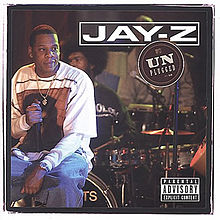
The simplicity of the idea and the intimate space that was being articulated to me triggered imagery from MTV’s Unplugged Sessions, in which artists would get a little more personal with their fans by sharing their music to smaller groups. While the artists still engaged in a performance, they went unplugged- acoustic. The spectacle of the performance was somewhat removed from the presentation of their work to create a moment more raw.
MTV Unplugged 2.0 Episode on November 18, 2001, Courtesy of Wikipedia
Now that you know where the inspiration for Startups Unplugged comes from, I’d like to share my own “unplugged” moment in opening up to you about Startups Unplugged.
The metaphor of unplugged tugs at my inner core. As a would-be entrepreneur trying to start up, I know that there’s a lot of pressure for entrepreneurs to present to their audiences in a superhuman fashion.
One personal fear that I am confronted with when I open up to people is knowing that the vulnerabilities that I expose to them may evoke feelings of disbelief and doubt. In contrast, the most vulnerable moments shared can also be the most moving. The movement of the spirit that captures your heart and moves your soul can lead to action, if you allow it to do so.
These are such romantic ideas, I know, and I’m not saying that every moment shared in Startups Unplugged is going to be this deep personal sharing, but think about the possibility of just starting a simple, yet real conversation with leaders and feeders in the startup community.
It’s precisely what I’m attempting to do with you, the reader, in this blog entry. I seek to share a real moment by opening up to you, as so many strangers that I have met -in my strong attempt to get this event off the ground- have done for me. The interactions I have with them keep me moving, in the midst of all the doubt and stumbling blocks that I continue to face.
I’m trying to move you to see Startups Unplugged for what it is to me and what it is for you.
What can Startups Unplugged do for the community?
With the immense support of gracious partners and sponsors, we’re throwing this event for free, as passionate volunteers. I guess that’s why I’m writing in such an airy tone because doing something for free somewhat forces you to realize why you’re being moved as part of a larger community with a shared goal.
As you witness Startups Unplugged, open your mind to the possibility of where the conversation can take you and the community.
JGL Open Coffee
For the leaders, the entrepreneurs, in the startup scene, realize the potential in working together, as a startup community, in which you share your gifts and passions. Collaboration will only strengthen you and your enterprise.
For the feeders, everyone else, understand your role in nurturing entrepreneurship for the Philippines and the significance of it to the larger development of this country, for yourself and for Juan.
If you’re unsure of where you fall in the startup community, do not despair. I invite you to participate. It’s a great network to be exposed to. I encourage you to share and be open to receiving. In the end, I’m sure you’ll end up giving too in your own way and own time.
Startups Unplugged means a lot to me. In a way, I see it as my first real contribution in starting up, as an aspiring entrepreneur.
I choose to go unplugged from the start because whether I succeed or fail in this startup journey, I hope that you will learn from my mistakes and successes for every Juan.
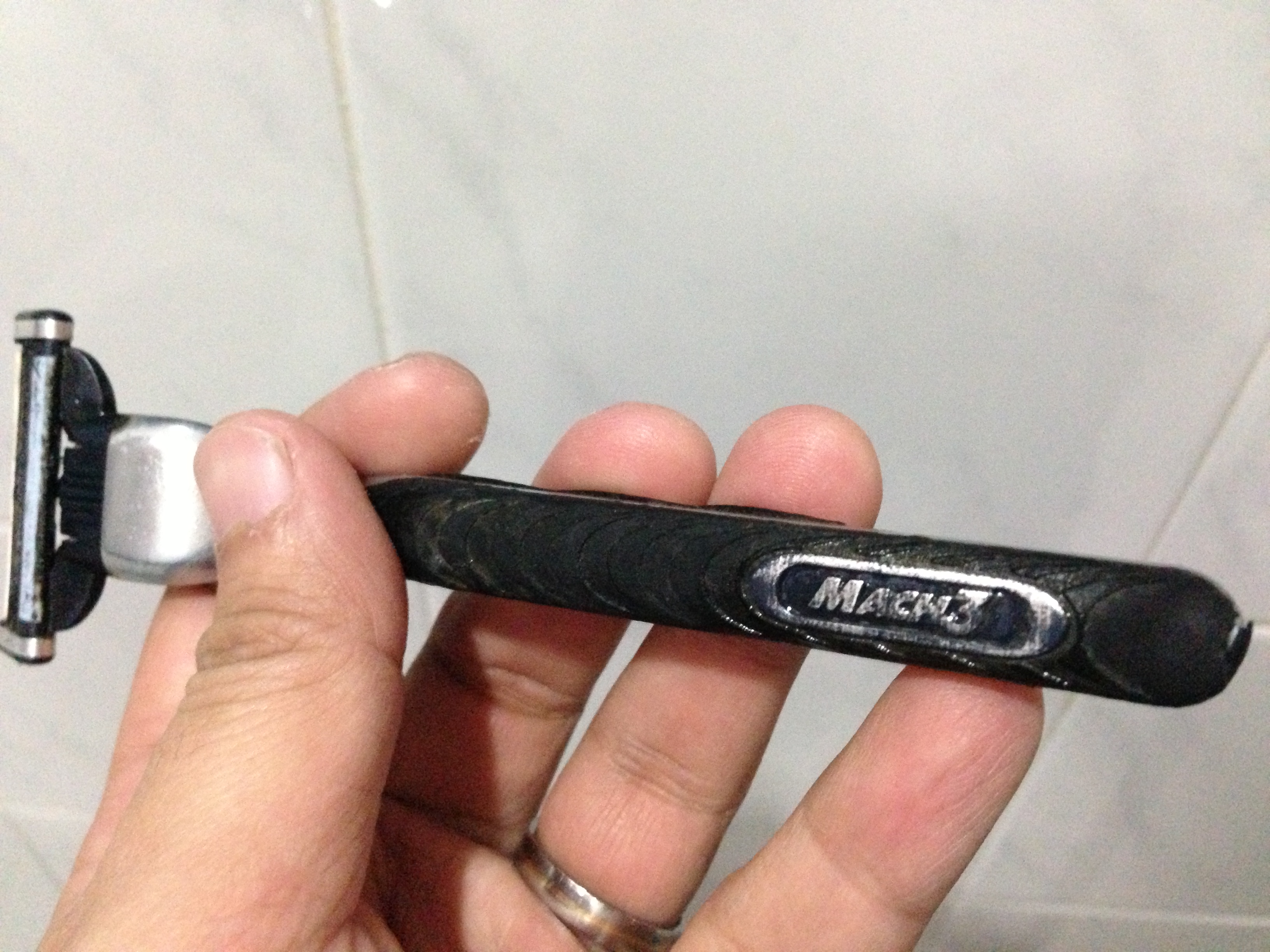
I was shaving my head this morning in the shower with my trusty Mach 3. I thought the blades needed changing. I made a mental note to myself to buy a fresh pack of blades – the woefully overpriced ones at the grocery counter.
I had been buying these blades for FIFTEEN years already – I had been paying Gillette a small fortune.
Funny, because I had never wanted these high-end blades in the first place – I won this Mach 3 way back in the 1998 Christmas party in my first corporate job.
Once I got the Mach 3, somehow I just made a habit of buying the blades.
I represent recurring revenue for Gillette. They must love me.
If your startup idea can operate with a recurring, “evergreen” business model, SERIOUSLY look into trying to adopt it.
I remember lucking into this business model when we started STORM in 2005. We wanted to sell a flexible benefits system to the market. We were looking at possible business models out there. A popular one was simply selling the software. We ask the client for a huge sum of money, in return, we would develop a customized solution for them and support it for 2-3 years. We loved the idea because it gave us immediate, usable cash.
Of course, no company would be insane enough to give a startup a huge sum of money – its just too much risk. So instead, we opted for a monthly “software as service” fee. With a lower barrier, we were soon able to land our first few clients.
Then, aside from the technology monthly lease,we built even more benefits services around it – also paid per month. If your company wanted, we could use our system to service your employees directly – less hassle for you.
It became a platform.
This “evergreen” strategy has a whole lot of advantages, namely:
1) Less dependence on day-to-day sales
Do you know how nerve-wracking it is for a startup founder to sell products day after day so he could pay the bills?
In this scenario, you just need to sell to a consumer ONCE. Then, it boils down to delivery. If you take care of your business, you can expect this consumer to consume repeatedly. The caveat? Your delivery team or your product has to be kickass.
2) “Forecastability”
(Is there really such a word?)
When we landed clients in STORM, we would know EXACTLY what the monthly revenue would be. 60K a month for this client. 84K for this client. Month after month after month.
This revenue pattern made planning so much easier for us as we grew. Can we afford to hire another employee? Will we have enough to pay 13th month? We would know definitive answers to these questions. This makes a whale of a difference versus businesses which essentially, makes guesses future sales figures.
The whole challenge of startups lies in the uncertainty of it all. Any item which adds even a smudgeon of forecastability goes a long way.
3) You are forced to be always on your heels
Our clients would pay us every month – with the usual contract provisions that if they are not satisfied with the service, we would get docked on the monthly. Guess what effect this had on our operations?
We were forced to look at the way we did things and ALWAYS improve on them. We would put supreme importance on customer servicing. We would make sure bugs would get stamped out ASAP.
Or else we wouldn’t get paid next month.
That’s tremendousmotivation to always deliver what the client expects and more.
4) Smaller bites > One big bite
As I mentioned earlier, its MUCH EASIER to ask a client to pay several bite-sized payments than one big, one-time purchase. This is especially true if you’re a startup. So don’t be afraid to lower your pricing significantly – you’re after the the longterm payoff.
Another advantage with smaller bites? You create a habit. This is extremely strategic.
Does your current business model employ elements of the Mach 3 strategy? If it doesn’t, these advantages are more than enough reason to seriously consider an overhaul.
Are you setting up a consulting firm? Perhaps you could come up with a related monthly service you can offer to outsource on a monthly basis.
Putting up a local bakeshop? Perhaps you can arrange to deliver your freshly baked pan de sal every morning to nearby homes at a significantly cheaper rate.
Tech firm? Perhaps you could build a platform on which you can deliver repeat products/services on.
Design studio? Perhaps you can find clients in industries who need to have things designed on a consistent basis (not the usual one-time website creation for say, startups). Lower your prices and go for long term contracts with monthly or weekly deliverables/payments. Just off the top of my head, you can try publishing (online or print), HR (monthly newsletters to employees), and maybe events.
Who knows, with the right model, you can develop a customer like me – a lifetime consumer. (well, fifteen years and counting)
smooth sheen like this could only be accomplished by a Mach 3!
With eight days left till the March 2 event, only around 1oo seats remain. From experience, these seats tend to get gobbled up fast a few days before the actual event – so we advice that you click on the button below NOW and reserve your slot!
Don’t Flake!
Also, for those who already have reserved their slots, please don’t flake! We’ve exerted all effort to make this a free event for all those who want to attend, so if you think you already know you cannot make it on the 2nd for some reason, please just reach out and tell us so we can give your slot to someone who can make it! (email us at peter@juangreatleap.com or matt@juangreatleap.com)
Prepare Your Questions!
For those going, please don’t forget to prepare your questions! This event is all about sharing experiences in a very comfortable setting – so please take maximum advantage by knowing beforehand WHO to approach and WHAT exactly to ask!
Digital marketing expert Ben Francia weighs in on his first Open Coffee experience in his blog right here. Do check out the rest of his cool blog as well!
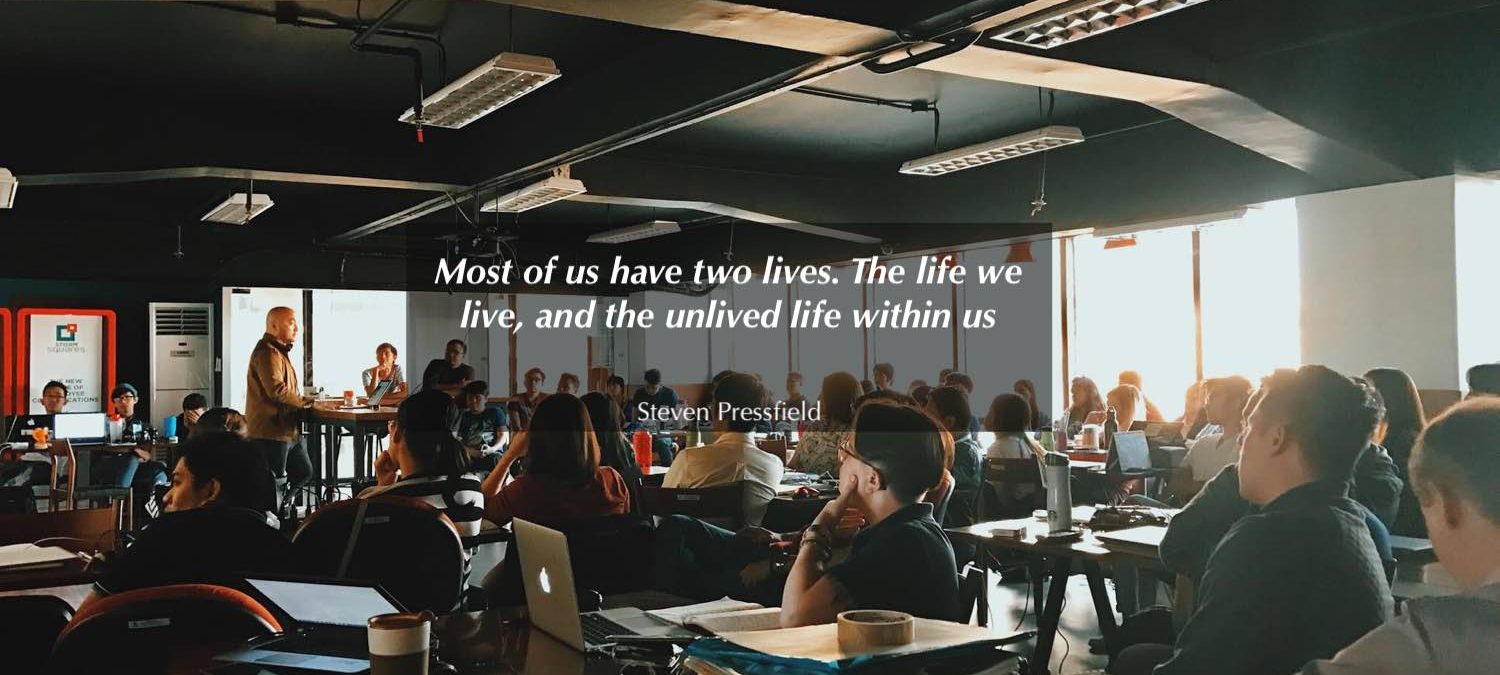
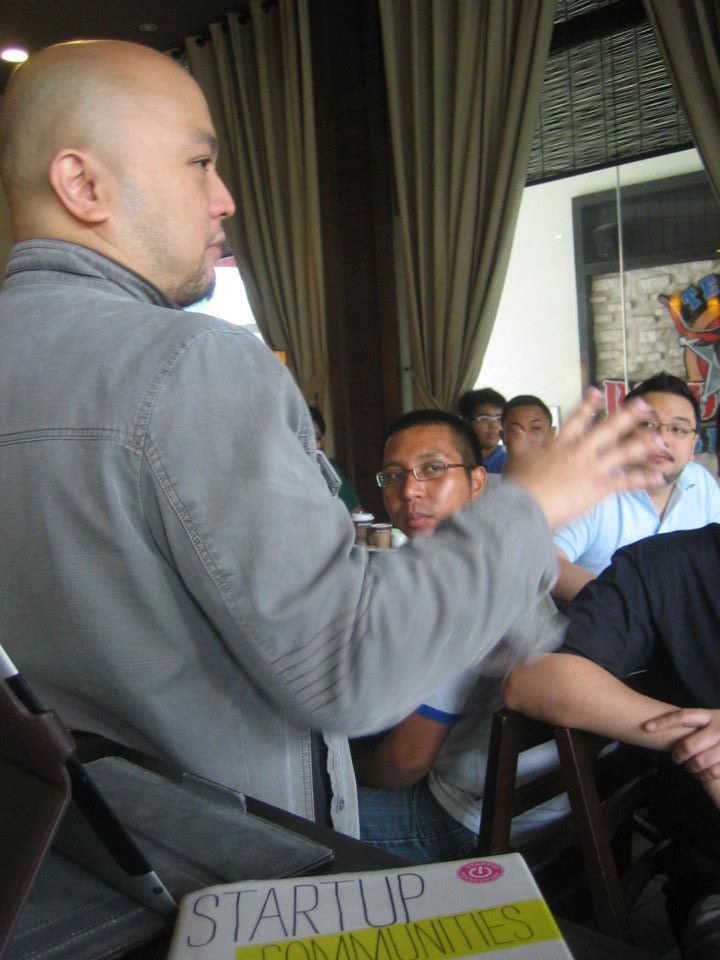
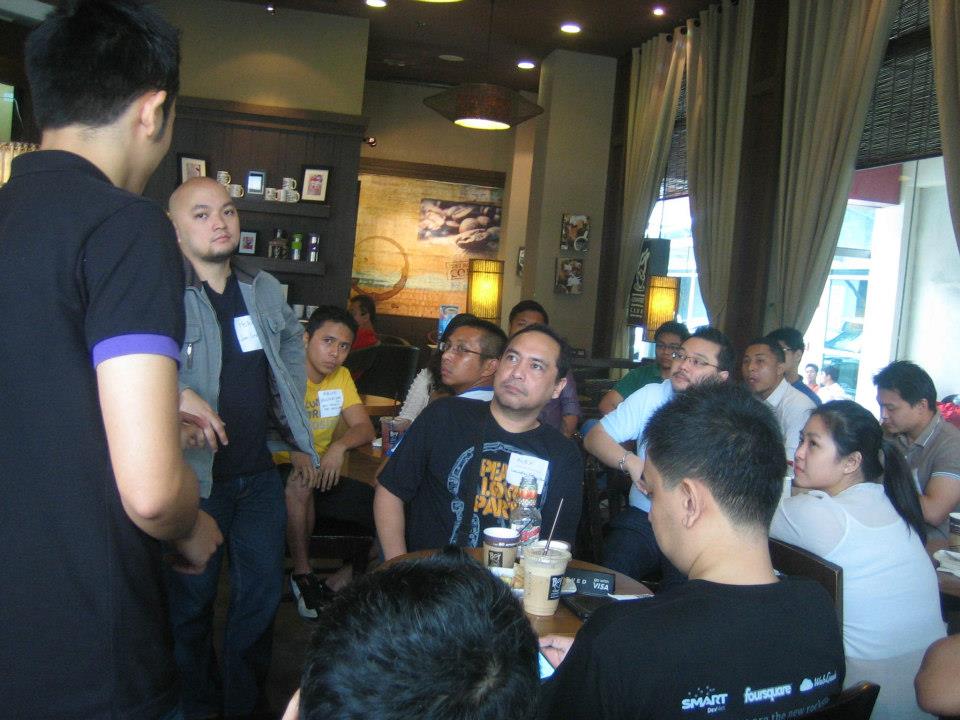
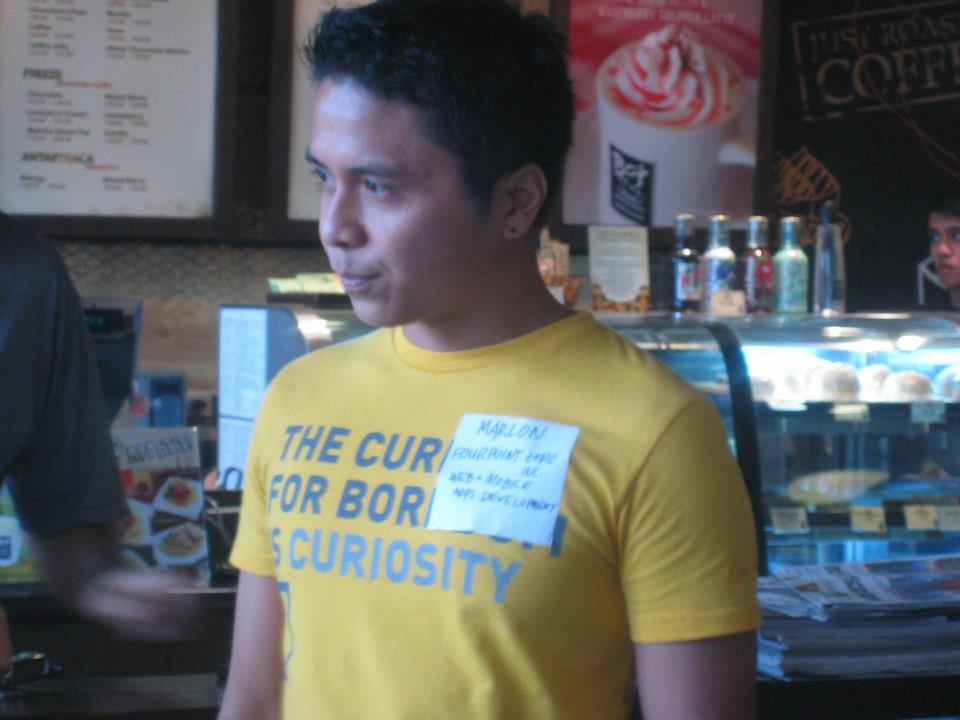
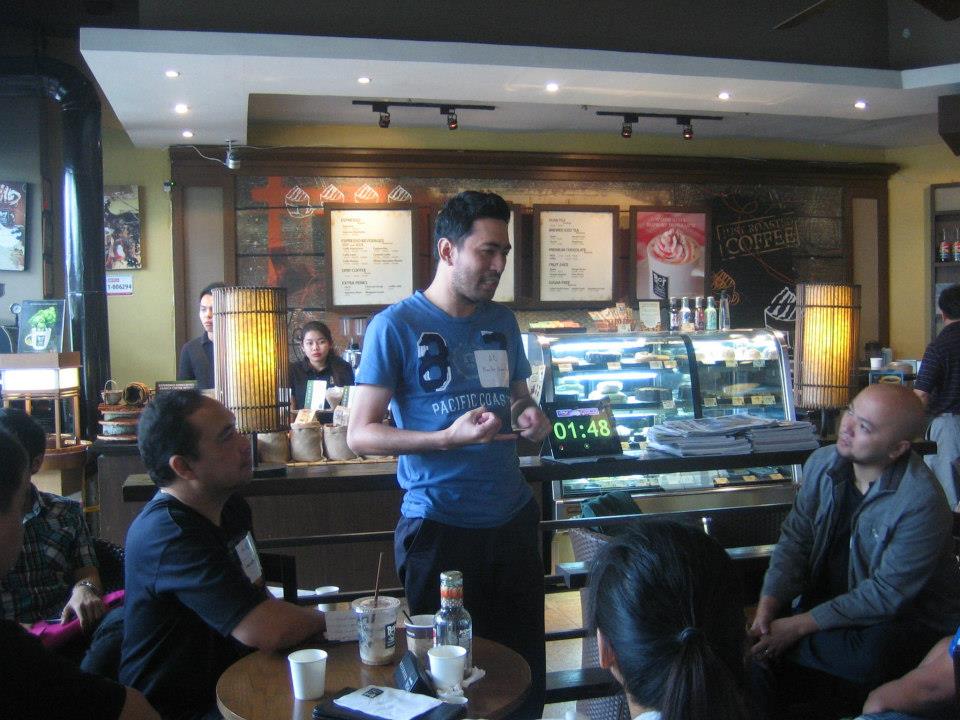
It never fails – get a room full of entrepreneurial people together to talk about startups and the room just erupts with energy.
In the last open coffee, the discussion veered towards mostly finding co-founders and some the more philosophical aspects of doing a startup.
This one was really all about 2 things 1) ideas and 2) helping one another.
“What do you guys think of this idea?”
“I think that will/won’t work because…”
“I know someone who can help you with…”
“Let’s talk later I think I can help you with…”
I thought it was just awesome.
In fact, one of the attendees wanted to do a study on how this burgeoning startup culture is the antithesis of the Filipino crab mentality we are so often accused of.
Thank you so much Bo’s Coffee, for hosting us! The food and coffee were great! (I didn’t know Bo’s had such great breakfast food! As in!)
JGL OPEN COFFEE PRINCIPLES (very much evolving)
1) We are all peers. There is no one higher or lower.
2) We will help each other succeed. There is enough room for everyone. It is never a zero-sum game.
On March 2, we’re having a MAMMOTH Juan Great Leap event!
We’ve invited a who’s who of 20 young startup movers and shakers across a variety of industries. Our objective? We want you to be able to learn from them in a very personal and unique way. I can best describe it as “Group Speed Dating.”
Those questions YOU’VE always wanted to ask? The stories YOU want to hear? The problems and solutions that’s relevant for YOU?
Well, simply put, you can just go around and ASK THEM yourselves.
This will be on March 2, Saturday (yep, we heard all those requests not to do it on a weeknight), at the AYALA TBI Office at the UP-Ayala Technohub in Diliman.
(This will be awesome. And you just HAVE to go)
300 FREE seats, so grab ’em at the link below. Now.
Check out the very gracious entrepreneurs who have already agreed to contribute and help out:
David Cruz
Industry: Technical (Hardware)
Blackfort Electronic Surveillance Systems Corporation; Mistral Global Gaming; Neugent Technologies; One-Touch Communications















 JUAN GREAT LEAP