Open Coffee Postscript

open coffee april

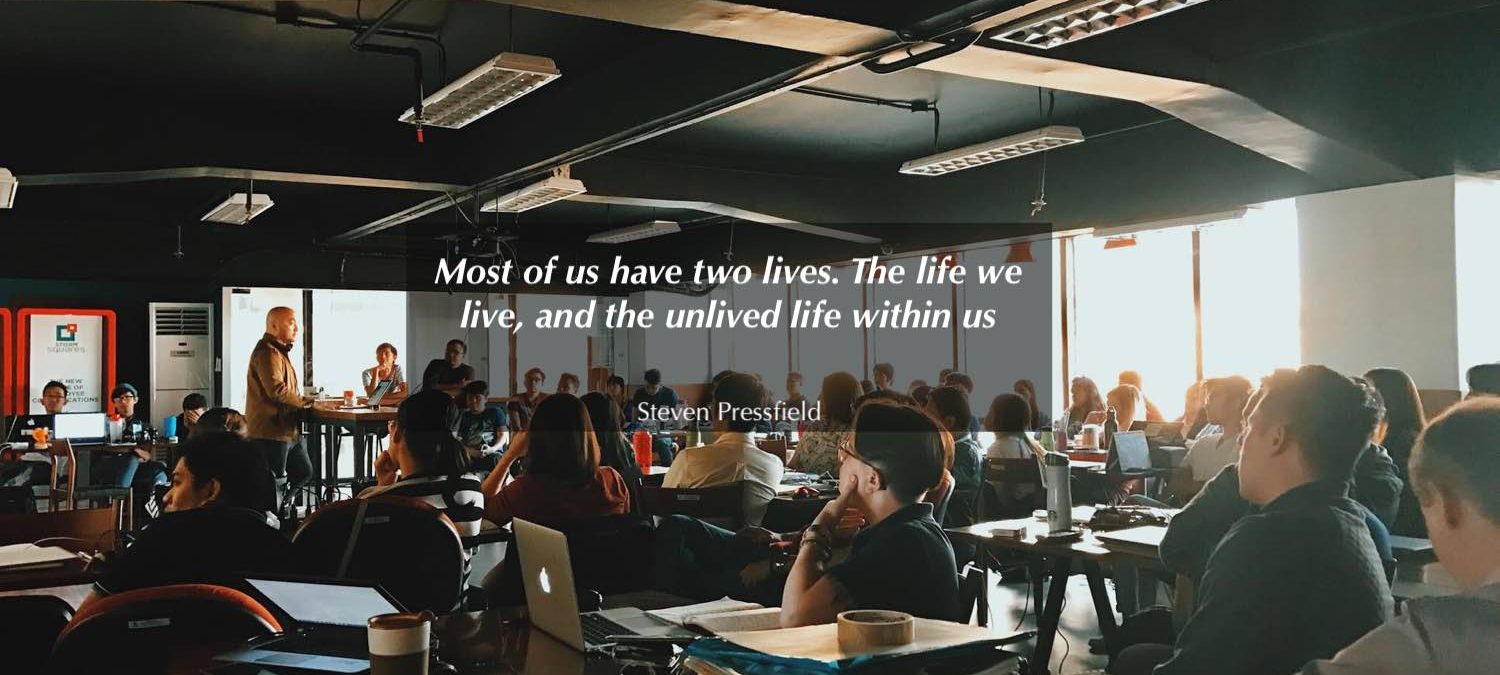
I had another awesome time last Saturday morning at the April Edition of Open Coffee. Here are some of my thoughts and observations on now holding four of these formatted mixers.

1)  The Sharing Continues to Amaze Me

My colleague AR told me that she plans to write a thesis about how the growing Filipino entrepreneurial community is debunking the notion of Filipino crab mentality. You can see this is in action in Open Coffee. In the pitches, you will see people will share business plans, ideas, and plans to people they do not know. (and unlike in “formal” pitching venues, there is no “prize” save for the learning. What’s magical is that the audience reciprocates – sharing their own insight, personal experience, and contacts to the one pitching. (You gotta see it if you haven’t yet.)

2) Get Ready for Sheer Variety

pitch

I think this is what makes the Juan Great Leap audience a bit different from other startup communities. Just on this version of Open Coffee alone, we had pitches for: a customer service consulting firm for front-liners, an essential oil which increases productivity, a crowdfunding site for volunteers, a published book targeting young entrepreneurs, a lactation consulting play on social media, a do-it-yourself online explainer video maker, a bazaar a unique social interaction app, and a consulting firm for boutique hotels.  For someone with my need for different stimulus, this is like a kid in a Toys R’ Us.

Long story short, it’s also tremendous learning.

3) For the Most Part, the Pitching Needs Work

The 2-minute limit presents a nice quandary for presenters:

How do I get my point across effectively in two minutes?

Theoretically, pitchers are then forced to be ultra-EFFICIENT, cutting less-important details for the MOST important details.

I’m not so sure this is what happens though, as most people prematurely wrap up their pitch when the two minutes are up.

I think there can be VAST improvement over how most of us present their pitches. Pitching is a crucial part of the startup life. Entrepreneurs need to be effective pitchmen for so many different, crucial things – recruitment, raising money, sales, marketing, partnerships,etc…

This is something we need to improve. (more on this soon)

4) The Platform Needs To Be a “Safe Place”

In the March 47 East Open Coffee, student Christian Go hitched with me going home. He told me he almost didn’t pitch, because he thought the first pitcher was sort of attacked. (basically people said the idea wasn’t too good)

Remembering what Christian shared, I started this Open Coffee by underlining two things. I told people that: a) they have to be extra-conscious of HOW they give their comments, and b) that ALL comments have to have some semblance of being CONSTRUCTIVE.

The resulting pitch rounds and feedback-giving were super. I think people took the two things to heart.

I do realize that there are some people who prefer the Western-style “tell it as it is in my face” method. But this is the Philippines after all, a reminder makes all the difference.

5) Bigger and Bigger

open coffee full house

I commented on the JGL FB page that OPEN COFFEE getting too big for the venue. The March Open Coffee had 40+ participants. This April version had 50+.

From an idea I wasn’t sure would pan out,

(would people share? what if no one wants to be the first to pitch? would people give useful feedback)

I think it’s safe to call Open Coffee a success after 4 iterations.

Onwards to bigger and better versions. Thank you so much to everyone who keep on making it so!

matt lapid profile pic
Naks! Matt Lapid profile pic!

More pics here! 

(For those who are new to Open Coffee, it happens MONTHLY, with the next one coming out mid-to-late May. Stay tuned!)


The Software Guru: On Refuting Peter, Premature Startup Culture, and Change for the Next Generation (Part 2 of the Joey Gurango Series )

The Software Guru, Joey Gurango of Gurango Software

In one of his blogposts, Peter, refers to the concept of the Argonaut from the book, Start-up Nation.

What are your personal opinions on the contribution of the Argonaut to a Philippine Startup Nation? 

Joey: I think the Philippine Startup scene is about 10 years away from being labeled as mature. A lot of my colleagues, maybe including Peter, might say that we’re on the cusp, about four years away from being a mature startup scene, I don’t think so. I actually don’t agree with some of the assumptions  [Peter] is making on the Philippines as a Startup Nation and the impact that you can make on it.

For me, it’s almost like saying that the Philippines is a mature democracy, but how far are we from a being a mature democracy? Well, to fix the problem it’s not just a matter of a constitutional amendment or having honest government officials or organizationally trying to change things, I think it goes far beyond all that stuff. It gets down to the common tao, the man on the street. Same thing, when thinking about ourselves as part of a mature Startup Nation. The common man on the street does not think about business. He thinks,

How do I get mine?

Now, I don’t mean that in a derogatory way, but there are too many people in this country that aren’t able to fulfill what would be considered the basic luxuries of life. There aren’t too many people who are at a level, in which they can comfortably say,

I’m enjoying my life, and I have time to think about things other than trying to just make ends meet from one paycheck to the next.

As long as you have a society, in which majority of the people are trying to make ends meets, you won’t have the mentality to think about starting a business. Now, when I say business, I don’t mean a business, in which the guy is doing pasaloads or running a sari-sari store. I’m talking about a real business which will attract employees and grow into something substantial. But when was the last time you saw a locally made television show that featured this happening?

In comparison to the typical US sitcom, how often do you see the TV characters start a business? Just the other week I was watching The Office and one of the characters in The Office was going to join a startup. It’s a common thing there [in the U.S.], but I don’t see that in the mainstream media here [in the Philippines]. If anything, you see some big business man who is corrupt, greedy and oppressive to his employees doing anything to make a profit. I believe that’s the common man’s perception of a successful businessman. We have to change that first. It’s going to take a while…many years…

In your opinion, what is the key to development in the Philippines?

Joey: Changing people’s perception about entrepreneurship. In all the things we’re doing, what Peter’s doing, what I am going to do as part of our advocacy with the Software Industry Association, and TechnoNegosyo. All of these efforts when you get down to it is geared towards changing people’s perception. We want to show people that pursuing a career in entrepreneurship is viable.

Right now, what the masses understand are celebrities. The most popular figures in the country are celebrities or politicians.

But you talk to the common man about who the most popular business man is and they’ll probably say MVP or the Ayalas. If you ask them about a regular businessman, not part of a conglomerate or oligarchy, who started a business… you ask them who started Jolibee… they wouldn’t know. This is the type of rags to riches story that our culture doesn’t promote.

Will changing the perceptions of individuals change our country?

Yes, and it starts with your generation. It starts with the people who are in their 20s.  It will take a whole bunch of successes and more people learning about what theses successes do to make this movement happen.

The Software Guru: On Refuting Peter, Premature Startup Culture, and Change for the Next Generation (Part 2 of the Joey Gurango Series )

The Software Guru, Joey Gurango of Gurango Software

In one of his blogposts, Peter, refers to the concept of the Argonaut from the book, Start-up Nation.

What are your personal opinions on the contribution of the Argonaut to a Philippine Startup Nation? 

Joey: I think the Philippine Startup scene is about 10 years away from being labeled as mature. A lot of my colleagues, maybe including Peter, might say that we’re on the cusp, about four years away from being a mature startup scene, I don’t think so. I actually don’t agree with some of the assumptions  [Peter] is making on the Philippines as a Startup Nation and the impact that you can make on it.

For me, it’s almost like saying that the Philippines is a mature democracy, but how far are we from a being a mature democracy? Well, to fix the problem it’s not just a matter of a constitutional amendment or having honest government officials or organizationally trying to change things, I think it goes far beyond all that stuff. It gets down to the common tao, the man on the street. Same thing, when thinking about ourselves as part of a mature Startup Nation. The common man on the street does not think about business. He thinks,

How do I get mine?

Now, I don’t mean that in a derogatory way, but there are too many people in this country that aren’t able to fulfill what would be considered the basic luxuries of life. There aren’t too many people who are at a level, in which they can comfortably say,

I’m enjoying my life, and I have time to think about things other than trying to just make ends meet from one paycheck to the next.

As long as you have a society, in which majority of the people are trying to make ends meets, you won’t have the mentality to think about starting a business. Now, when I say business, I don’t mean a business, in which the guy is doing pasaloads or running a sari-sari store. I’m talking about a real business which will attract employees and grow into something substantial. But when was the last time you saw a locally made television show that featured this happening?

In comparison to the typical US sitcom, how often do you see the TV characters start a business? Just the other week I was watching The Office and one of the characters in The Office was going to join a startup. It’s a common thing there [in the U.S.], but I don’t see that in the mainstream media here [in the Philippines]. If anything, you see some big business man who is corrupt, greedy and oppressive to his employees doing anything to make a profit. I believe that’s the common man’s perception of a successful businessman. We have to change that first. It’s going to take a while…many years…

In your opinion, what is the key to development in the Philippines?

Joey: Changing people’s perception about entrepreneurship. In all the things we’re doing, what Peter’s doing, what I am going to do as part of our advocacy with the Software Industry Association, and TechnoNegosyo. All of these efforts when you get down to it is geared towards changing people’s perception. We want to show people that pursuing a career in entrepreneurship is viable.

Right now, what the masses understand are celebrities. The most popular figures in the country are celebrities or politicians.

But you talk to the common man about who the most popular business man is and they’ll probably say MVP or the Ayalas. If you ask them about a regular businessman, not part of a conglomerate or oligarchy, who started a business… you ask them who started Jolibee… they wouldn’t know. This is the type of rags to riches story that our culture doesn’t promote.

Will changing the perceptions of individuals change our country?

Yes, and it starts with your generation. It starts with the people who are in their 20s.  It will take a whole bunch of successes and more people learning about what theses successes do to make this movement happen.

How to Use Consulting as a Bridge Between Corporate and Startup

stepping

I had a great lunch meeting today with a very talented friend who’s been working in corporate for nearly two decades already. During that span, he’s built impressive credentials and has worked on different projects in his chosen corporate function.

“I’m at that point Peter where I’m at a crossroads in my corporate career. If I leave my company now, I can apply for department head in another firm, but then what? I’ll be looking at a future of just jumping as department head from one company to the other?”

(I was at that same crossroads before, so I could really relate to what he was saying.)

A common friend of ours who was managing her own lucrative consulting practice was asking him if he wanted to pursue the same. It was something my talented friend could establish easily. He then thought of talking to me to get more feedback on making the leap.

I said:

 “Ah. I think one point to consider is the decision to go into consulting or pursue a startup. They are different things.”

Consulting vs Startups

Having been involved in both consulting and startups, I know first-hand how different they are.

A consulting practice centers around the skills and reputation of the Consultant. The ensuing organization is built to extend the reach of the consultant.

For example, from time to time, I still agree to HR Consulting engagements with some firms. They pay me for my HR expertise. If I were to build an organization around this “service,” it would involve creating a support structure around me so I can maximize my contribution – admin people to ensure I don’t get bogged down, a junior consultant to help on the ground with projects, etc…

This is of course, a GREAT thing. I know numerous people who have created either solo consulting practices or consulting firms who have employed 2-3 people, even more. These people are immensely satisfied and do not worry about money anymore.

If you wish to scale though, and make a splashy startup, it probably would not be through a consulting practice, as a consulting practice does not scale. The consulting practice organization is built around the consultant’s particular skill. Since there are only 24 hours in a day, there is only so much that you can do to extend your reach.

While a consulting practice is built around the consultant, a startup’s goal, on the other hand,  is usually create a repeatable, sustainable business – or in other words, to make itself operationally independent of the founder.

If you take me out of the equation in STORM, for example, STORM would still exist. It would still make operate. Of course, a lengthy separation would have ramifications on long-term strategy and growth (I hope), but unlike in a consulting practice, taking the founder from a working startup doesn’t mean it tumbles like a house of cards. (independence is the goal, obviously – taking a founder out of an early-stage startup is a wholly different matter).

In a startup, the product or service offered is SEPARATE from the founder, the founder BUILD the product. In a consulting practice, the product IS the consultant.

So, for those who are interested in doing a startup, and have garnered a signifiant amount of skills and experience in a particular corporate field – here’s one strategy you can do:

Do the Karen Yao

Use the financial stream and flexible hours of your consulting practice to build your scaleable startup idea on the side. Then, as your startup makes revenue, you can spend less and less time on your practice and more and more time on your startup.

Screen Shot 2013-04-18 at 10.57.41 AMTake my good friend Karen Yao, who was one of the entrepreneurs in Startups Unplugged. Like me, she built for herself a corporate career in HR. Then she jumped into a consulting career. During this time, she built Congruent Partnerships – first as a vehicle to extend her consulting practice, but then recently pivoting towards a more scaleable startup idea: HR outsourcing services for SME’s.

The thing is, the jump from corporate to consulting isn’t such a HUGE leap as jumping headlong into a startup. For one thing, you will be using the same expertise you were using in corporate – so work-wise, it will be a very comfortable shift.  The only difference is that the payment just isn’t through salary anymore, it shall be though project-based contracts. Moreover, it’s a good transition – you are already getting exposed to some of the elements of managing a startup: client work, accountability, finances, managing your own time, etc.

Since you manage your own time, you CAN NOW allot some time during the week to work on your startup without giving the startup the whole burden of paying for your expenses. This is crucial. One of the big challenges of doing a startup is running out of money. Running out of money basically means you run out of time to work on your startup.

Leaning on your consulting practice is a way fund your startup product development. You can extend your startup runway significantly.

Have your cake and eat it, too

If you choose to work on a startup which is RELATED to your consulting practice, then that’s a HUGE win-win scenario. Your consulting meetings are not only monetary opportunities, but now also double as pertinent data-gathering and validation activities for your would-be startup.

If your consulting clients are your target customers for your eventual startup? That will be super! You can ask them crucial questions like, “What do you think of this product?” or “Would you buy this product?”

Execute the consulting leap within the same entity

If you make a quick visit to Karen’s site, you’d find that congruent has three product lines: consulting, outsourcing, and solutions. I remember when Karen first started Congruent – most, if not all of her clients were in the consulting business. Gradually though, as the consulting line paid the bills, she began building her outsourcing and solutions lines. Nowadays, she is less dependent on her consulting line. Pretty soon, I’m wagering she will have to make a decision: do I let go of the consulting line? 

We started STORM  pretty the same way. When we started back in 2005, we had no actual product and an undeveloped market. We only had a product idea – flexible benefits.

For us to buy time to both develop the product and educate the market, we made money by going into consulting – we started offering organizational diagnosis to corporate clients. This actually became a profitable business line, which kept us afloat for a few years while we were developing our scaleable product. After some time, our flexible benefits line started making money. Soon, it made more money than our consulting line. Recently, we changed our name from STORM Consulting to STORM Rewards, fully making the transition by dropping our consulting business and offering a pure product.

This is one strategy you can do – you can create a consulting company immediately and course your consulting revenues through this entity. Then when you’ve developed your product, you can easily do a quick pivot.

Your financial books will look better, too.

Do Prepare For Your Consulting Leap as Well

If you are planning this sort of stepping-stone strategy, one mistake is to focus too much on the startup leap, forgetting that the consulting leap needs to be taken very seriously.

It is far from automatic that you can transition from corporate to consulting. You have to have led a great career in your function. You have to be REALLY GOOD at what you do. If not, then no one will pay you. You have to have distinguishable expertise in your craft and you have to have the knack of selling yourself well. You have to consciously develop yourself as a consultant.

Also, plan it out. 

If you already know, for example, that it will be your last year in corporate before you take the consulting leap, THEN BY ALL MEANS USE THE YEAR TO TRY TO FIND A MARKET ALREADY. Send feelers to other consultants in the same field if they have extra work you can do. Do free projects on the side to build a credible portfolio. Network and announce your plans to possible clients. Hustle.

So, if you find the startup leap daunting, perhaps you can do an easier leap onto consulting first, before taking on your ultimate startup leap. It’s a very very viable stepping-stone option. I’ve seen HR practitioners build HR firms, brand managers create marketing consulting startups, finance guys doing finance firms, and so on.

Might as well as be you.

30 SLOTS LEFT FOR OPEN COFFEE. GRAB EM NOW!

Typically, most of the slots for open coffee get scooped up 2-3 days prior to the event. This time, half of the slots are already filled, with a full 10 days before the event. So if you want to attend, don’t walk, RUN to fill this form up. Remember, the April OPEN COFFEE event will happen at Bo’s Coffee at Bonifacio High Street at 9:30 am on the 27th. See you there!

JGL OPEN COFFEE2

APRIL OPEN COFFEE NOW BREWING – TO BE SERVED ON THE 27th!

WHAT: APRIL OPEN COFFEE

WHEN: Saturday, April 27, 930 AM

WHERE: Bo’s Coffee, Bonifacio High Street

HOW MUCH: Just buy a cup of coffee as a form of thanks to Bo’s for hosting us

For those who missed the last Open Coffee (which included this part), you just HAVE to join us for the next one! As usual, the level of generosity, idea-sharing, energy, learning and overall do-goodery are expected to be at awesome levels.

For the reservations for this one, I’m going back to Googledocs, as it seems to have a lower flaker rate and we can ask for more information from you (to help us improve JGL content).

Do reserve a seat NOW by clicking HERE. Limited seats.

How to take your consulting/freelancing gig to the next level

levelup

I know quite a number of freelancers and consultants, engaged in a variety of services: design, HR Consulting, programming, writing, training, fitness, and so on.

These guys are cool – they are able to live the dream of being their own boss and at the same live comfortably.

Some of them are perfectly content with their lifestyle and current circle of clients. I remember one of them telling me recently:

“Why should I complicate my life getting more clients?”

(For me, this is awesome.)

Some of them though, want to expand and are constantly seeking ways to do so. Some have opted to hire an employee or two to help them grow. Maybe more.

If you are among the latter category, this article is for you.

Most of the freelancers, consultants, and consulting firms I know offer a whole list of services.

For a web design consultant, a typical menu of services would look like this:

Hey guys! I can do all these things for you! One-stop-shop-I-am!

– Website design

– SEO

– Website Management

– UX-UI

– Logo design

– WordPress design

– Marketing paraphernalia

– Print design

– Flash animation

– business card design

Moving onto another field, an HR Consultant’s list of services may look like this:

– Training and Organizational Development Consulting

– Performance Management Consulting

– Recruitment Consulting

– Talent Management Consulting

– Onboarding

– Workforce Planning

– Job Analysis and Design

– Job evaluation

– Salary Scale Development

This is all well and good. The intention and logic of offering many things are clear: more services, more chances of getting clients, right?

Here’s the problem.

Go to Linkedin. Search for “web design freelancer” or “HR consultant.”

(go ahead, I’ll be right here)

See the problem?

EVERYONE’S profile will look like mirror images of what I just typed above.

This strategy will NOT make you stand out and attract a market beyond your friends’ friends.

Here’s one branding strategy you can do.

one thingPick ONE thing in your list.

One thing you know you can do very, very, very well.

Then drop everything else. Build your brand about this ONE singular service. Make it the only thing to appear on your website.

OMG, Who did THAT Video? 

In a time when one-stop-shop wedding services were the rage, Jason Magbanua changed the game by delivering JUST wedding videos. Oh, and during that time, I think he even ultra-focused on just doing videographies of the Church wedding (to be shown a few hours after during the reception – I was just stunned the first time I saw this).

Armed with this intense focus, he managed to create his art – magnificent, awe-inspiring videos with a hip soundtrack.

Now, he’s a household name, and arguably created his own local industry.

I’m sure Jason could have offered the typical menu (photography, the album, stills, video editing, videos of the reception, maybe even the floral arrangements and coordination). But choosing but ONE service made him stand out.

The numerous advantages of ONE THING:

1) You stand out

What’s more memorable, saying:

I do consulting in performance management, recruitment, training, organizational development, job analysis, job evaluation, onboarding, HR policies, and Workforce planning,

or saying:

I am THE onboarding coach?

(onboarding – the process of making sure an employee is oriented properly and completely when he first starts in a job)

You can now name your consulting firm something like ALL ABOARD! and get a memorable url like http://www.allaboard.ph. Your website can contain interesting facts  and tips about onboarding. You can position yourself as THE onboarding expert.

Now, everytime someone thinks, “I’m having trouble with onboarding,” she will now think of YOU, and not think about about the kajillion other generic HR freelancers around.

Even if a couple of people in the kajillion might actually be better than you in onboarding expertise, guess who takes the credit for being the best?

If you were the client and you need onboarding consulting, would you go to a one-stop-shop or an onboarding expert?

If you are a startup and you need a lawyer, woud you go to a typical law firm offering generic “corporate legal consulting?” or a focused “startup lawyer?”

If you wanted to do a video on your website to explain your product, would you go to an all- around production house, or Stream Engine Studios, whose website very prominently states:

Hi. We’re STREAM ENGINE STUDIOS, and we make kickass animated explainer videos.

One thing makes you stand out.

2) You are forced to become great in that one thing

Since you are now focused on a single service, you can rally all your resources around making that one thing great. Yup, there is pressure in doing absolutely GREAT work in doing your one thing – this is how you have chosen to brand yourself.

But you know what? That is good pressure. Doing one thing great gives you a larger chance of recognition and success versus doing 10 “good enough” things.

Instead of keeping up with trends and continuously improving on TEN different things, you can just focus on getting better on one thing – which surely will cause radically faster progress.

3) Better scaling

Generally, consulting doesn’t scale very well – if you plan to grow you would need more and more people. Still, “one-thing-consulting” can still scale so much better than a one-stop-shop, where you need to think about multiple services and processes.

Let’s say you offer 5 different services and you manage to get 50 clients. What will happen is you will have, say, 12 clients you are doing one service for, another service for 8 clients, and so on. Can you imagine growing your company that way? It’s like growing 5 startups.

One service across the same 50 clients? Much easier to digest and build efficient processes for.

One last tip 

Building a brand takes time (and is so much worth it). Once you have an established brand which focuses on one thing? Expect a ton of passive referrals.

But what do you when you are just starting?

You can still offer the long list of services, but offer these privately to your immediate network (friends and friends of friends).

For example, if you were a design consultant, you could still offer the service buffet table to your current clients. Logo design for this client. SEO for this other client. And so on.

Your plan, however, is to be the business card design king.

So what do you do? While doing all your other projects, you have to simultaneously be working on building your brand around your one thing – build the focused website, learn a ton on business card design, survey the business card market, think of the amount of innovation you can do in the business card industry.

Then one day, when your business card profits are enough, you can drop everything else. You can truly focus on being the Jason Magbanua of Business Cards.

Gotta have that one thing.

(apologies – any spontaneous One Direction LSS is unintended)