The only shoe that will fit perfectly is yours

Each individual is unique.

From our fingerprints, our view of the world, our biases, our histories – we are each truly unique.

Our uniqueness extends to what exactly satisfies us at work.

Some of us prefer sales, some research, some human resources, some supply chain management, some finance, some technology.

Some of us prefer to work at night, some mid-afternoon, some are morning folk.

Some of us prefer working with people, while some prefer to work alone, for some “it depends.”

Some of crave simplicity, while others desire sophistication.

Some of us get a thrill out of talking to someone new everyday, while some of us want to a correspond with more an intimate set of people.

Some of us want structure, while some of us would want none of that.

Some of us like synthesizing, some facilitating, some writing, some performing, some speaking to large groups.

We all have a unique fulfillment menu. We are each fulfilled by a combination of different things.

This is why job-hunting is so tricky. We ALWAYS end up compromising something.  Isn’t it funny that there’s always something missing?

How many times have you said or have you heard others say, “The salary is good, my boss is cool, the work is okay, but, I don’t know, I’m just not happy.”

A corporation is someone else’s dream. It is someone else’s menu. Someone else’s shoe.

In the end, the only shoe that will fit perfectly is yours.

Get Off The Corporate Assembly Line!

Do you remember the last time you did truly great work? I bet your output was made possible because you were fired up and inspired, and you threw your entire being into the project. I bet you thought about the project during non-work hours, in fact, I bet you had trouble sleeping because your mind was so buzzed thinking about possibilities regarding your project. It was work which was consuming, inspiring, and meaningful. There was a point to it.

It was work you believed in.

Now, how long ago was it when you felt this way? A lot of my friends in the corporate world haven’t felt this way for a long time. Oh, they might feel this way for the first few months of a new job, but when reality sets in, the humdrums return with a vengeance.

Why?

One reason is autonomy. Or lack thereof. I find that I can do far greater work in projects I know I have the autonomy to fully influence. In big corporations, such blanketed autonomy is rare. You have an idea for your project? Then you have to sell it to your boss first, then perhaps more bosses. The larger the idea, the more signatures you have to collect.The more radical and revolutionary your idea is, the more difficult it is to secure signatures. This is why in large corporations, to be effective you really have to be a politician. You have to collect the signatures to get things done.

Another reason is that majority of companies are built for efficiency.  The owner equation is simple: I want my company to produce goods and services at the least cost. The fastest way that is achieved? Using the assembly line.

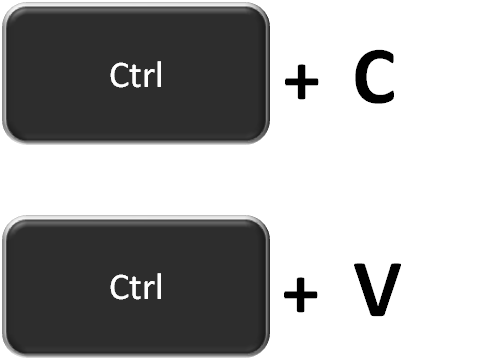
“Assembly line” jobs are more commonplace than you think. The “copy-paste” job I described in my very first post exists in large numbers, albeit perhaps not as blatant.

Take a look at your job description. Are you given enough freedom to pursue something that’s meaningful to you?

Come to think of it, the very fact that you have a job description points to the whole conundrum. The purpose of the job description is to limit your role – its to make sure boundaries are set. Interestingly, I hear so many people say “I hate working with this guy – he doesn’t do work beyond his job description.” Then why have the job descriptions in the first place? Isn’t it ironic then that the people who succeed and are promoted in firms are the very people who go beyond what is in the job description?

Are you lost in the org chart?

Traditional corporations are structured by silos, by departments. The bigger the firm, the more sub-departments are created, the more limited a job becomes. This is why the biggest firms have people who cut and paste all day. This is when people get commoditized.

A person can be given a manual, sent to a training course or two, and few months on the job, and…boom! You have been assimilated. When a person can replace another person by sticking closely to the job description, I’d call that an assembly line.

Of course, there are exceptions. I’ve worked with several companies who give autonomy to their employees and treat them as partners. I’ve met several individuals who truly love what they are doing, do great work, and inspire people around them. Are these common? You know the answer.

YOU HAVE BEEN ASSIMILATED

Instead, we find people in the assembly line. People who hate Mondays and treat Fridays like the greatest thing since sliced bread. People who work merely for their paychecks and look for their kicks elsewhere. People who just go through the motions and find themselves on Facebook the whole day, because they can do the required work in just 1-2 hours. This is a tragedy.

The ONE TRUE RISK I faced in taking the startup leap

One of these days, I’ll post the full-blown story of what exactly happened when I took the leap and kissed my corporate career goodbye. It was truly a Faith-Leap for me.

Till then, kindly make do with this super abridged version:

I was a 33-year old corporate lifer with a wife and a newborn son I was supporting. It was the middle of the 2008 recession. The startup firm I was working part-time putting up was struggling mightily, partly because I wasn’t giving it the time it deserved.

I had two paths to take.

One was to continue on my 12-year corporate career as a line HR director, continue receiving my comfortable salary, continue with the peace of mind that my family would be ok. I would also continue working in a career I had since realized wasn’t for me, and didn’t stoke my passions anymore. It would also mean the sure-death of STORM, my startup baby.

The other path was unthinkable: to go full-time in the startup, in an effort to right the ship. In doing so, I would be swallowing an 80% salary cut during a recession year and I would be leaving behind a career which took a decade to build. It would mean my startup would have a chance of surviving.

Easy choice right? Bye-bye STORM. After all, what idiot would risk his family? The more I thought of it however, the more I saw the real risk.

It then became clear: I could always go back to my corporate career. There would ALWAYS be someone in need of a good HR guy. If my experiment with STORM didn’t work out, I could always go back. Malamang may increase pa. 

On the other hand, I realized I could never go back to STORM. Had I let go of it, it would have died and that would’ve been it. I would never find out what could’ve happened if I took the leap. I knew it would be hard to live with that what-if. The real risk was to grow old one day and never find out.  

And so, with confidence and faith amidst a trying time, I took my great leap.

My wife Pauline supported me that time through and through. We tightened our belts and made small sacrifices to make ends meet. It never became desperate though. In a few months, we were Blessed with a big client, and revenues started growing.

The benefits of making the leap are fantastic: I am able to pursue what I am passionate about everyday. I wake up in the morning actually excited to go to work. I am learning tremendously. I am able to decide and do what I feel is relevant and important, like this blog, in the context of my work. I feel God more in the workplace, and feel surer that I am where He wants me to be – pursuing my God-given passions.

These are things which I feel everyday, which I seldom felt in my corporate career. I believe everyone should be given the freedom to pursue these, work is such an integral part of our lives. We can’t and mustn’t settle.

Think about it. Is the risk even that big?

Young people. They say “startups are for the young” because of two things: first is that it takes a lot of energy to pursue a startup. You will work HARDER than you did in corporate. Hopefully it’s not only because of your intense will to make it, but also because you’ve chosen a product you love. The other reason startups are for the young? You have nothing to lose. You don’t have mouths to feed yet, nor a house loan to pay. You can always go back climbing the corporate ladder. It will always be there for you.  The ONLY thing you might be sacrificing is lifestyle (the one your corporate salary allows you to afford), which really if you think about it, isn’t worth it. At all. If you have that itch, there is no sense stalling. Take that leap now.

Slightly older folks. You probably have something to lose. It’s the large, 2x-a-month cash that comes in like clockwork. You use it to feed your dependents. If you think about it, your career is NOT really at risk – you can always go back to it.  By now though, you probably have an idea if that career of yours really is something you really love, or its something you are stuck with. If it is the latter, you owe it to yourself to take a leap – don’t settle. Not necessarily a giant, hairy leap, but perhaps smaller, more calculated leaps that build momentum. (I talk about that here) Create a definitive plan. Partner with young people who can take the big leaps. You are the one they will look for needed domain knowledge. Small, low-risk steps.

Look, startups are not for everyone. They require a high tolerance for ambiguity and failure, as well as high intestinal fortitude. I remember the early years when my partner Pao and I would face not knowing where the money would come from WHILE losing a huge client WHILE losing a key employee WHILE having to clean the office. Grabe. However, if you have that fire in your belly, there is NOTHING as exhilarating as being the captain of your own ship, I tell you.

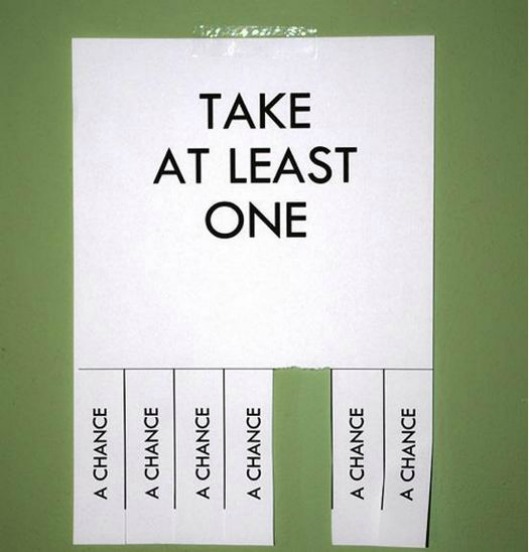
There is only one way to find out though. Take a chance.

Juan, A Great Leap Please

I am a Filipino startup owner. I began my professional career going up the human resources ladder. I eventually got really tired of this climb and felt the corporate structure stifled me from fully spreading my wings (more on this later), so I took the most significant leap of my professional life. In 2006, I started the HR Technology firm STORM Consulting. After nearly 6 years, through all the ups and downs startups go through, I am pleased to see our firm alive and kicking, impacting employee lives for the better through the provision of HR technology.

Over these years, I have played every role that our startup has needed me to take on: CEO, sales, investor, evangelist, janitorial services, messenger, technical support, you name it, I’ve done it.

There is one key role that I’ve made sure to always be closely involved in: recruitment.

The very minute we needed to recruit our first employee, I felt how different it was from all my years of recruiting for corporations  – the margin for error was much, much smaller, and my expectations for the applicant were much,much higher. It was my money, time, and passion that were at stake, after all.

For all our openings, I’ve always sought out this one truly elusive quality that I felt was so needed in a startup like ours – “entrepreneurial.” This was much more difficult than I thought it would be.

Eventually, I began the process of seeking out partners for new firms I wanted to try out. This made the process even more acute – I now was looking for potential co-owners and partners. Not only did I need people I could trust, but people with grand dreams and the great will to make them happen.

Now, I remember feeling quite excited when I chanced upon Evelyn’s resume. After all, in college she was the president of her school’s entrepreneurial organization. Moreover, she was one of the winners of that young entrepreneurial contest HSBC sponsors. Where was she working?  3 years now for an insurance firm. I was betting there was an itch there she wasn’t exactly scratching.

When we met for coffee, I found that she was all that her impressive resume suggested: a great people person, innovative, self-starter, and yes, entrepreneurial. And yes, it turns out there was an itch she wasn’t scratching. So I went for the kill and presented my offer: 1-year apprenticeship in STORM to learn the startup ropes, then a chance co-own a firm after. I offered a good package, great challenges, potential equity, and mentorship.

The answer was something I’ve been hearing the last five years across hundreds of people.

Not yet.

Writing this is borne out of much more than frustration, it is borne out of concern. Concern for all those startups which never happened. Concern for all the soul-sucking that happens when brilliant people do years of sludgework. Concern for people like Mao, an eloquent applicant I chatted with yesterday whose answer to my question “describe your typical day,” was an unbelievable “I copy-paste all day.”

Yup, there are people who do this all day

Concern for the thousands of not-yets developing into nevers.

I’ve interviewed thousands of people for nearly 15 years now, if you include my time in corporate HR. One generic question I always ask is the “long term plan” question.

Far and away, the two most common answers to the question are a) an MBA, and b) to put up my own business.

Fast forward 15 years after and I see a number of MBA’s around, but where are the new businesses? There should be hundreds of them.

What the hell has happened to all those dreams?

This is a plea for you, the dreamer, the would-be entrepreneur, the future tycoon momentarily biding her time in her corporate cubicle, waiting for just the right circumstances, for the stars to align in just the right way, till she makes that leap.

Take that leap now. The stars will never align. There will be no perfect time. Take that leap now. Our country needs you. Enough excuses. Enough fear.

Take that leap now.