Don’t Be A Customer Service Cliche!

stop

A couple of weeks ago, I was waiting in line at a Toyota Service center, waiting for someone to estimate the costs for the damages done to my car. (by a brake-free 20-wheel truck going down a flyover – but that’s another story) I waited around one hour. Then, someone signalled for me to proceed to a chair in front of an assessment officer’s desk. I waited for around 30 minutes more.

Wait, was there no one at the desk, you ask?

That’s the unbelievable part! There WAS SOMEONE at the desk. I was ignored for 30 minutes as he was doing something else (picture below). Then, once he finished whatever paperwork he was doing, ONLY THEN DID HE LOOK AT ME to say, “Can I help you sir?”

desk

I find it just amazing that virtually ALL companies have “Customer Service” as a Company Value. A number state these values on a huge wall in their offices or sites. This obviously means that Customer Service is something that companies take very seriously right?

In light of this, isn’t it funny how we just brace ourselves when we need to call a customer service hotline, or cue up at some customer service desk? Don’t we all have stories such as the one I narrated above?

(Sadly) We EXPECT bad service.

bad-customer-service
If I only had a ketchup bottle in the picture above…

Please, please, promise me you won’t be a customer service cliche as you service the clients of your startup/business.

Our country now has such low expectations when it comes to being serviced properly. There is a big opportunity to stand out as a provider of awesome customer service.

NEXT POST: Tips on how to build a kickass customer servicing team! 

The Absolutely Crucial Art of Defending Your Dream Time

defending

Do you want to know what’s truly important to you?

There’s really no need for further philosophical / existential analysis.

Here’s a surefire way to know.

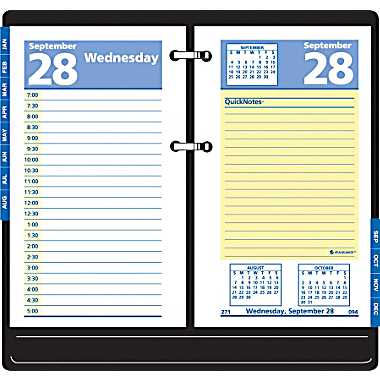
Take a look at your calendar for the past month. Take a look at the number of hours you spend on certain tasks.

Where you spend your time will show you an objective view as to what you truly find important.

Do you spend countless hours working overtime? How much time do you spend with your family? Do you spend a lot of time pampering yourself? Video games? TV?

Your calendar says a whole lot about you. 

calendar

In our community, we are encouraged to “defend our prayer time.” That we should spend 15-30 minutes, at a specific time of the day, praying and being with God. We know this will be challenged by the temptation to sleep, watch TV, work, or a hundred other things, which is why we have to vigorously defend the time. Because God is important.

I can’t help but think this also applies to following our career dreams as well. We need to designate a certain time of day. Even just 15-30 minutes a day(for those of us will fulltime jobs which we already know don’t and won’t fulfill us). Because our dreams are important.

I recently talked to someone asking me for advice on how to do a startup part-time. He had an interesting B2B idea which I thought had some potential. I told him it IS possible to start things part-time, but that he would have to work hard and render disciplined, daily effort. I told him we can talk from time to time so I can check up on him. He kept on saying the right things – I want to follow my dreams, I want to pursue what I love, I will do what it takes.

But then when it was time to share with me what research he should’ve garnered, or which potential partners he’s now talked to, he chokes. He says he just too busy.

I would have believed it too, had he avoided adding me in FB, where his reactions to Game of Thrones and the NBA playoffs pop up in my feed.

An NBA game is around 2 1/2 hours. Initial internet research on possible competition can take a mere 30 minutes of smart Googling. Coffee with a potential partner usually takes an hour.

In the time he took to watch ONE basketball game, he could have interviewed two candidates and made the research.

NBA > Dreams.

It sounds funny and simplistic, but if we take a look at our calendars, I’m sure we would also see dozens of “misalignments” between what we SAY are important to us and where we ACTUALLY spend our time.

If your family is important to you, did you sacrifice time from other stuff to be with them?

If your dreams are important to you, how much time a day do you spend working on it?

Just a mere 30 minutes a day of deliberate work on your dream can yield tremendous results.

When I was starting STORM out in 2005, I had a fulltime job and I was pursuing a master’s degree. I had really wanted to do a “business” though, (the term “startup” wasn’t quite popular yet) so I really resolved to find some time. I still remember spending a few minutes every weekday researching on flexible benefit competition, polishing my powerpoint deck, and “profiling” potential partners (I remember having a list of people with their strengths and backgrounds). Sunday mornings (otherwise known as corporate veg-out time) would be sacrificed for morning coffee with potential co-founders. I would drive out to the Starbucks nearest to the homes of my potential partners.

After months of doing this, I finally found partners who were willing to take the leap with me. Then, the project started taking a life on its own. There was momentum (so crucial). Excited, I started finding more and more time to work on my dream. Weekend coffee transformed into weekend planning with my partners. Soon, we would be putting up our share of the money, get SEC-registered, and start. By no means was it smooth sailing after, but I never looked back. Three years after, I took my fated full-time leap.

Is your dream worth sacrificing for and pursuing?

If it is, then take your calendar and start making changes.

Put your time where your mouth is.

(do you know anyone who would especially resonate with this post? be a blessing and share! Sometimes we need to encourage people to take leaps! – Peter)

5 Must-ask Questions for Your Co-Founder Interviews

partnersIf you’ve been reading this blog for awhile now, you already know how much emphasis I put at the process of finding the right partner. Actually, wrong partner selection is THE single reason I’ve failed in multiple previous  startups. Do NOT take this delicate process haphazardly.

To help you with this process, I’d like to share some practical questions you can ask a potential partner during an interview. This is by no means a comprehensive list – these are just a random, practical list of questions I’ve found to be pretty helpful over the years.

Image converted using ifftoany

1) What are your own dreams for this startup?

You want a partner, not an employee. You want someone who will share your startup dream and very importantly, make it something bigger. Your potential partner HAS to have his own take on how to further build on your idea or vision.

Red flag answers:

“Well, uhm, I haven’t really thought of that.”

“It’s your vision, not mine.”

kryptonite

2) I really suck at _______, _________, and _________. What are YOUR weaknesses?

Weaknesses questions are very, very tricky in interviews. People know the question is coming and yet are are still befuddled by it. Moreover, you typically get people who won’t divulge real weaknesses and instead give you duh answers like:

“I work too hard”

or

“I’m a perfectionist.”

or

“I used to be bad with detail, but now it’s no longer a weakness.” (this means its a HUGE weakness!!)

In the co-founder search, the weakness/strength discussion is just so crucial. The whole point of getting a partner or two is to find people who will complement you and account for your weaknesses  (and vice versa).

So you HAVE to have an honest, open conversation about strengths and weaknesses.

The first part of the question, “My weaknesses are…” is designed to make the interviewee more comfortable in divulging her own weaknesses by first divulging your own. Share these truthfully. If you are genuine, your interviewee WILL, more often than not, reciprocate.

Red flag answers:

“I work too hard.”

“I have worked so hard in correcting my weaknesses that now I have none.” (yep, I have gotten this multiple times)

Carrot-on-stick

3) How do you like to get rewarded? 

I like this question precisely because it is a very general question and can lead the conversation where the interviewee chooses. You can then see patterns as far as motivation is concerned. Knowing what will motivate a partner is crucial in ensuring your partner/s stays with you.

For extrinsic rewards, be sensitive to answers which pertain to the timing of when the interviewee would want to get rewarded.

You want people who will believe in your idea and will work for FUTURE monetary rewards. You want to be talking more about equity, success-based rewards, and future plans, instead of negotiating current salary.

Which reminds me of another very strategic question to ask:

pesos

4) What are your current financial obligations?

This is an AWESOME question.

I’ve found that a person’s current financial situation is a HUGE determinant as to whether he would take a leap with you or not. Not only will you get a good picture of this, but this is also a VERY GOOD WAY of determining what the person’s minimum salary can be.

(If the person says “I’m paying around P3000 a month for the phone bill and around P4000 for gas. that’s it.” and then he says later on, “I would require a fulltime salary of P40,000,” then you have a red flag.)

I just am realizing this right now as I type this – I hope I won’t regret posting these when I do future founder interviews…

audition

5) Can you design/program/sell/  ________ for me right now? 

These are the three classic roles for the ideal founding team: a design expert, a programmer (or more generally, your MAKER/PRODUCER), and your pitchman.

How do you know if they can do the role well? Make them exhibit it. Make them audition.

Make the pitcher give you a 5-minute pitch. Ask the programmer to code. Make the designer draw something. Don’t  rely on a portfolio (you’re not sure if they really did it). Rely on what they could produce right there and then. This will take time yes, but believe me, its worth it.

Red flag answers:

“Really? Now?”

Other quick suggestions: 

– NEVER partner from just one interview. Do AT LEAST 3. Ask many references. And then work on a small project together before shelling out any equity. This is not an employee. This is a marriage. Be thorough.

– If its been a long time already and you haven’t found a partner yet? (I know some people who are now at year 3 of the search). Just start and incorporate. The work you will do (assumption: you do good work) WILL attract potential partners. Who knows, you might not even need one.