
The LEGO Theory of Job Fulfillment

lego


Who doesn’t love Lego?

When I was a kid, Lego was my ultimate, favorite toy. After I would unbox a set, I would first try to build it as designed. But this wasn’t the fun part yet! This is sort of the boring requirement.

After some time, these new pieces would gradually fall into my BIG PAIL of Lego blocks. Playtime commenced when I would pour the pieces on the floor – one big mess.

Then, I would just…create.

Cars, knights on steeds, robots with several points of articulation, you name it, I built it. Fun!

Decades after, Lego is bigger than ever.

People buy the stuff in droves (even if it hurts the pocket) – fuelled especially by licensing everything cool. (Marvel AND DC, Lord of the Rings, Star Wars, etc…) There are Lego amusement parks, TV shows, movies (Lego Batman movie FTW!), Lego copycats, corporate training programs (!) and typically, a whole section of your nearest toy store devoted to all things Lego.

When you think about it, the timeless appeal of Lego is easily explainable.

People want to build. 

I remember just getting LOST in building stuff. Like when I created my own Mazinger Z (complete with attachable Head-spaceship), and then letting it last a few days (savoring what I built?) before destroying everything and starting anew with another idea. It was Play-doh on steroids.

You can imagine millions of kids letting their imagination run wild in creating something that was truly theirs.

What are you passionate about?

When I get asked this question, sometimes, I get flummoxed. Am I super passionate about flexible benefits? About HR?

When I really think about it, the answer is no. I don’t think about it in all my spare time, nor do I devour books on it as pleasure reading (unlike say, some business books). I AM highly interested in it.  But I’m not prepared to say it’s a passion.

So that does that mean I’m not passionate about building my HR Benefits firm?

Of course not. That’s a passion that runs very, very deep.

Pondering on it, I then realize that what I am passionate about is building.

Building things, building the firm.

I’ve almost complete control of my blocks – who I hire, what direction I choose, what color scheme, what market, what tools, what culture.

And when I take a step back and see what I’ve helped built, it is something that gives me immense satisfaction and joy.

Isn’t this true with everything else we build?

The scripts and blogposts we write? The architecture we’ve drafted? The recipe we masterfully whipped up? The clothes we design? The app we coded? The training program we drew up?

You can almost hear the pride and joy a person has when they can point at something and say, I did that! or I contributed to that! 

That’s my Mazinger Z!

A lot of the people I know in jobs and careers where they CREATE are happy. Sure, they may find themselves in a crummy job or two once in awhile, but they love what they do and this ultimately leads to a fulfilling career.

The problem occurs happens when we choose jobs and work which REMOVE the opportunity to build something. When we’re just maintaining something. A cog in the machine.

I find that there is also a radical difference in learning when you’re building something, as opposed to merely maintaining. There is more engagement. There is more purpose.

Just ask any programmer you know: what’s more exciting – developing something new, or maintaining something that’s already running? The difference will be a chasm.

This is what worries me.

I’ve a son now in a traditional big grade school. The coursework has barely changed (since my own time there). Letter grades in 5-6 classic subject matters.

Most of our schools are still stuck in Industrial Age-type of teaching and thinking. Standardized tests. A single path to success. And, while there are notable exceptions, most of the coursework is still geared towards maintenance. Just take a look at how we NAME our courses…

Human Resources Management

Business Management

Management of Financial Institutions

Management Information Systems

Business Administration

Legal Management

Why merely manage, administer, or maintain, when you can create, improve, and build?

A New Paradigm

While this is something we have to institutionally change, especially with the Digital Age having a whole new set of rules (a heated topic for another day). Still, there are a lot of things we can do if we find ourselves in a situation where are not able to create and express.

1. Find the part of your job where you can build

What I find is that even if you’re in a blatantly “maintenance” type of job, like let’s say, accounting – there are still many ways to  try to exercise your creativity. You can for example volunteer to improve processes, or offer to do a cost-benefit analysis on an area which it has never been done. The caveat here of course is that your current work is done at a level where your boss is comfortable letting you tackle other things. If you pour your heart at this new task, though – you will probably do great work, which your boss will appreciate.

2. If there isn’t, leave

Of course, not all bosses and cultures will tolerate this. Some people will simply think you’re over-stepping boundaries. Some people will want you to really just fulfill your job description, nothing more, nothing less.

If this is the case, prepare your resume already. Don’t let your soul get slowly crushed maintaining and being a cog. I guarantee, a few years of this WILL result in you being effectively turned into a zombie afraid of change, just looking for the highest paycheck.

Leave.

3. Engage your childhood hobbies

When I do recruitment, I try to see beyond the resume and the credentials in placing the person in a role. A critical question I ask is: what were your hobbies growing up?

I’d get different answers: acting, drawing, painting, singing, designing, writing, and so on.

The sad thing is, for a LOT of people – they let go of these hobbies when they “grow up” and start working.

I would normally ask them, “Hey, have you ever thought about a career in __________? (writing, design, whatever the hobby is…).

The most common answer is no, and the most common reason is a lack of practicality.

Very typically during the interview, I would normally try to convince them to try it out, and the applicant, sensing that I might not be interested in hiring her because I’m suggesting another course of action, would then underline even more how impractical that would be. Sigh.

Don’t kill the Lego Builder in you. Keep these hobbies alive. Use what God has blessed you with. I’m convinced these can offer also you clues as to what your Purpose really is.

4. Consider being an entrepreneur

Of COURSE I’m biased. This IS a startup-themed blog, after all.

For the Lego-Builder in you though, this is the ultimate choice  – to bring something out into the world with your unique DNA draped all over it. Your very own Mazinger Z.

There’s no better time in history to be an entrepreneur. Everything you need is a Google search away. Start small.

So, what are you building now? What are you up to?

If you’re not building anything, it’s never too late to start.

6 Essential Rules on How To Deliver Kickass Customer Service (part 2 of 2)

(The second of a two-part series on AWESOME CUSTOMER SERVICE, part one can be found here)

Before we proceed to rules 4, 5, and 6, let’s do some definition of terms first.

There are two types of culture in a given organization: there is the EXPRESSED culture, and there is the ACTUAL culture. 

The expressed culture is what you see on Mission-Vision-Values statements or in organization “credos.” It is the culture that companies WANT their companies to be defined by.

The actual culture is, obviously, what your organization is really like.

To hardcore HR practitioners, the technical terms are actually “presumed” vs. “actual” HR. But I think “expressed” is a bit more descriptive than “presumed.” Expressed culture is the culture organizations SAY they have. 

My underlying theory here in these articles is simple: producing documents and expressions are not enough. You need to be able to consciously MANAGE culture to have any effect on the ACTUAL culture.

What does this have to do with customer service?

Everything.

This flows now into rule #4:

By the Horns

4) Take culture by the horns

If you want to deliver kickass customer service, then it has to be ingrained in your ACTUAL culture. For this to happen, you have to consciously create a customer service culture.

You need to talk about it all the time with your employees, and say stuff like, “how do you think this affects our culture?” or “does this employee fit our culture?” or “we can’t do that, it’s against our customer service culture.”

You need to put visual cues on the wall. You need to make “creating a service culture” a key objective for your managers.

If awesome customer service becomes part of the norm, then you will easily see everyone in the organization “policing” themselves.

If everyone literally frowned upon telephones kept ringing, or delivering slow service, or lack of enthusiasm, then guess what – then it won’t happen.

A very powerful tactic is on anchoring a culture on a certain “rallying point.” (think war drums or a coxswain)

This deserves its own rule:

bullseye

5) Create a Customer Service Mantra

Hanep!

This word is what our employees are given as an objective – the customer should be so inclined to express “hanep!” after transacting with them.

Rather than describing to our employees what awesome customer service is with jargon-filled definitions and scenarios, we just ask them to deliver “hanep!” (the second rule is extremely important in making this one happen)

This makes awesome customer service seem very real and very simple to our guys.

lolly

6) Never Fail to Reward and Recognize

Norms are created in an organization largely because of simple operant conditioning – the norm is positively or negatively reinforced.

If rule 2 is strictly followed, the need to do negative reinforcement (punishment) is lessened. We can then concentrate on positive reinforcement. (Much admired billionaire investor Warren Buffet is renowned for never using negative reinforcement and always giving positive reinforcement)

First, you have to REWARD your customer service personnel well. Since you are hiring empathic problem solvers, and not parrots – you have to pay them as such. Incentivize great customer service. Remember rule 1: this is an investment. While perhaps at first you may be paying more than you bargained for, done right should give you a very nice return. Remember, people are starved for good customer service.

Second,  always remember that you should never fail to grab an opportunity to recognize good customer service rendered by your employees. It has been WELL DOCUMENTED that recognition – praising others – goes a long, long way in motivating people. Do this publicly.

Bonus Rule: Read Tony Hsieh’s Delivering Happiness

There was a time we were using scripts and carried on with customer service using practices garnered from BPO firms.

When I finished reading this book, I had a “stop the presses!” moment and met with our team. We needed to change everything. (the audio book’s pretty cool despite Tony’s sleepy-hypnotic voice)

(Know anyone who would especially resonate with this post? Be a blessing and hit those share buttons!)

6 Essential Rules on How to Deliver Kickass Customer Service (Part 1 of 2)

Much of my opinions here are based on my own journey in helping build STORM‘s customer service function. (This is obviously a work in progress) Since STORM services thousands of employees across a growing number of firms, we had to make sure from the onset we were making the right choices as far as customer service is concerned.

Here’s what I’ve been learning on how to build truly differentiated customer service. As a startup or an SME (versus my experience in my previous life in HR of bigger firms), you will have a much greater chance of building a culture that’s TRULY centered on customer service.

First 3 rules below, next 3 up in the next post!

decision

1) At the very beginning, DECIDE that customer service will be a priority

This first tip is the most important one. Your startup HAS TO DECIDE to make customer service a priority. Then you have to commit.

This is much easier said than done.

There will be a lot of cases wherein you will be tempted to look back on this decision and compromise – very typically to save money.

For example, as we have been growing in STORM, we have been increasing the number of people in our customer support group. We follow certain ratios which we believe lead to great customer service: such as “one person should not support more than 1000 people” or “one person should not support more than 3 clients.”

As we experienced further growth however, we inevitably were forced to confront the question: in the name of right “scaling,” do we compromise on our ratios? Do we overload our current team to save a significant amount of money in hiring?

We always went back to our initial decision: since customer service IS a priority, then no, we will not compromise on our ratios and our service levels. We figured, if we truly wanted to make customer service as a differentiating competitive advantage, then we CANNOT compromise.

A short-term, traditional thinker would always opt to choose the money.

If you, however, want to really hone in on customer service, and if you see the strategic value of doing so, then you bite the bullet and spend.

Friends

2) Recruit the right team

This is another tip that’s very hard to actually implement. Here are some of the things I’ve learned in forming a customer-focused servicing team:

– Hire happy people. If you feel bad vibes during the interview process, don’t second-guess your intuition. The airplane test (if you were stuck in an airport, would you enjoy hanging around with this person?) works especially well with customer service.

– Hire empathic people. The book Strengthsfinder has a good description of what to look for. These guys are naturally able to put themselves in the shoes of the client and say the right things.  Hunt for these people.

– Be extra cautious with hiring ex-BPO employees. This seems to be counter-intuitive, after all, aren’t customer service what BPO companies do best? That’s what we thought also – so we hired a number of BPO people for our own customer service team. Then a pattern began to show – we were having problems with them.

Of course, we have to be careful in judging and making hasty generalizations, but this was the pattern we experienced. Perhaps it’s because people from the BPO sector are so used to “traditional” customer service practices – scripts, the faster calls are done the better, having little real freedom to solve problems for the caller – that they get thrown off when we tell them to do something very different. In any case, when you do hire one, you have to make the person realize your definition of “customer service” is vastly different from where they came from.

(for one thing, a company who’s TRULY invested in customer service and considers it a value and its CORE business would NEVER outsource customer service to another company. Think of the companies you would associate with “great customer service” – I bet not one of them outsources it)  

– Make the TEAM do the recruitment. Eventually, as you hire happy and empathic people and putting them on one team, something interesting occurs. By the very nature of their personalities (if you recruited well) and shared work, they become a close-knit group.  Instead of force-feeding people you (or your HR) select in that close-knit group, make this GROUP decide if they feel someone is a fit to join them.

empower

3) Empower and Trust

Once you’ve hired happy, empathic, helpful problem solvers to work in your customer service team, you have to:

Empower  them – they need to be able to have enough resources and accessibility at their disposal that will allow them to REALLY solve problems.

Give them access to decision makers in every department in your firm which affects your service. Give them access to complete client data. Give them enough rope to make calls. Here’s a biggie: give them enough freedom to exercise their natural THOUGHTFULNESS for the clients they service.

If we delivered the wrong item to the customer, aside from apologizing and explaining to her what happened, can we also give the right item to her for free?

If the customer waited 20 minutes for his food, will the customer appreciate a 50% discount? 

In order to be truly effective, your guys need to be able have the freedom to make thoughtful decisions like this.

Once they are sufficiently empowered, you now have to TRUST that they will do the right thing. Then just let them do their jobs. Don’t pressure them in a way that they second-guess their decisions.

NO SCRIPTS. No process map. Nothing canned. (we already know these suck when they are used on us, right?)

Let the good people you hire service your clients uniquely. This is what we expect and want when we call any customer service hotline or go to a service center right? We have a unique problem we need help in solving. We have particular needs. We want information as to what’s REALLY happening. We want people to be honest and upfront. We want people truly talking and trying to solve our problems – not be bombarded by scripts we can smell a mile away.

You want to meet (and exceed) these expectations? Then nothing should be canned. You need to empower problem-solvers and give them the needed leeway to their jobs (and more).

3 more rules next post!

(Know anyone who would especially resonate with this service-centric post? Hit the buttons and share!)

Is There a Superman Your Clark Kent Can Become?

clark kent

In this early 2005 interview with Mark Zuckerberg, the Facebook founder described Facebook as:

“I mean, I just really want to see everyone focus on college and make a really cool college directory product…there doesn’t necessarily have to be more…”

Zuck was intent on just focusing in colleges. He was ecstatic with his 3 million users.

Then, somewhere along the way, he realized he was sitting on a goldmine. Now? He’s just passed his first BILLION users.

Sometimes, all we need is a fresh look at our business to experience an epiphany. 

Pao and I experienced the same thing in STORM around 2 years ago. (at a lesser extent than Zuck, obviously) We were making most of our money off of the monthly retainer we were charging our clients for using our flexible benefits system. It was evergreen. It was paying the bills. We were okay.

Then we that saw our online Flexible Benefits system was enabling a particularly large amount of transactions per annum.

Epiphany.

It was time to change our business model. We wanted to do it fast, so we went for broke and raised investor money (for the first time) to allow us to go after our strategy. Hard.

What is the big-league alter ego of you current startup? Is there a Superman your Clark Kent can become? 

The greatest enemy of a business owner is complacency. Even at the peak of your company’s powers, you should always ask yourself – how can I do things better? These new tools coming out – how can I use them to power my business? How can this idea be BIGGER?

You need to think about it carefully and plan.

Thinking of doing a bakeshop? Perhaps you can be the first social-media powered bakeshop – where you can tweet people that they HAVE to come over – because a fresh batch of pandesal is about to be taken out of the oven. (can someone please do this – freshly baked pandesal is just heaven)

Are you a database programmer who wants to put up a business? Instead of doing database consulting, perhaps you should look at big data opportunities in different industries and try to look for a real-world problem where data can be a solution. (there a lot – recruitment, cellular data, enrollment data, government, etc…)

Think bigGER!

Employing The Mach 3 Strategy

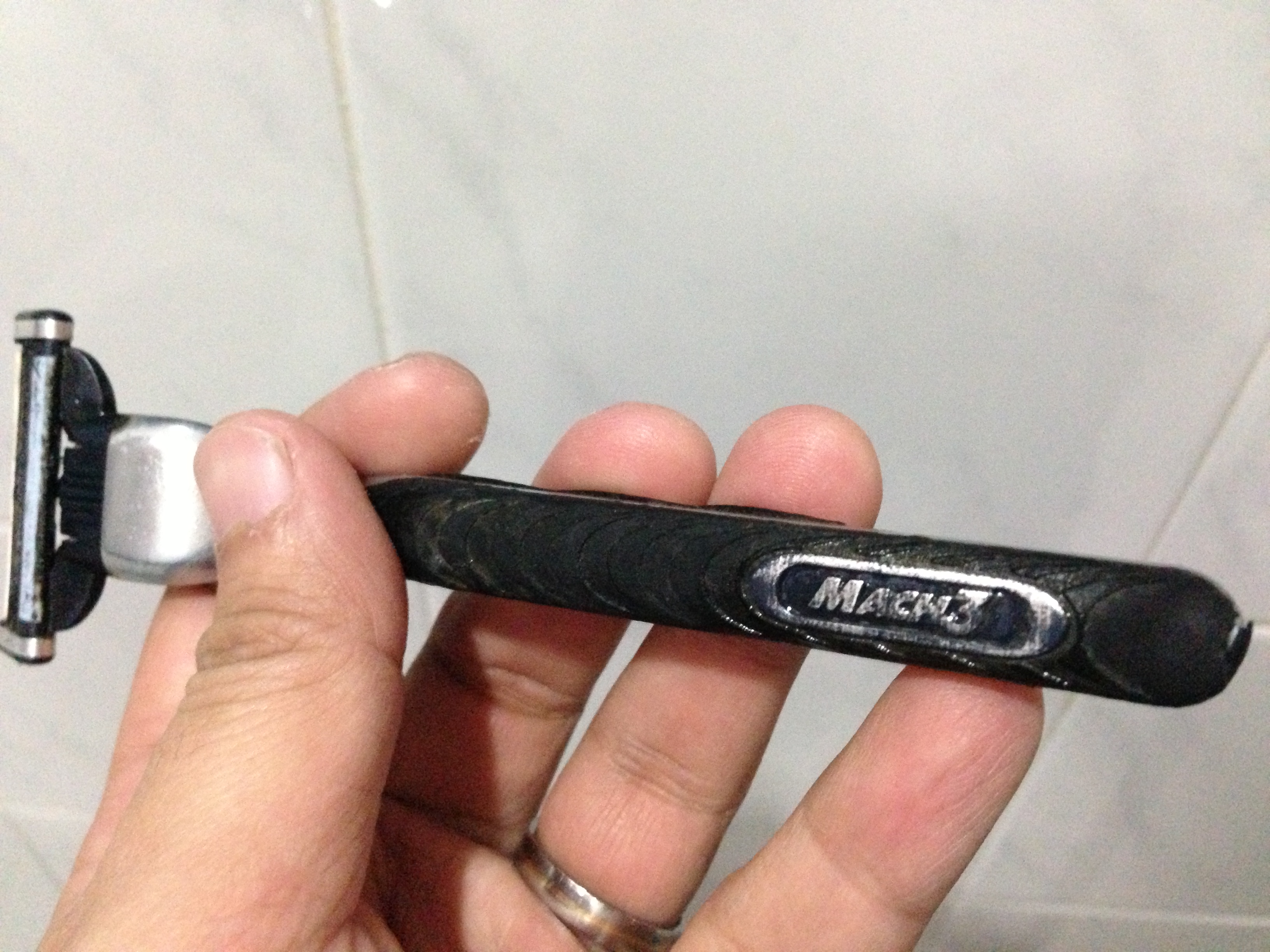
Yep, this baby's 15 years old
Yep, this baby’s 15 years old

I was shaving my head this morning in the shower with my trusty Mach 3. I thought the blades needed changing. I made a mental note to myself to buy a fresh pack of blades – the woefully overpriced ones at the grocery counter.

I had been buying these blades for FIFTEEN years already – I had been paying Gillette a small fortune.

Funny, because I had never wanted these high-end blades in the first place – I won this Mach 3 way back in the 1998 Christmas party in my first corporate job.

Once I got the Mach 3, somehow I just made a habit of buying the blades.

I represent recurring revenue for Gillette. They must love me.

If your startup idea can operate with a recurring, “evergreen” business model, SERIOUSLY look into trying to adopt it.

I remember lucking into this business model when we started STORM in 2005. We wanted to sell a flexible benefits system to the market. We were looking at possible business models out there. A popular one was simply selling the software. We ask the client for a huge sum of money, in return, we would develop a customized solution for them and support it for 2-3 years. We loved the idea because it gave us immediate, usable cash.

Of course, no company would be insane enough to give a startup a huge sum of money – its just too much risk. So instead, we opted for a monthly “software as service” fee. With a lower barrier, we were soon able to land our first few clients.

Then, aside from the technology monthly lease,we built even more benefits services around it – also paid per month. If your company wanted, we could use our system to service your employees directly – less hassle for you.

It became a platform.

This “evergreen” strategy has a whole lot of advantages, namely:

1) Less dependence on day-to-day sales

Do you know how nerve-wracking it is for a startup founder to sell products day after day so he could pay the bills?

In this scenario, you just need to sell to a consumer ONCE. Then, it boils down to delivery. If you take care of your business, you can expect this consumer to consume repeatedly. The caveat? Your delivery team or your product has to be kickass.

2) “Forecastability”

(Is there really such a word?)

When we landed clients in STORM, we would know EXACTLY what the monthly revenue would be. 60K a month for this client. 84K for this client. Month after month after month.

This revenue pattern made planning so much easier for us as we grew. Can we afford to hire another employee? Will we have enough to pay 13th month?  We would know definitive answers to these questions. This makes a whale of a difference versus businesses which essentially, makes guesses future sales figures.

The whole challenge of startups lies in the uncertainty of it all. Any item which adds even a smudgeon of forecastability goes a long way.

3) You are forced to be always on your heels

Our clients would pay us every month – with the usual contract provisions that if they are not satisfied with the service, we would get docked on the monthly. Guess what effect this had on our operations?

We were forced to look at the way we did things and ALWAYS improve on them. We would put supreme importance on customer servicing. We would make sure bugs would get stamped out ASAP.

Or else we wouldn’t get paid next month.

That’s tremendous motivation to always deliver what the client expects and more.

4) Smaller bites > One big bite

As I mentioned earlier, its MUCH EASIER to ask a client to pay several bite-sized payments than one big, one-time purchase. This is especially true if you’re a startup. So don’t be afraid to lower your pricing significantly – you’re after the the longterm payoff.

Another advantage with smaller bites? You create a habit. This is extremely strategic.

Does your current business model employ elements of the Mach 3 strategy? If it doesn’t, these advantages are more than enough reason to seriously consider an overhaul.

Are you setting up a consulting firm? Perhaps you could come up with a related monthly service you can offer to outsource on a monthly basis.

Putting up a local bakeshop? Perhaps you can arrange to deliver your freshly baked pan de sal every morning to nearby homes at a significantly cheaper rate.

Tech firm? Perhaps you could build a platform  on which you can deliver repeat products/services on.

Design studio? Perhaps you can find clients in industries who need to have things designed on a consistent basis (not the usual one-time website creation for say, startups). Lower your prices and go for long term contracts with monthly or weekly deliverables/payments. Just off the top of my head, you can try publishing (online or print), HR (monthly newsletters to employees), and maybe events.

Who knows, with the right model, you can develop a customer like me – a lifetime consumer. (well, fifteen years and counting)

smooth sheen like could only be accomplished by a Mach 3!
smooth sheen like this could only be accomplished by a Mach 3!

Think Bigger. Much Bigger.

Whatever you’re thinking, think bigger. – Tony Hsieh, Zappos CEO

When thinking of or developing your startup idea, the overwhelming advice now is to “get out of the building” and do honest-to-goodness research with potential customers.

Intuitively, you’d think that what should happen is that your idea would narrow down, right? This was what I thought: that as the “big idea” comes into contact with research and reality, you’d have to scale your plans down and “get real.”

What I’m finding out though, is the reverse.

Think Facebook. When Zuckerberg originally thought of “TheFacebook”, he was targeting only universities and campuses. As he developed his startup, he began to realize something: this could be bigger. Much bigger.

So he then went for it.

When we started STORM in 2005, I thought:

This could be a nice sideline business for me. 

Then as we developed our startup, did more research, and talked to our customers, we realized one thing: this could be bigger. Much bigger.

There are SUCH great opportunities out there. Getting out of the building will make you say things like:

No one’s done this yet?

or

This is the only thing in the market right now?

or

I could do a MUCH better job than this!

The funny thing I’m realizing is that my mind was wired to think in a narrow fashion. Perhaps this is the mindset that corporate life gave me: silos, rules, limited scopes. Stepping out into the world, I brought with me the same frameworks and limitations. We all need to trash these and dream big. Dream bigger. 

Could your idea work for ANOTHER industry? Instead of competing, why not go for a blue ocean? (create a market) Instead of a “safe” sideline why not innovate? Instead of being a player, why not be the best? Instead of local, why not go global? Instead of introducing, why don’t you consider disrupting?

Reach for the stars. Who knows, you might get the moon in the process.

Emulate Tony Stark: Intuit The Future

When Pao and I started STORM, we thought of a product which people WILL be buying – an online flexible benefits service for companies. There was nothing like it in the market yet. We decided to pursue a FUTURE need, as opposed to coming up with something we knew people were ALREADY buying.

In 2005, we launched our product with a hotel seminar which exhausted the little capital we had. It was a fully-booked (free) event, which made us think, “We’re going to kill it!”

Uhm. Not really.

When we talked to everyone after, NO ONE wanted to buy our product – largely because people didn’t understand it, and no one was using it. Wet behind the ears, we concluded that we still needed to educate the market sufficiently before we could sell.

(where were you and your book in 2005, Eric Ries?)

Actually, that could have been it for our fledgling company, but we really believed in our idea. Stubbornly, we said we’d still develop our flexible benefits idea and sell the concept. (this sounds a bit heroic when I write it – don’t get that idea, we actually just didn’t know what we were doing half the time)

We had a big problem though: monthly overhead. We only had enough cash for one more month of overhead.

So we got creative.

I feverishly called around 20-30 HR people I knew at that time and asked them repeatedly, “What do you need? What do you need now? What would you buy now?”

(It was the type of market research I SHOULD have done in the first place)

From the data, one trend I saw was a need for an employee satisfaction survey.

Problem was, we didn’t have any manpower to do this. Pao and I then wracked our brains in a small cafe in the Renaissance parking lot along Meralco Avenue. We decided that Pao needed to come up with an online survey system which we can use to scale processes for a new service. We called the system Websurv.

Astonishingly, Pao, finished the system in a month.

Our Websurv-powered Satisfaction Survey service kept us afloat from 2005 up to 2008. Around 80% of our revenue would come from that business line, with the other 20% from our very few clients in flexible benefits.

Starting 2008 however, the trend would begin reversing itself. We would encounter more and more competition in the survey industry, and it was getting tiring and a drain on resources to sell. Meanwhile, we were getting more and more clients for our flexible benefits line – without doing any marketing to speak of. We were relying (up to now) almost purely on word-of-mouth.

As I type this, we have altogether DROPPED the survey service (and all our other business lines), opting instead to go all-in with our initial bet for the future, which was flexible benefits. We are now the current local market leader in flexible benefits, and we’re really really excited with how everything has been developing for us.

Lessons Learned: 

1) Targeting a known market means going to war

If you KNOW people will buy your product, it means YOU ARE SEEING that they are currently buying from someone else. This “safer” choice is difficult, because it will necessitate going into immediate war with current competition. This might not be so palatable for startups – which often have a limited budget.

It’s like deciding to dive into a densely populated pond as a fingerling. You’ll have a very small chance of getting to be the big fish, plus you’ll always be in danger of getting commoditized.

2) To make it big, you have to be a FUTURIST

You have to have the Tony-Stark ability to intuit the future if you want to make it big as a startup.

If we decided in 2005 to be an Employee Survey company, then chances are, we’d now be one of the many players doing this. (and with Survey Monkey and Mail Chimp being offered free, we’d be deathly afraid now) We’d be a small, or at best, a mid-sized fish in the pond. Betting on something we thought people WOULD buy made it easier for us to be a bigger fish in the pond.

It was also a bit easier for us to market: there was less competition, and we could concentrate on building our product and customer base.

The caveat is clear though: you have to build something people will buy. Much easier said than done.

3) You might need your own Websurv first though

Yes, you can bet on the future, but you also would need to account for present concerns, like you know, food and stuff.   One way you can do this is to diversify your product portfolio with products which YOU KNOW people will buy now, while working on the killer FUTURE NEED idea in the background.

This is one advantage of funding versus bootstrapping. If sufficiently funded, you CAN pour all onto your future bet.

While we have closed our Websurv line, I am mightily grateful towards it because that was what kept us afloat during a crucial time.


Delivering Happiness Delivers Big-time! (A book review)

After finishing a good book, I typically lie back, savor the moment, and say to myself, “that was a good book.” Then I try to think of ways of applying what I learned in different aspects of my life.

In the middle of finishing Tony Hsieh’s (pronounced “shay”) super cool book, Delivering Happiness, I HAD to talk about it to my team immediately. This book makes you want to jump out and change the way you do things. This is a great book.

Structurally, the book talks about 2 main things in sequence:

a) Tony Hsieh’s personal entrepreneurial journey (he started out wanting to be the King of the Worms)

b) The rise of Zappos (an amazing story)

But the neat thing is, he makes the book into something of a reference/how-to by providing quick lists and ordered suggestions.

The result is something unique: the book tells an engrossing story while providing practical tips in a very informal, accesible manner.

Culture Matters

This was the overwhelming lesson which was tatooed in my mind as I was reading. Zappos made customer service their number one, put-our-money-where-our-mouths-are priority. The Zappos brand is now synonymous with customer service – which is the main reason for their success. The internet is riddled with people telling stories on how Zappos made their day with jaw-dropping customer service. (just google)  After all, the goal of their every employee is to wow every customer and to “deliver happiness.”

The result? One billion dollar sales on just their 10th year of operations.

Every company would love to have this sort of customer service quality right? (well, maybe not)

Hsieh talks very transparently on how they achieved this: by focusing relentlessly on something a lot of firms ignore – culture.

“We may have 1200 to 1500 brand relationships and a good head start against the competition, but that can be copied. Our websites, policies – all can be copied, but not our special culture.”

Zappos’s competitive advantage is clearly their culture. Pause and consider this for just a minute, to help you realize how awesome it is.

Zappos has ten values which they passionately build their culture around:

Zappos 10 core values (p154)

  1. Deliver WOW through service
  2. Embrace and drive change
  3. Create fun and a little weirdness
  4. Be adventurous, creative, and open-minded
  5. Pursue growth and learning
  6. Build open and honest relationship with communication
  7. Build a positive team and family spirit
  8. Do more with less (see more in further reading)
  9. Be passionate and determined
  10. Be humble

They are extremely passionate about these 10 things, and make key decisions and structures around them.  Hsieh talks about rejecting highly talented individuals whom they knew would help the company out immediately, but rejected them because they didn’t fit the culture pillars above. That’s thinking long-term. That’s making sure the culture is protected.

Another amazing thing about recruitment? At the end of the recruitment process, once you pass everything, you’ll be offered $2000 if you decline the job. Yep, you read that right. To filter people who are only in it for the money, they offer a you $2000 to reject their offer. That’s literally putting money where your mouth is.

Throughout the book, Hsieh wows with dry wit, humility, honestly, and self-awareness.

Paradigm Shift

Part of the reason why this book resonated with me is my Human Resources background. Back in the day, I was the flag bearer for “Vision,” “Mission,” and “company values.”

Jumping into startups, I slowly felt that it mostly a crock of BS. Here’s the evidence. I felt it was how corporations “herded” their employees into docile sheep.

This book has singlehandedly shifted my paradigm, marrying my HR sensibilities with my entrepreneurial ones.

Vision and Values can be more than a plaque on the wall. Done right, it’s downright transformative.

Read this book now! (startup founders, HR people, customer service people – I can’t say enough how important this book is)

Culture. Matters.

Scaling Your Caring: How You Can and Why You Need to

A few weeks ago, my wife posted “what’s a good ramen place?” on her Facebook account. We love ramen and wanted to find out if anything new was out there.

She was besieged with a score of answers. She got the usual suspects – like Ramen Bar and Ajisen Ramen.  Then we noticed an answer which was met with near-universal approval from her friends – Tamagoya Noodle House. Apparently, it was a small, obscure ramen place in Antipolo which gets crowded fast.

Best value-for-money ramen experience ever!

(How can we say no to that?! Resistance = futile)

And you know what? We went and just loved it. We’re now frequent customers.

More than ever, we have been consulting Google less and less and our friends on our social networks more and more. We are now doing social searches. Social media has transformed everything. Armed with networked mobile phones with high resolution cameras, experiences can be shared automatically and spread out like wildfire across multiple social networks. (this is a large reason why being an entrep now is so enticing – we do a good job and people spread it around)

I can attest to this in a very personal way. STORM has never had a marketing executive. How do we get leads? Word of mouth. These last two years have been record-breaking for STORM. Why? Social media-powered word of mouth.

On the other end of the spectrum, most brands are now on the social networks as well. Did you just have a sucky customer service experience? You can now post them on brand pages and broadcast it to the world. You can write an open letter to the President and post on Facebook. If it was an especially nasty experience, it WILL get spread and force a company to react.

The power has come back all the way to the consumer. Every person is now a powerful voice.

In this 2.0 era, there is now NO CHOICE but to treat every customer like royalty. We have no choice but to deliver truly authentic customer experiences. We cannot put parrots on our customer service teams anymore. We have to deliver on every promise and empower frontliners to truly HELP, not merely to placate. Just check this out for an example of how NOT to do things. How to properly do things? Check Zappos out. They are amazing.

I have a million customers! How can I help every single one?

Social media plus hustling. Answer every inquiry like a human being. You know, when I think of it, when I call to complain about a service, I usually just want to be heard and have the assurance someone is actively helping me out. What I hate most? Scripts.

(Oh, and if you have a million customers you can afford to hire a good team to take care of customer service.)

If we make mistakes, we have to live with the fact that they will be public – but we can show the world we can rise to the challenge of getting better (and the world WILL love you for it – they can relate).

Guess what? This forces us to be better firms. Forces us to create better products and services. Forces us to step up.

Big Brother is there not merely for the Carabuenas of this world, but customer experiences as well.

But defending our brand is just the tip of the iceberg!

Stop for a second and imagine…you can talk directly to ALL your customers!

That is an amazing thought. Think of the dialogue you could create. Brand loyalty. Are you the CEO of a startup? Think of what your consumers would feel like if you made friends with some of them over social media. Think of the free market research you can do. Think of the cross product marketing you can achieve.

It’s a brave new world just dripping with opportunity.

Don’t Put Parrots In Customer Service

A few weeks ago, I was in the hospital passionately arguing with an HMO officer who was insistent on applying a policy which was so evidently not applicable to my own particular case.

“If we implement this policy, instead of the insurance paying for my fees, I would be paying YOU – it doesn’t make any sense.”

“Ganoon ho talaga.”

WHAT?! I was furious. But I understood what was happening. The person on the other line was trained to placate customers and explain policy, but no true power to interpret or be flexible.

This is inherently why customer service sucks in so many companies – most customer service personnel are simply given a script and if-then scenarios. Invariably, there WILL be cases which won’t fall under any of the planned scenarios – a lot of them. So what happens?

“Ganoon ho talaga.”

“I’m extremely sorry sir, but that’s policy.”

“Let me work on this sir, I’ll put you on hold.” (I’ve had a service put me on hold before for an hour)

A friend of mine told me before that the root cause of this was structural – the product management group is oftentimes separated from the group which does customer service. It gets worse in this outsourcing age – the customer service group can be in an entirely separate company. Structurally, customer service would NOT have easy access to information, nor would they be in a position to make any calls about how to interpret a policy for a specific customer incident.

The problem is, customer service IS a part of the product.

This is why I love Citibank Phone Bankers – I can feel a real difference with how empowered and well-trained they are. In my years phone banking with Citibank, I’ve yet to have a problem they couldn’t solve by themselves in a span of a few minutes, or give me a number where I can talk to a person who can solve my problem. I also know they are paid well and are taken cared of – it’s tough to pirate them. Good job Citibank, you’re putting your money where your mouth is.

Any business that has customers will automatically have to think about customer service. How is your business treating its customers? Do the people who manage customers directly have the power to solve unforeseen customer issues? Or are they parrots with a script?

(Subscribe now to Juan Great Leap and never miss a post!)