Every start of the year, our corporate bosses talk to us and we are given our “annual targets.” These are quantitative or qualitative goals which we are instructed to focus all our attention on.
It could be something like:
P12 million quota for someone in sales,
Reducing costs by 20% for an operations guy,
Improve the satisfaction index by 5% for an HR guy, or perhaps
Increase total calls serviced by 15% for a BPO team leader
The side effect of this process? If we are not careful, these goals become our personal goals for the year. To illustrate, when you ask the guy in sales what his career goal is for this year, he will most likely say, “P12 million.”
This is dangerous.
Soon, with our head down working, 3-4 years of this can seem to zip by in a flash. Then we are left wondering:
OK, so what have I accomplished?
The seeds of quarter-life crisis.
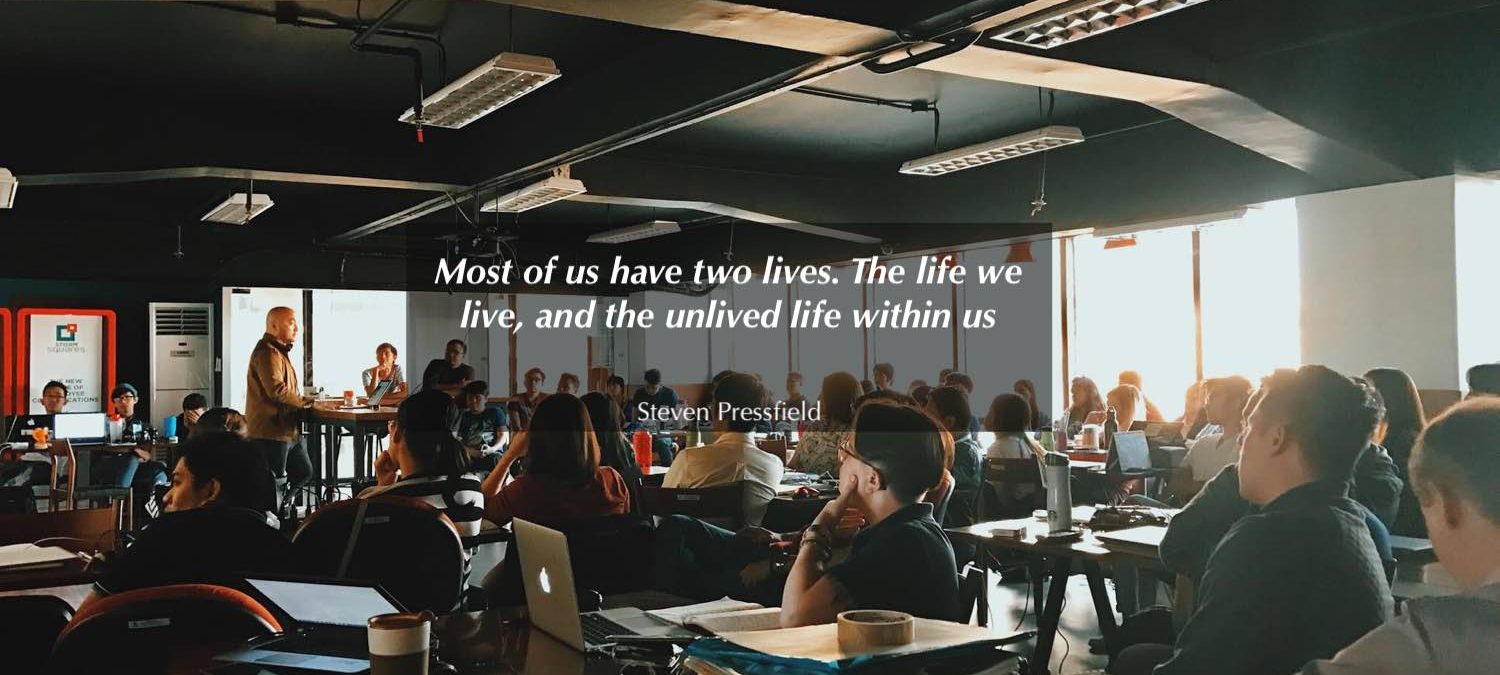
After we graduate, when we go out into the world and start our careers, we often forget about who we really are, don’t we? We almost unconsciously put aside our own dreams and ambitions, and enter the corporate rat race. Our goals become the corporation’s goals. This is further drilled into our heads by annual targets.
The HR guys in Career Management will forever preach (I should know):
Company goals should align with your personal goals. Tell us what your personal goals are so we can help you manage what will surely be a long and satisfying career here.
Uhm, yeah – but only if your goals can exist within the company’s narrow field of vision. Try to see what happens when you tell them this:
I want to be my own boss, have freedom with my time, and work on an idea which involves movies.
Taking our cue from the corporations themselves, shouldn’t WE think about alignment?
We should ensure that our annual goals are very much aligned to our dreams.
Is it your dream to create a startup? To pursue a freelance consulting career? To be a restauranteur? To create a satisfying career doing what you love but at the same time affording you more time to spend with your kids?
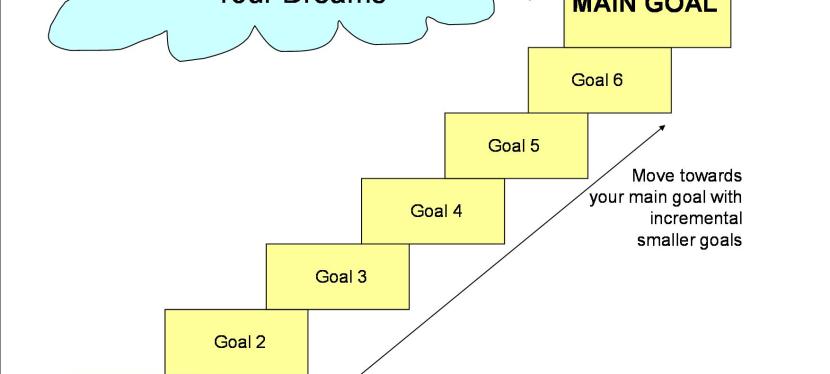
What can you do this year which can help you inch your way to your dream?
Limited to 100 slots. Food and drinks shall be served in the venue.
——————————————————————————-
Here. We. Go!!!
As I promised a few days ago, I cancelled the last Juan Great Meet to make way for a bigger event.
The Ayala Foundation- TBI (Technology Business Incubator) is sponsoring the next Juan Great Meet (not naming it MEET first so its more accessible to a wider audience)
The event is designed to let the participants learn and understand what exactly it takes to build a successful startup from idea to product delivery and development. We’ll be learning from four different entrepreneurs.
I’ll be hosting the event and will be delivering the keynote address (What it takes to achieve startup success). Then we’ve invited 3 successful entrepreneurs to share with us how exactly they’ve taken their ideas and transformed them into profitable and meaningful ventures. We’ll be asking them to share real experiences and practical tips we can all use.
Here they are below:
Howard Go: Mobile Game Developer, Co-founder of Mochibits
Glenn Santos: Writer, Serial entrepreneur, Founder of Memokitchen
Dr. Denton Chua: Medical and tech entrepreneur, CEO/President of Health Cube
(I’ll be posting a more detailed account of their backgrounds soon)
Then, I’ll be facilitating a panel discussion / Q&A with our three guests. Exciting stuff!
We’ll be ending the night with networking and drinks.
Last week, a friend of mine was about to take the leap. She had a consulting concept in mind and had a client ready. Being someone with integrity, she decided to ask her boss if there was anything at all that would be construed as unethical if she put up the practice she had in mind. She didn’t think it was going to be a problem, but she just wanted to be sure. She also trusted her boss and valued his opinion.
The boss shot the idea down. It WAS unethical, he said.
Huh?!
Tell me, is there something unethical when a marketing manager from an FMCG firm wishes to put up a consulting firm whose first potential client was a small firm engaged in construction?
I know a handful of FMCG marketing people who have put up their own consulting firms. None were sued. In fact, almost all these new firms were contracted by the very firms their founders resigned from.
So what gives ?!
Perhaps the boss thought:
“Uh-oh. If she leaves, I’m going to have to do more work, I’ve got to find a replacement, and it also hurts my reputation. Easy call here.”
Next story.
Another friend, this time from a large IT firm, had been in his firm for good number of years already. One very common occurrence was having lunch out with a set of friends in the office. He admitted that they would always have a good time – mostly bashing his current employers and trying to out-do one another with boss horror stories.
During one lunch session, he told his friends about a recent decision he’d made: he was going to take a pay cut to join a startup.
To my friend’s utter surprise, there wasn’t universal support!
“Of course, mostly everyone congratulated me at first, but you can see from their expressions and body language that some thought differently. Then later it came out:”
Iiwan mo na kami dito!” (So, now you are leaving us behind)
My friend was puzzled because he thought he’d get all-out support, after all, they were his friends.
Perhaps not. Perhaps the basis of their friendship had been the bonds they formed hating on their current jobs, so once that was gone…
Or perhaps it’s simply people being crabs.
I guess that’s one more advantage of doing bold leaps – you get to see who your real friends are. Real friends believe in you, and WILL support any endeavor of yours that involves pursuing your heart’s desires.
Find them and distance yourself from the selfish soul-suckers above.
In my first job, I was a high school english teacher. I loved what I did, but I earned minimum wage. That was my first year out of college, so naturally, I went out a lot with my friends – who were all mostly working in corporations. Every month-end, I had around P20 in my account.
A year later, I entered the corporate world. They more than doubled my salary, just like that! (even if I actually I thought I did a bit more work in school – where you are ruled by the bell and lesson plan submissions)
I bought a lot of things with my newfound extra cash, went out 1-2x a week with my friends, and gave nice Christmas gifts to my friends. This was also the year when Starbucks just opened in Manila. And oh boy, did I love my coffee.
My friends, this is what is so seductive about salaries. What it buys for us is a lifestyle. A lifestyle we weren’t used to when we were in school. All of a sudden, our purchasing power increases exponentially, and with that, our tastes somehow develop exponentially as well.
Baon and cheap cafeteria food for lunch will suddenly not be good enough. After some annual salary increases, Jollibee and “food courts” will not be good enough. Soon, we find ourselves spending huge sums of money on restaurants.
Eventually, eating out and nice Christmas gifts for friends become carsand condos. Worse, we buy them before we earn them – mostly through “great plans” our employers provide us, or these loans the banks ram down our throats (with all their ads selling the lifestyle, if you notice).
It isn’t any secret – all these great perks, your annually-augmented salary, and other benefits are designed precisely to keep you.
In just 2 years, you will be entitled to become a Manager, and then you will receive all these other perks and more importantly, a different pay grade! Then, you just wait a bit more, and then it’s VP time!
Don’t you notice that a better, flashier lifestyle is immediately dangled before us even if we just entered a new one? Here is your career. Here is what you’ll be receiving at every step.
In our pursuit of a better lifestyle though, aren’t we sacrificing a better life?
What about doing what we love? What about following our dreams? What about getting paid for something you’d do for free?
Oh, you can worry about that later in life. Much later. Look, here’s an 8% salary increase! Get yourself that new Retina Macbook!
Life or lifestyle? Frustratingly, it seems that to start pursuing one means denying yourself of the other. After awhile though, the differences surface. The more you choose lifestyle, the further your dreams can become. Witness the great number of corporate lifers who experience periodic existential angst.
But the longer your choose to pursue your dream? The likelier you end up with the lifestyle you thought you sacrificed anyway.
Uhm…no offense dodo, but you even looked the part!
Unfortunately for the species, the dodo remains synonymous for concepts or objects which have become obsolete due to failure to evolve.
When I graduated in 1997, the following industries were kings of the the roost. They are now dead or are shadows of their former selves – all in just 15 years.
Record Stores – remember shops like Odyssey and Music One?
Today, everything in this room can fit in the phone in my pocket
Newspapers – My dad used to get 3 newspapers for the house daily. And that Sunday Manila Bulletin edition was thicker than the Bible. Now? My dad goes online for his news. Manila Bulletin is now as thick as a comic book.
Video and Game Rentals – ACA Video anyone?
Landlines – I’m not really sure why we got a landline for our house. I think it was because of the bundled package with the internet. It NEVER rings anymore.
Point and Shoot Cameras (not SLR’s) – the lining was on the wall when the smartphone camera specs started getting better and better. Then the iPhone 4-S came out and was essentially the straw which broke the camel’s back.
Photo Developing Shops – These shops seemed to be in every other commercial block at one point. Now you hardly see one.
Encyclopedias – Remember Collier’s, World Book, and Britannica?
These are some of the industries which I think would be in quick decline from hereon:
The PC – Have you seen how cheap laptops now are? It’s also worth noting that the Macs, while still selling well, are now Apple’s lowest-selling machines next to phones and tablets.
Book Publishing – Did you know you can now self-publish in Amazon? (and according to a lot of authors, make MORE money)
Brick and Mortar Bookstores – I used to think, “There would always be a need for a book! It’s a different feeling to turn actual pages.” Then I got an iPad and was introduced to ebooks and Amazon online. From buying a book almost every month just 2 years ago, I haven’t bought a physical book ever since.
(What do you think is on the verge? Hit the comments!)
It’s not surprising that we see industries come and go. What is staggering to observe is the rate of human adoption – and therefore, disruption. How much time did it take for books to gain prominence? Hundreds of years. What about newspapers? Landlines? Record shops? Cameras? The PC? Decades.
Now? You can change the world (and make something obsolete) in months, or even weeks. Just visit the likes of techcrunch and mashable to find proof.
What does this mean?
No one’s job is safe.
Nowadays, it’s dangerous to become a one-trick pony. (Hello, cobol programmers) You have to be a lifelong learner.
Nowadays, you have to become an expert in becoming an expert. You have to do it fast, too.
Nowadays, you have to deal with the ambiguity that comes when technology disrupts markets every other week.
Flexibility, learning fast, and managing ambiguity?
Sounds awfully like what an entrepreneur does.
(Subscribe now to Juan Great Leap and never miss a post!)
In his delightful book, Outliers, Malcolm Gladwell states that for someone to be “great” at something, he should have spent at least 10,000 hours honing and perfecting this skill.
The famous 10,000-Hour Rule
He cites The Beatles and Bill Gates as examples.
The Beatles performed live in Hamburg, Germany over 1,200 times from 1960 to 1964, amassing more than 10,000 hours of playing time, therefore meeting the 10,000-Hour Rule. They used all that time to hone and perfect their music. According to Beatles biographer Philip Norman, by the time they got back to England from Germany, “they sounded like no one else. It was the making of them.”
Gates met the 10,000-Hour Rule when he gained access to a high school computer in 1968 at the age of 13, and spent 10,000 hours programming on it.
In Outliers, Gladwell interviews Gates, who says that unique access to a computer at a time when they were not commonplace helped him succeed. Without that access, Gladwell states that Gates would still be “a highly intelligent, driven, charming person and a successful professional,” but that he might not be worth US$50 billion.
Gladwell explains that reaching the 10,000-Hour Rule, which he considers the key to success in any field, is simply a matter of practicing a specific task that can be accomplished with 20 hours of work a week for 10 years. He also notes that he himself took exactly 10 years to meet the 10,000-Hour Rule, during his brief tenure at The American Spectator and his more recent job at Washington Post.
Now, let’s apply this to entrepreneurship.
Think about the great entrepreneurs you know. What do people like Henry Sy and John Gokongwei have in common? They began honing their entrepreneurial skills very early on – as teenagers! Imagine the skills they built early on – negotiating, sales, financial savvy, handling pressure (they didn’t eat if they didn’t earn) – all essential entrepreneurial skills. They got to 10,000 real early,cumulatively applying what they learned onto their new ventures.
Steve Jobs started as a teenager. Richard Branson started his first business, a magazine called Student, when he was 16. Investor extraordinaire Warren Buffet did odd jobs and “buy and sell” as a child. Buffet bought his first shares at the age of 11. Jollibee’s Tony Tan Caktiong spent his teenage years helping with the family’s restaurant business in Davao he built the ice cream parlors that would later morph into Jollibee.
I could go on and on.
Gladwell makes a lot of sense. The more experience you gain as an entrepreneur, the better at it you become. I remember telling people that if there was one thing I regretted in my entrepreneurial career – it was that I could’ve started sooner. (I started at 30) I would’ve made my mistakes earlier. I would’ve applied my learnings faster.
I would be a much better entrepreneur now had I started earlier – I have absolutely no doubt about that.
Time on the job is essential. Sorry, but whatever time you spend in corporate does NOT apply.
Last Friday morning, I was wheeled into an operating room. They strapped my arms in crucifix position. (yep, apparently they strap your arms). Then the doctors came in and introduced themselves to me.
They were about to perform laparoscopic cholecystectomy. I was having my gall bladder removed due to stones and a polyp.
“Hi, I’m Dr. _____ assisting me is Dr. _____. Your anesthesiologist is here, Dr. _____. In a few seconds, you will fall asleep, by which time we will proceed to cut you up” – yup, this is what basically happens 🙂
One doctor explained that she was now introducing the anesthesia through the IV, and that I would soon begin to feel drowsy. I instantly remembered this scene from one my favorite movies last year. A gas mask was then propped over my head. Then…
…
The next thing I knew, I woke up in a busy room full of people.
I was told I was in the recovery room and that I should get some rest.
When I was wheeled back to my room and I was bit more into it, I started noticing the differences:
There were four white bandages on my stomach. They were painful.
My throat was very dry and sore (I was told I was intubated).
I felt very weak and couldn’t move around much.
I couldn’t move my left arm at all! (Apparently, I belong to the small percentage of the populace who have a bad reaction to an intramuscular injection. My shoulder muscle became so swollen, I couldn’t lift my left arm)
It was really hard to get up from bed. (Try getting up using no abdominals and only one arm functioning)
All I wanted to do was rest.
I spent the next 3 days mostly in bed at the hospital.
Since I really couldn’t go online (too much trouble with one hand), 80+ channels became boring fast, and my sleeping patterns were destroyed, I did a lot of thinking, instead.
I always tell people that in the times I get really sick, I get to feel very human. Each episode got me reacquainted with my own mortality.
This experience was something more specific than that. It made me feel old.
I imagined that growing old was like that – when parts of my body would begin betraying me. The difference being, instead of my body recovering over time, it deteriorated over time. Slowly but surely, I would lose control over the only thing in the world I had complete control over. Worse, I would be keenly aware of the things I used to do, of what I’d lost.
What I felt after all this thought?
I just wanted to go back to work right away. I wanted to be productive right away.
It’s now Wednesday night, and I write this with still some pain in my wounds. I still cannot sleep on my side. My left arm is still limited. I still cannot get up from bed in less than 5 seconds. My arm and my stomach shoot pain waves to my brain when I carry my children. Worse, I can laugh, but not heartily. No one would blame me if I stayed home.
However, I insist on going to work tomorrow. I have dreams to fulfill, and I want to go out trying to fulfill them in my prime, at the height of my powers. Each day counts.
Being productive is easy to take for granted. The problem is, there is a finite window to productivity. We all grow old. We become less and less productive after an apex.
Don’t waste the most productive years of your life.
Think strategically. Won’t it be logical to build your dreams – presumably stuff that’s pretty hard to do – during your prime? During that point in your life when you have the most energy and will to take it on? Wouldn’t this ensure the highest probability that your dream happens?
“Always try to schedule a foreigner to do our recruitment talk. Mas may dating.”
I was given this instruction in my first year working in corporate. Of course, seeing how all the highest positions were occupied by foreigners – not only in our company, but in every other multinational – this was easy to accept as reality. They were always more educated, had better strategy, were more charming, smarter, had more business-savvy, just…better. I mean, why else would they need to fly in, right?
I put them on a pedestal. As a result, I was always more tongue-tied and nervous when dealing with them than my Filipino superiors.
Of course, my mind told me otherwise. After all, I studied and read about equality and all, right? It wasn’t what I was perceiving, though. People were just different around them. Things were different when you were praised – or castigated – by a foreigner. There was more laughter when they told jokes. People were just…deferential to them.
After forming my startup years ago, I’d still have my share of dealing with foreign bosses, through client meetings. I would see more of the same thing from our client companies. This time, as a third-party, it would be very clear how, again, people would treat foreign bosses differently, deferentially.
And, since perhaps old habits die hard, sometimes I would find myself tongue-tied, especially when negotiating with the more aggressive foreigners.
This was extremely frustrating for a former English teacher like myself who loved engaging people.
Then, something interesting happened.
My startup achieved profitability.
This was significant because all of sudden, I wasn’t a beggar at the negotiating table. All of a sudden, I wasn’t too desperate for accounts. Suddenly, I could walk away.
Although I didn’t know it yet at that time, this was huge.
For the very first time in my corporate life, I was now an equal on the table. For the first time, either as a corporate lifer or an entrepreneur, I could say: “You don’t like what I got? Not a problem!”
Shortly after, I remember negotiating with a foreign lady who was renowned for her toughness. When our meeting started, she lived up to her reputation.
She was cutting off my sentences.
Looking at me straight in the eye (something which I think isn’t inherent to us Filipinos, because we are taught to bow down).
Talking to me in a certain tone.
Almost ordering me to lower the rates.
I stood my ground. I explained the value of my service as best as I could, then I stood by my pricing. Somehow, I was able to do it both calmly, professionally, and never combatively. I was myself. No tongue tying or struggling with words.
In reassessing what happened on that fateful meeting, I had my epiphany. My heart finally realized what my mind and education had long accepted – that being Filipino does not and cannot mean second rate, even subconsciously. I don’t need to be deferential to ANYONE, save my God. The blinders came off.
I think there are a lot of us Filipinos who need for their hearts to experience this same epiphany, for us to fully realize our own giftedness and talent.
Don’t sell yourself short.
If you haven’t noticed, the world has become flat. In his landmark 2005 book, Thomas Friedman argues that due to technology and globalization, the playing field has become leveled. In other words, he’s saying that the next Google could very well come from the Philippines.
Technology has democratized innovation.
Nowadays, one man with one brilliant idea CAN make a difference. More and more, where that one man is standing is mattering less and less.
Of course, it is still easier to make a startup in Silicon Valley or Boulder, Colorado, or wherever. Fine. It’s going to be much harder creating the next Google here. But that’s where KEY difference lies: It was IMPOSSIBLE to even fathom that as recently as 10 years ago. Now, it’s merely much harder. There’s a Marianas Trench difference between impossible and “much harder.” Pretty soon, I believe circumstances and technology will necessitate a transition to merely “harder.”
Listen, I GUARANTEE that in the next 10 years you will see non-US firms sprouting and making huge global impacts. So, why can’t it come from here?
A key transformation in making this happen is mindset. We need to eliminate our deferential thinking.
Remember that world I was talking about, the one where people are deferential to the foreign boss?
Yep, that will STILL exists. This global outsourcing phenomenon will grow to new heights and all but guarantees an even more acute United Nations workforce here in our country. There will be more multinationals. More opportunities to do what so many people before you (like me) have done: to be subservient.
The key difference is that you don’t need to embrace that world if you don’t want to. You don’t need to join, or answer to a multinational. Heck, you don’t need to join a company. Take RJ and Arianne, for example. They decided to create an online Buy and Sell portal in their spare time. After a few years of hard work, their startup baby, Sulit.com.ph, is now THE Philippine buy and sell portal of choice. I just saw a TV commercial for Sulit a couple of minutes ago. Bravo.
My fellow Filipinos, take the blinders off. YOU can do something like this as well. NOW is simply the best time in history to do it. All you have to do is to take a leap…
Ah…
And herein lies the crux of the matter. This is the essence of what this blog wants to address. The hesitation.
I have been in recruitment for nearly fifteen years. In that span I have talked to thousands of people in the workforce. Talented ones. People much better than me. I keep saying that we Filipinos are renowned globally as being some of the best professionals in the world. I have seen that. I have met that. I know you have the potential to create globally relevant startups. I know it.
Look, I know how hard it is to resist that 6-figure salary. It feeds your family and your lifestyle. It’s an awfully nice title. You’ve dreamt about that salary figure for years now. Let me just tell you that you could do much, much more.
More, not only monetarily, but also for your inner passions.
More, not only for your career, but also for your legacy.
More, not only for your expectations, but also for your dreams.
More, not only for yourself, but also for this country:
This new, flat world? I tell you, we Filipinos are MADE for it. There is no need to defer to anyone else. We speak the global language better than most, we are inherent internet and mobile users – achieving some of the highest technology penetration rates in the world, we are savvy, smart, and are natural entrepreneurs. We are highly sociable, respectful, resilient, and have deep faith in God.
The only thing that’s missing now is faith in ourselves.
It’s high time to take our deferential blinders off and just believe.
Believe.
Let me end this with an 80’s commercial which made a mark on me when it was first shown. When I think of it, this just captures everything. Beautiful commercial. I recommend viewing it more than once – the first time you can look at the video and the english captions. Then, on the second time, close your eyes and let your rich tagalog language flood your imagination.
















 JUAN GREAT LEAP