There’s no reason why YOU can’t build the next Twitmusic!

Great news here for our burgeoning startup community!

Our country is widely regarded as a producer of some of the best professionals in the world. Certainly some of the most enterprising and innovative. Developing impactful startups should be second nature to us.

Twitmusic should be the tip of the iceberg – but it’s up to us.

C’mon people! I’m calling YOU out.

You with that brilliant idea that’s been cooking for a while now.

You with those marvelous execution skills which are wasted in the bowels of a 2000-man corporation.

You with that passion burning that’s been so afraid to get out of the comfort zone.

You.

STOP wasting time.

Start something.

(You don’t know exactly where to start? Send me an email at pcauton@yahoo.com, let’s have coffee…)

The RESISTANCE is real, and it aims to KILL.

Raise your hand if this sounds familiar:

1) A new idea dawns upon you, and you are exhilarated. You cannot stop thinking about your idea. You begin thinking of the steps you need to make to make your idea happen. You are on a high.

Then sometime after, something happens. A seed of doubt plants itself in your consciousness. Suddenly you see holes in your idea which you haven’t seen before, and you begin to realize how difficult it would be to fill them. You begin to realize you might not have time for all this. You begin to think of the huge scale of work you have to do to accomplish your idea. Soon, you conclude that your idea wasn’t so “hot” after all, and chalk it up to “momentary foolishness.”

2) You have a huge project you need to do that’s absolutely vital to your dreams, your fulfillment, or your passions. It could be finally writing that book, or pursuing that startup idea, or creating that app, or pursuing that killer project idea you’ve always wanted to do in your corporate job. So you set the stage. “When I get home, I will lock myself in my room, face my laptop, and start on my project at 7:30 pm sharp.” Then you start. Oddly, despite all your motivation, you CANNOT start. You do check your email. You check your Facebook page. Then everyone else’s. Twitter. Youtube. You take a bath first. You find yourself doing everything humanly possible EXCEPT that particular thing you WANT to do. Finally, it is 12:00 midnight and you are exhausted. So you say to yourself, tomorrow! And the cycle begins anew.

3) New Year comes and you have 2-3 resolutions which you want to do. Perhaps it’s losing weight. Controlling your temper. Quitting a vice. So you begin the year right. A mere two weeks pass and you succumb to the status quo…telling yourself it isn’t so bad in the first place, and that perhaps you’ll try to change again in a couple of months.

Familiar?

Isn’t it funny that most of the time, we KNOW what the next, crucial step in our lives would be – that one thing which we know would make a dramatic impact in our lives. We KNOW what to do.

Isn’t knowing half the battle already? It all then boils down to just doing it right?

As soon as we try though, we find that something opposes us. Self doubt. Fear. Procrastination. Distraction. Analysis paralysis. In his two landmark books, War of Art and his follow-up, Do the Work, author Steven Pressfield calles it The Resistance. He explains:

…there is a malignant presence that exists to block you. It rises up against you to stop you from doing what you most need to do. This force is the Resistance.

And, as Pressfield puts it:

The more important a call or action is to our soul’s evolution, the more Resistance we will feel toward pursuing it.

Can you recall a time when a great opportunity or idea came your way, and you find yourself ON THE ROAD TO TOTALLY BLOWING IT?

I remember getting the idea for STORM way back in the early 2000’s, but it was only in 2005 that I actually got around to looking for partners and telling them about my idea. I KNEW it was a good idea, and I KNEW I needed partners to pull it off, but it still took me years of dilly-dallying before I put my intention into action. I would start thinking it might be embarrassing to tell my friends about it. That my idea might not be worth anything.  Resistance.

Sometimes the task is so simple, like “send an email to this big potential client,” or “talk to this person about her performance” and yet I would find myself doing so many other things to put it off. Or sometimes I would tell myself to sleep earlier because I want to begin my day right by praying and going to the gym very early in the morning. Yet, I would find myself at nights reading unimportant stuff on the internet, watching TV, playing Skyrim, needlessly analyzing my fantasy basketball lineup, or even cleaning my room. And then waking up late.

Isn’t that crazy? When something is of crucial importance to you, there is really an inexplicable force which descends, sabotaging and paralyzing you. Resistance. Pressfield continues:

Resistance’s goal is not to wound or disable. Resistance aims to kill. Its target is the epicenter of our being: our genius, our soul, the unique and priceless gift we were put on earth to give and that no one else has but us. Resistance means business. When we fight it, we are in a war to the death.

For startup founders and would-be founders, this knowledge is absolutely crucial – because The Resistance has killed more startups than we can count. We read everywhere that the biggest stumbling block for startups isn’t financial, nor product related, nor strategy related. The biggest killer of startups is the failure to start. The biggest reason for this failure to start? The Resistance.

It doesn’t get any easier when you start, either. You will find the Resistance going at you full force. Complete freedom with time and effort makes the Resistance doubly dangerous for the startup founder as well. There is no supervisor, nor camera, nor company deadlines to tow you back in line.

It is your battle. And everything is at stake.

Amidst all the entrepreneurial and startup-related book I have read in recent years, Pressfield’s twin books have made such a remarkable impact on me. Just recognizing the existence of the Resistance, that there is such a thing – and it is what has been sabotaging my efforts – have made me more sensitive to the Resistance’s power in my life. As Pressfield writes, Resistance acts like a True North – when you feel it working, you already know where to go: the EXACT opposite of where it is trying to lead you.

Oh, I need to stop writing this blogpost to check on Facebook?

I continue writing this blogpost.

You’re saying I don’t need to call this client now because it might be a bad time to call her, just wait for tomorrow?

I call the client.

Just another 5 minutes of Skyrim, perhaps one more area to explore?

I close the console. (or more recently, I placed the dang thing where I can’t touch it)

Just do it.

This sort of thinking has actually led me to one of the most creative periods in my life. Ever so recently, I was wracked with doubt and fear and the Resistance about this blog, some of the startups we recently founded, or even doing Juan Great Meet. In all cases, I recognized the Resistance, harnessed my competitive nature and told myself “hindi ako magpapatalo.” (I will not be defeated)

(The interesting thing is, the more “practice” you have in resisting the Resistance, the better you get at doing it.)

Buckle up. Get ready. If you want to follow your dreams you’re going to have to fight for it.

You already know it’s worth it.

The Time Value of ACTION

The Time Value of Money:

Definition: money available at the present time is worth more than the same amount in the future.

So, simply put, we’d rather have money now than the same value in the future. The same thing holds true for action.  Let me posit an integrated theory then:

The Time Value of Action

Definition: action done NOW is worth more than the same action done in the future.

This blog is a testament to this sort of thinking. The original idea for this blog was that I had wanted to make a book chronicling and documenting the various things I was learning while running a startup. That thought started in the middle of 2011. I had created a table of contents already. I knew it would take a significant amount of time for me to finish the entire endeavor, as I had to go at it chapter by chapter. I was thinking I’d be done by 2013 with the pace I was doing.

Then I stopped and thought, why not do the same idea, but through a blog? This way, I could publish the chapters as I was writing them. So with a small investment, I put up this blog by late November of 2011 – and it has been such a huge blessing and gift for me. If I had waited for myself to finish all the chapters of my intended book, it probably would not have launched at all!

There is great value is action done now. The more time you allot to make a decision, the less the impact is.

Is there a decision you are deferring and deferring? Stop and just choose an option. Chances are, your decision to do it NOW makes it a better decision REGARDLESS of the option chosen.

 A good plan, violently executed now, is better than a perfect plan next week. – General George S. Patton

 (Is there someone whom you think would greatly benefit from the content of Juan Great Leap? Bless someone by sharing now!)

How 2 Powerful Words Can Help You Sidestep Fear

I remember years ago when I was congratulating my friend Jigger Galvez for the opening his BreadBag Pandesal store in Ortigas Home Depot. (which by the way, has awesome, original food – the roast beef pandesal is divine)

He said something which made quite an impact on me. He said “Try lang.” He was referring of course to the whole entrepreneurial endeavor.

Try lang.

The way he said it was almost apologetic, conveying a sense of – if it works, it works, if not, don’t blame me for trying. When you think about it, it’s a bit funny that he responded to my “Congratulations!” with a “Try lang.” But this attitude is totally understandable. We all have a fear of failure. So when we put something out there for the world to see, it’s a risk. Jigger put an original-themed restaurant smack in the middle of Ortigas. It’s only natural to feel a bit of trepidation. I can totally relate.

I remember when I finished my very first blogpost for Juan Great Leap. It took me around 2-3 days to finally publish it. I remember dilly-dallying about the design, and what widgets to put. But I was really dilly-dallying because of fear. Never in my life had I blogged before. What if no one visited the site? What would people think? Who am I to blog about startups? What if I run out of things to share? What if they think I’m a hack?

These are the times when telling myself TRY LANG is so powerful. TRY LANG demystifies the oftentimes large mental barriers we like to erect for ourselves, barriers that often paralyze us from doing even the smallest of actions. TRY LANG subtly puts our fear in its place – by the side.

Okay, I’m afraid of what people will think and if it will fail, but hey, I’m just trying here. 

You’d be surprised at what a little “trying” can do.

There are also times when we worry too much about THE FINISH, and we ask ourselves questions like: would I really have time for this on a day-to-day basis? Would this be profitable enough to get me to leave my day  job? Who would I hire as my GM? Would my company find itself in NASDAQ?

These are important questions, sure. But these questions might be too early, and could be debilitating if asked right at the start.

Just start. See what happens.

Try lang.

(Subscribe now to Juan Great Leap and never miss a post!)

VIDEO: Why You Will Fail To Have A Great Career

This a great companion piece to the last post, serendipitously sent to me by a friend (thanks Jan Castro).

Larry Smith hits it out the park with equal parts pathos, passion, and persuasion.

Watch it here.

Enjoy!

Are You a Victim of the Diminishing Dreams Syndrome?

When I was in high school, I dreamt of someday owning a huge firm.

Then I entered college.

When I was in college, only the ones with the highest grades were given the most recognition. So I figured, only they could one day “own a company.”

So, from thereon, I dreamt of becoming a high-ranking corporate employee – perhaps a C-whatever-O!

Then I joined a corporation.

I came in as an entry-level HR Officer. The more I learned about my field, the more I realized how incredibly difficult it is to overcome my chosen corporate function and make truly strategic decisions.

So, from thereon, I dreamt of becoming a “Head of HR” one day.

Moreover, I also saw that in corporations, the best managers were often given “car plans” or “company cars.” Of course, I wanted to be the best.

So, from thereon, I dreamt of getting my own car – a FORD ESCAPE if possible, because I thought it looked good.

More than once I thought. “Hey, I’m not really happy! I can’t wait for the week to end and the work is getting repetitive.” But then when I asked around, everyone else felt the same way.

So, from thereon, I thought, “That’s life.” And then I just forced myself to chug along, day after day after day after day after day.

Then, one day I was the Head of HR for an entire firm. My salary was higher, so naturally, I quickly got a loan to purchase a FORD ESCAPE (which I eventually loathed because it was such a gas-guzzler) The monthly loan payments were debilitating, and in truth I could have used the money for more important stuff. But hey, who cares?  I had my car, right?!!!

Then, after some time, I got a bit confused. Wait, so what was left to dream of? I dared not dream of being a CXO. Owning a firm was even more laughable.

So, I instead “dreamt” of just getting higher pay, year after year. Maybe get a job outside the country to earn higher currency. That’s it. I figured, nothing wrong with that right? Everyone I talked to dreamt of the same thing, and talked about the same thing.

In around a decade’s time, society and corporate life had subtly diminished my dreams from “owning a firm” into “receiving a higher salary increase next year” and “owning an Escape.” At one point, these two were my professional dreams. DREAMS. Egad.

My friends, our dreams should be saved for bigger, much more meaningful things. God placed us on this earth for far greater things than a nice car and nice pay. Our dreams fuel our hopes, which in turn, fuel our souls. We should take great care of our dreams. 

Buy hey, you know, my dreams include the really big things, like having a family and travelling to Europe and stuff, they don’t involve work. Work is just work.

Stop thinking this way. Work is such an important part of our lives. It is where MOST of our waking hours are spent. A person who feels broken about “just work” is simply just a broken person. I was.

What, so inspiration, meaning, and feeling great are just reserved for the weekends?

When I took stock of where I was, and I made a conscious decision to follow my younger, more childlike dreams, I noticed something very different.

My dreams grew.

My initial dream was to “just earn enough to get out of corporate.” And I did (with a great leap). Then I figured we could “grow this baby” into an industry leader. We did. Then I figured I could use the experience to create more startups. I did. Then I figured I could use everything I learned to help people create more startups. This is my passion dream now, and it excites and burns within me furiously. I would do this for free. And when I think of it, I think it’s an aspiration worth being called a dream.

Are your dreams getting less and less worthy of being called a “dream?” Are you a victim of the Diminishing Dreams Syndrome? If you are, then this recognition alone can prove to be a monumental asset. Get out of this downward spiral, fast.

It might be good to take a long leave. But don’t go to Boracay with your friends first. Retreat. It might be tough to see the forest from the trees, so take a step back first. Take stock of who you are and what is meaningful to you. Pray. Consider. Be open.

Then ask yourself this question: what do you REALLY want to do?

(Never miss a post! Get this Juan Great Leap content directly through your email by subscribing!)

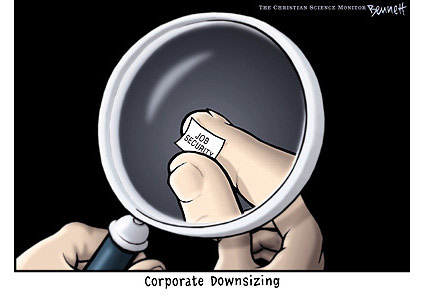
Insecurity Blanket: No, Your Job Isn’t Safe

As an “HR” guy, I frequently get my share of resumes of people who want to get “placed.” A good number of these are people who want to explore other options because they’ve grown tired of the their current company. A smaller number of these would be from people who were PUSHED OUT of their jobs because of “rightsizing,” “downsizing,” or “declared redundant.” The very interesting trend is that the last 2 years, I’ve been getting more and more resumes from GOOD people who were pushed out of their jobs – highly productive and skilled people who perform well. I even get resumes BY THE BATCH from HR friends in the industry who need help in facilitating successful placements for people they’ve downsized.

The game has changed.

I remember a not-so-distant time when corporations offered “employment for life,” and getting hired by the bigger firms resulted in you not worrying about money anymore – your house, your car, your medical expenses, and your retirement would all be accounted for by the Corporation.

If it isn’t too obvious, those days are long gone.

If you worked in the newspaper industry or the recording industry a few years ago – your industry specific skills are now all but obsolete.

Nokia, which ruled the cellular hardware industry just a few scant years ago, has just laid of 3500 workers and is closing down a main plant in Romania. Erstwhile powerhouse Kodak declared bankruptcy a few weeks ago.

Of course, you know what happened to the pension plans of a multitude of US citizens during the recent economic downturn.

Mergers and acquisitions, which occur so frequently now, also result in mass job cutting.

No, your job isn’t safe at all. If there’s one thing that’s NOT going to change I think it’s this new reality – the old days are not coming back.

Two major points here.

One, like a lot of people recording industry, you can kick and scream all you want and go sour grapes over this new reality, or you can see things with this lens: that this reality offers a TON of new opportunity. Why can’t YOU create the next disruptive company? There’s no better time – technology has made innovation a commodity.

Two, “corporate security” hardly factors anymore as an excuse for taking that leap you’ve always wanted to take (perhaps its more attachment to lifestyle upon closer inspection). Think about it – as you grow older and start having children and deep accountabilities, do you REALLY want to rely on your current firm for security in this day and age?

In no other point in history has following your dreams become more practical. Go for it.

(Know someone who would appreciate the content of Juangreatleap? Be a blessing and share now!)

The 4 most common excuses for not taking the startup leap

Here they are, in no particular order:

EXCUSE NO. 1: PARANOIA

Sounds like: “Huge risk! The LIVES of my kids are at stake!”

Commentary: First, it’s never ever as bad as you imagine it would be. Too often we fall victim to our wild imagination. Moreover,  you can always mitigate risk, through research and early customer feedback. You can do this without quitting your day job. Small, calculated leaps. Then, you will inevitably come across a crossroad – the big leap. By then, if you did your homework, you should have a clearer idea of your cashflow and the projected (or even the actual) monetary risk. By then, you should have calculated how much you can really, really live by (you’d be surprised with this amount and what happens if you eliminate your “small” luxury expenses) By then, you should have saved, say, around 6 months of expenses in preparation. Also, by then, you should have contingencies. If let’s say the cash flow isn’t as healthy as you’d thought in month 2, perhaps you should be planning to take up part-time work to supplement your startup income. If it really doesn’t fly, you have a safety parachute for use at anytime – you could always go back to the corporate grind: most likely with slightly higher pay than your previous point. Moreover, if you go back, you will now be armed with a business experience no training course could ever duplicate.

The solution is merely to plan.

Among all the excuses, “too risky” is the lamest and is usually given as the cover for the other excuses. It’s the lamest because there is NO risk in taking the smaller steps. HOWEVER, people talk themselves into thinking it’s such a big risk that they don’t even bother to initiate even the smallest of steps.

Excuse no. 2: SELF-DOUBT

Sounds like: “ME?! Oh no, I am not an entrepreneur! I’m not built that way! I don’t have what it takes.”

Commentary: When we started STORM, I had no MBA, no cum laude standing, no cash endowment (but a lot of financial problems), no entrepreneur mentors, no entrepreneurial background. I even came from a job function (HR), which was described by two separate people to me as, “the function where the least amount of CEO’s come from.” (Gee, thanks.) Entrepreneurs and startup founders come in all shapes and sizes, personality types, family  backgrounds, education backgrounds, and experiences. There is no template.

They do have one thing in common: all of them overcame their insecurities and took leaps. You can, too.

Excuse no. 3: READINESS

Sounds like: “Not yet. I need to go through some things first before I take any leaps. Getting there though.”

Commentary: Much like getting married, there is never a “perfect time” to take the leap. You are never completely ready. There will always be something you will tell yourself “has to be right first.” You have to overcome this feeling.

If you want to develop a true-blue start-up, the situation becomes ironic.  A trailblazer hacks a path into the unknown. Readiness implies anticipation of the known.

You can never be truly “ready” for startup life. Startup life itself is the only thing that can prepare you for startup life. The sooner you leap, the sooner you learn, the sooner you garner relevant startup experience. The compromise? Join an existing startup.

Excuse no. 4: SOCIAL APPROVAL

Sounds like: “I am thinking of leaving my VP-Marketing post in ABCD Telecoms to put up a startup in… the flowers business?! Egad! What will other people think?! Heck, what am I thinking? Away, thoughts!”

Commentary: This I think is a subtly common excuse. We wear our corporate titles like badges sometimes, don’t we? It’s how we are often introduced, or even how we introduce ourselves.

“VP” “REGIONAL” “CXO” We love the ring of it, don’t we? This is to be expected, after all, work IS important to us, as well as the opinions of our peers.

So what would happen if we are stripped of our relation to the biggie firm, stripped of our corporate title?

Is our identity and self-worth really that much tied to these titles and company names? More importantly, will you let what people think ultimately bar you from pursuing your heart’s desire? (which actually allows you to pursue a more real self)

I hope not.

My own leap into fulltime entrepreneur wasn’t met with universal acceptance. After all, the safer bet was staying in my salaried job. But at that juncture, I had reached a point where I just didn’t care anymore. As long as my wife supported me, I was good. And she did.

I actually encountered ALL these excuses in my head when I was deliberating on my leap, and all throughout my startup life – even up to now. I encounter them in my interviews as well – consistently.

Realize one thing: most of it is ILLUSION.  It’s really all in your head.

Break through. Break free.

(Addendum: readers, if you have more common “excuses” to add, then please share! Thanks!)

The Destructive Power of “Not Yet”

Dangerous business

Around three years ago, I had a coffee talk with an entrepreneurial fellow named Randy (not his real name, rhymes though).

Randy was a mobile applications programmer working for a large telco. He was carefully explaining to me about his idea for a mobile application/mobile service which I thought was just super – first in the local market, clear user value proposition, clear monetization strategy, low investment costs.  I had a lot of questions, but he gave thoughtful answers – it was obvious he gave a lot of thought to his idea. Typically, I got really excited and told him he should start working on the code immediately. I reasoned he didn’t need to resign, but that he could work on the code and the interface after hours. I immediately offered him whatever help I could give – assembling a team, a table in our office, etc…

He smiled a bit and stopped me from rambling on. Then the all-too familiar words were uttered.

“Not yet.”

He explained he wanted to “polish” his idea further before we did anything concrete. I argued with him a bit, but he was resolute. I didn’t want to appear too excited and do a hard sell, so I just stopped and asked him what his timetable was.

“Maybe in a couple of months.”

I emailed him a couple of months after. I asked him about his timetable.

“A bit busy now with work. Maybe early next year.”

I didn’t push anymore.

Around year and a half after, I sent him an email. It featured a link to a local application. It was basically Randy’s idea. Only, it wasn’t him who made it happen.

He replied with something like, “Too bad. On to the next idea!”

Too bad? Too bad?! I’m not really sure if he didn’t feel any regret at all or it was a coping mechanism. I had no doubt in my mind that the experience he would have garnered would have been tremendous – best case: a successful startup, worst case: invaluable knowledge. Instead, he chose to throw it away without trying, another startup which died without even getting a chance to live.

This is why “not yets” are so dangerous. At least a “no” isn’t self-pretentious. A “no” isn’t about fooling ourselves.

A “not yet” is comfortably nestled between a yes and a no – it’s such an easy reply to give to any question which implies a commitment. And so it remains the most common barrier to startups.

But life will not wait. Competitors will not wait. The window will not wait.

(and if you are in corporate, the longer you wait, the more the system will make it harder to for you to take any leaps)

I remember an ex-officemate once told me about his brother who got into this huge vehicular accident and nearly lost his life. The next things he did are almost too obvious: he quit his (largely successful) work in corporate, and put up a resto in Tagaytay. (If I remember right, it’s Firelake Grill – an awesome place)

Does it really take a life-threatening moment for us to pursue our passions?

Enough not-yets.

(Join the Juangreatleap movement and learn more about startups! Subscribe to the blog now to get the newsletter and join the forum)