Why You Should Consider Staying The Course

The following is a guest post from Dino Alcoseba, newly-minted head honcho at the HR startup Strata.ph. I’ve known Dino for five years now and I’ve seen him develop since coming in as a fresh graduate working for STORM in 2008. Here, he shares about staying the course. I can remember the events Dino describes below (that YM Conversation!), and its a bit jarring to hear what exactly he felt. 

Considering the state of young employee turnover not only in startups, but for the entire industry, I think what Dino writes here is pretty important to consider.  – Peter 
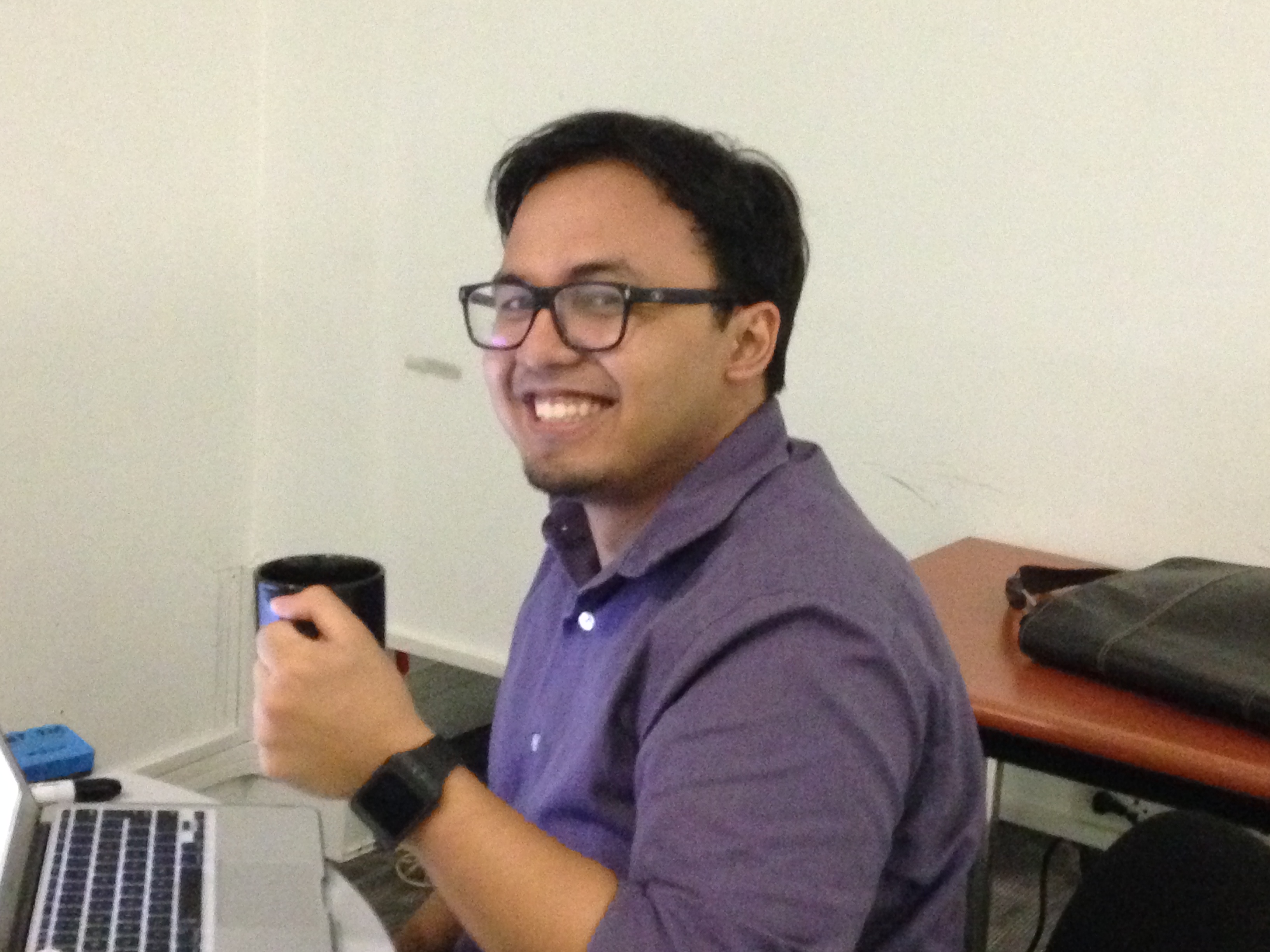
photo 2
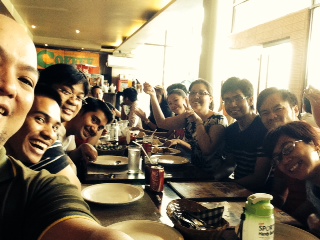
Despite his Miami Heat losing both the Championship AND Lebron, Dino is still all smiles nowadays 🙂

5 years ago, I was stuck with a dilemma…

I just finished packing 8,000 letters to employees for one of Storm’s clients. It was an implementation of an organizational climate survey, which, a few months earlier, seemed alien to me. I knew absolutely nothing about the consulting environment. I didn’t know how things were supposed to be done. All I knew was, it was my birthday, I was supposed to have a party at my house, and I spent almost 36 hours packing letters to unknown people, asking them to log into an online survey – a letter a large number of them ignored. To make matters worse, the delivery of the letters didn’t even need to be done by that day, as evidenced by the lengthy time it took to reach the intended participants, as I found out a few days after.

That experience made me want to quit.

Up to that time, I didn’t know if I actually was enjoying my work. I didn’t consider myself a creative person (I didn’t know I’d have to create report templates from scratch, someone I never did before). I didn’t like the idea of presenting the same things over and over again (something I did for 2 straight months, presenting the same old results to a different set of people and asking them to validate results, covering around 30 FGD’s and 200 people to meet). I just didn’t see myself as staying here for long. The thing is though, I realized up to that point that I didn’t actually have a career plan for myself. I had ideas about my interests, I knew that enrolling in graduate school would be an option, but that was basically it.

I had made up my mind right then and there to talk to our CEO (Peter), and explain the reasons for my resignation. What followed was a lengthy conversation over instant messenger (Y! Messenger, no less) and culminated in…. me staying.

I am thankful up to this day that I made this decision.

Up to now, I do not know why I decided to stay. Maybe it was the promise of better and brighter things to come. Maybe it was just naiveté on my part. But regardless of what those reasons were, it was my first experience that taught me to stay the course.  

I know it’s not easy looking at the bigger picture when you’re fresh out of college, all brimming with credentials and aching to make a difference. Sometimes, work doesn’t paint that kind of picture, and it’s something we want to feel everyday. If we don’t feel that we’re doing something that matters, we tend to focus on the little things that annoy us, and distract us from the bigger picture. This culminates in unsatisfactory feelings in work, and ultimately, in tendering our 30 day notice and looking for greener pastures. I am not saying this is wrong. There really are companies that make it hard for us to stay, especially if there were inconsistencies between the job that was explained, and the actual job. But sometimes, staying the course, sticking it out for a little more, matters.

This has been especially true for me.

Making a Difference

Fast forward to 2013-2014, where I’ve been blessed with the opportunity to be a part of Strata, one of Storm’s sister companies, and just recently in May, been tasked with leading it.

It’s been all a haze, and the months have come and gone so fast. It’s hard to believe that it’s been months, but it’s been equally hard to believe that it’s only been months. The work that we’ve been blessed with has been nothing short of amazing. I cannot believe how and why large corporations and big government agencies continue to trust us with their projects. It must mean that I, along with my amazing team, must be doing something right. This is exciting for Strata because it allows us to 1) use our HR knowledge and expertise (something the team LOVES discussing), and 2) make a huge difference in people’s lives. It allows for transformational change in organisations, but recently more with the government sector, partners we’ve recently begun to start working with (and is a personal preference of mine, and I’ve been an avid listener of AM radio since my 1st day of work). It allows us to see directly how our work contributes to society, and how we can make the Philippines a much better place. This is completely unprecedented, and I am completely dumbfounded that we find ourselves in such a good position.

Never Ending Fears

Being part of a startup is hard. That’s just the truth. Leading it is even harder. The amount of decisions that have to be made on a daily basis range from petty (no more ink! where to buy ink?!), to complicated (how to present certain HR methodologies to the right audience), to downright insane (how, as a 27 year old, to tell much older and more experienced people that they have the wrong methodology). I sometimes feel like I’m in over my head, honestly. There are days when my feelings back in 2009 come haunting me back. . There are still days when I don’t feel like meeting some people. There are days when I just want to put earphones on and listen to my Jesuit-inclined playlist (The Song of Rupert Mayer has become a personal favourite). There are days when I wish for a simpler life, maybe one where I just have a role in a company, and I just have to do the same thing over and over again.

But at the end of every single day, I catch myself. I always find something good to smile about. And that, I find, is what gets me through most days.

Work is hard, but so is everything that is significant and life changing.

I find that with my never-ending fears, there are always reasons to stay the course make a difference in this world, and that’s all that matters.


 

Introducing Thursdays Unplugged – And Why I’m Limiting It to 4 People

While I like organizing events like Startups Unplugged or Open Coffee, where I really get my kick is when I go on one-on-one coffee-talks.

In the bigger events or in some of the speaking events I’ve done, I may be able to impart knowledge and help out, but obviously, the learning cannot be customized to the individual. Sure, after the event there can be informal networking and getting to know people, but I don’t really get to KNOW people that much.

This is why I like doing one-on-one coffee-talks.

More than just the startup idea, I get to know the entrepreneur’s story. I get to know his motivations. I get to read body language. I don’t just shoot from the hip and comment on just the idea. I can comment and help out on the journey, which I think is far more valuable.  True enough, I’ve had a number of memorable one-on-ones with certain people.

The problem is, over the past few years, doing these random one-on-one meetings has gotten to be quite challenging, given my schedule and where I live (Antipolo).

So here’s my proposed solution.

I know 2 posts ago I set a 10-man meeting next thursday. It’s pretty evident that it won’t be as intimate as I would like it to be.

Hence, I am reducing it to 4 people (so total in the meeting of 5 including me). I’ll also endeavor to this weekly and make it part of my workweek.

photo (2)
Perfect for five!

Here are some of the rules:

RULES FOR THURSDAYS UNPLUGGED

1) Venue and time

The venue will always be at the STORM Offices (Ortigas Center), at 5:30 pm. I would schedule it later to accommodate those coming from work, but I do want to go home in time for dinner. It would end approximately 6:30-645. There’s ample parking beside our building.

2) Unplugged

No powerpoint decks or demos. Let’s keep it simple and just talk.

3) Send me material

Do email me the idea or the problem at least 3 days before the meeting takes place. Be as concrete and concise as possible. If you have a deck or a website, this is where you should send it.

4) Transparency and Non-disclosure

You will be sharing your idea/situation both with me and the three other people in the room. (Honestly, this should be okay with you. Stealth doesn’t work) However, this doesn’t mean you should go around spreading what the other guy just shared with you – so we will agree that whatever was mentioned in the room, stays in the room.

5) 5 and 10

We have an hour. Let’s do approximately 15 minutes per person. In the first 5 minutes, do tell us about your idea or your problem, and also your journey. Then let’s spend the next 10-15 minutes discussing.

6) Reserving a slot

Let’s do this very simply. Just email me at peter@juangreatleap.com to reserve a slot for a specific Thursday. First-come, first served.

7) Yep, it’s free

Nope, there’s no need for any sort payment. I just really want to help out in my own way (it’s not even sure if I will be able to be relevant and helpful to you). That said, if you feel obliged to bring some snacks for a group of 5, no one’s stopping you 🙂 (coffee will be on me, though). Just tell me what you’re bringing so there won’t be any duplication.

First one is on July 24. This is already fully-booked.

Next one will be on July 31. Two slots left.

Not yet sure if I can arrange one on August 7. I’ll confirm here in the blog.

Excited for the 24th! Will tell you how it goes!


I Forgot I Was On Vocation!

photo

The past few months have been some of the most rewarding for me as an entrepreneur. At the start of 2013, we made a crucial decision to split STORM Consulting, my startup baby, into two, distinct, laser-focused firms: STORM Rewards was going to focus on flexible benefits. I was going to lead the efforts as its CEO. STRATA was going to focus on HR competency frameworks. The big difference here was that I really wanted to source an independent management team to lead Strata – I didn’t want to be involved in the day-to-day operations.

In hindsight, it proved to be a very pivotal decision. (yep, focus is everything)

Armed with a new business model which allowed it to offer Flexible Benefits for FREE to large firms, STORM more than doubled its client base and became the country’s flexible benefits leader in 12 short months. A learning junkie, I got to learn how to do two things: a) running an e-commerce firm (something STORM pivoted into with our new model), and b) truly scaling a firm. I am 3/4 into hiring a complete management team using internal revenue. Last week, I was in Cebu setting up operations to expand there. We’re also in the midst of a major fundraiser to fuel our efforts to expand into the region. There isn’t a shortage of interested parties. We will be in another country in a few months. That’s a statement I never thought I’d utter this soon.

Struggling out of the gate in 2013, Strata started 2014 with a risky decision. We decided to let 26-year old Dino Alcoseba, who started in STORM immediately after his graduation, to run EVERYTHING. It was risky because the usual service providers to the HR market are typically led by people decades older than Dino. With STRATA more consulting-heavy than STORM, and with management consultants usually being a lot more seasoned, the risk was real. However, with Dino’s proven record with us of being ultra-dependable, a leader, extremely coachable, entrepreneurial, and someone with a high degree of integrity, I heavily endorsed his appointment.

Dino started the year off landing no less than three 7-figure projects and one 8-figure project for STRATA (with significant help from COO Orvin Hilomen and HR wonder-boy Mico Subosa). In one quarter. He also has raised his game, showing a strategic side of him I’ve never seen, and most importantly, showing a genuine care and interest in the members of the team he was building.

As an entrepreneur, I should be on cloud-nine. But there was something missing.

Don’t get me wrong, I am extremely happy and feel extremely blessed for all of this. Some part of me WANTS me to be satisfied with this.

However, I felt like Tom Cruise near the end of Jerry Maguire when triumphant Cuba Gooding was surrounded by reporters. I was supposed to feel awesome. It WAS awesome. Still, I felt terribly incomplete.

Screen Shot 2014-07-13 at 11.07.35 PM
It was shocking not to remember after years of mindlessly logging in

“When are you posting again?”

I had been avoiding any talk of Juan Great Leap for months now. It took me 5 tries to remember the right username-password combination to access this WordPress account. I would brush off queries as to when the next blogpost would be, or when the next Open Coffee would be. I would indefinitely postpone requests for a coffee-chat or a Skype session with dozens of people. I would ignore internal moments of inspiration for a new blogpost. I’d ignore all of these, rationalizing it with thoughts like:

“I had done my part”

“It’s now time to concentrate on my own firms.”

“I’ll do it next month.”

“I’m busy with more important things.”

“Why do I need to spend several hours writing a post when it doesn’t make me a centavo?”

But that gnawing feeling would come to haunt me every so often, accentuated by the occasional “when’s JGL coming back?” comment.

That made me think.

What is my purpose for JGL anyway?

Is it a medium to share my thoughts? To network? To better my brand? To help? A medium for a frustrated writer?

I then got around reading this and this, which, reading now, I almost feel comes from a different person.

Juan Great Leap was is the central medium for my vocation.

The reason I felt incomplete as an entrepreneur was precisely because my vocation wasn’t to be just an entrepreneur. It was to help others find their own vocations in this brave, new, fascinating world, where one has a lot more choices than to be a corporate cog.

I felt incomplete because I wasn’t following His plan. The Strata experience exacerbated this incompleteness even more, because seeing Dino finding himself and develop into his own brought such an intense feeling of satisfaction in me.

I think this incompleteness comes to us in many different forms, called by many different names:

“quarter-life crisis”

“mid-life crisis”

“existential angst”

“something is missing”

“why the heck am I not happy?!”

“I feel detached”

I believe God has a plan for all of us. It is a beautiful plan – one where all our talent and faculties are used to the fullest. Where we feel whole.

God tries to give us clues as to what it is. We see glimpses of it in our innermost desires, in our unique gifts and talents. We feel a bit of it when we find ourselves in situations where we can clearly help others with our gifts, where we cease noticing time and find ourselves in the “zone.” It is when we feel not merely happiness, but true, inexplicable joy.

It is when we are doing what God BUILT us to do. So naturally, there is a FELT alignment when we are on the right path, and a FELT misalignment when we are off the path.

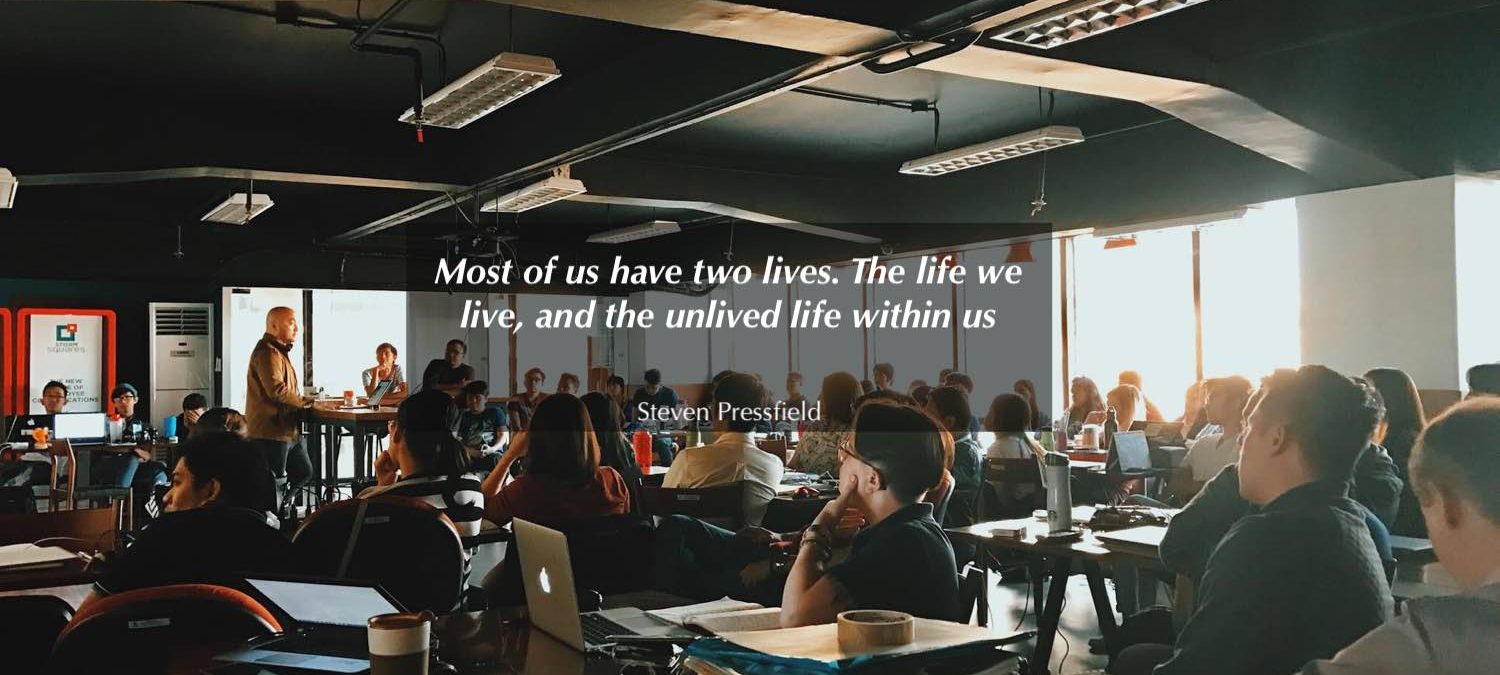
Steven Pressfield and Seth Godin call this doing your “art” (as opposed to doing a job). I call it pursuing your vocation.

And I almost let it get away.

reset

Do allow me to start over.

There’s so much I’ve learned in the last 6 months which I absolutely need to share with you. New insights. New paradigms. New strategies.

But let’s start small and simple. Starting small and simple has worked tremendously for me.

First, you can now expect regular updates from hereon. Let me ease into this again.

Second, I want to organize a quick, intimate get-together – largely because I want to meet some people who have recently reached out to me wanting to do a coffee-chat. There are around 5 of them. I’m opening 5 more slots. I just want to meet 10 people in an intimate setting. Criteria: you need to be someone who has a clear startup idea and needs a bit of advice or you need to be a current startup entrepreneur with less than 1 year experience who needs a bit of advice. It also needs to be okay with you to share your idea with the rest of the people invited.

Email me your idea and your background. If things check out, you have the slot. First 5 people to email (and fits the criteria) gets in. Coffee will be on me. I’m thinking of scheduling it next Thursday night, July 24. We can meet at the STORM offices along Julia Vargas.

Let’s do this.

Building a B2B Startup? Here are 5 of the Most Crucial Lessons I’ve Learned

Building

I hope my previous post got you more interested in taking a longer look at building a Business-to-Business (B2B) startup.

If you’re interested in plunging into one, here are 5 of the most crucial lessons I’ve garnered in building B2B’s for almost one decade now (Can’t believe it!):

incomplete

1) Doing Lean Startup? You cannot use a traditional “MVP”

If you aren’t familiar with Lean Startup Methodology, then please buy Eric’s book as soon as you finish this post. Essentially, the book says that you have to validate your assumptions about the product and the market systematically before you spend money on building.

Specifically, it suggest building a “minimum viable product.” This is basically a bare-bones version of your eventual product (which won’t cost you much) that you can show to potential clients in order for you to get valuable feedback which you can then use to develop the product further. Typically, this “MVP” would consist of just approximations of the actual product that could show potential clients. Here are 10 examples. 

You CANNOT do an “approximation” with a B2B when you’re selling to a corporation. Companies will simply not pay for anything which isn’t ready. They cannot risk it. (Unless the CEO is your brother or its a smaller company and your product is something they desperately need)

(And no, application developers, you won’t be able to fool them with a wireframe demo – they will ask you to click on everything to see whether they work)

So yes, you do need to spend earlier on product development than you would do on a B2C product.

What you could do to balance this out is to spend more time getting data on the PROBLEM you are trying to solve.

Is it really a problem? What are the specifics? How MUCH is this problem costing companies?  What price point would it get bought? Is it a painkiller or a vitamin? 

Talk to boatloads of potential customers to get problem validation. Not only does this serve as a data-gathering exercise, but its a customer development exercise as well – you are priming all these people in buying from you (once you have a working product).

mutliple

2) Remember, you are Selling to 2-3 different people

This is what we quickly found out when I started selling in my first startup, STORM.

We sold an HR product, so we built a pitch to the HR Head. After getting approval from the HR Head? Turns out we then had to present a cost-benefit analysis and present it to the CFO. Then another presentation to the CEO (with the whole EXECOM).

You will need to incorporate the paradigms of different people in the organization you are pitching to.

Usually, you have to pitch to the functional head of the department which will end up using your product. Then, there has to be a pitch to the one who will disburse the funding, which (if your product isn’t a finance product) is likely to be another person. Sometimes, the USERS of your product will differ from the functional head, so you will have to get their approval as well.

Put yourself in the shoes of each of these people and customize your pitch appropriately.

Some questions they WILL think about when doing the buying decision:

How will this help my department?

Will I look bad/get fired if this fails? (this is an underrated one – everyone is thinking of this!)

Can I trust these guys to deliver?

Will this help the bottom line? Can I just accept that proof as gospel?

Will this make me do even more work?

Can this further my career?

due

3) Be sure you ALWAYS have enough cash on hand for the next 6 months of overhead

I remember when we built STORM, we wanted to pursue a service arrangement wherein we would bill the client every month (instead of a one-time, big-time approach). We figured this was best for cashflow management and put less pressure on sales.

Never did we anticipate that we would get delays of 60-90 days for payment! While we had safeguards in the contract for late payment (stopping the service, steep penalties, etc), we  quickly found out it would be very dangerous for us to make good on these penalties, after all they would endanger our relationship with  the hand which feeds us.

As a new startup, you would seldom have bargaining power in asking clients to pay on time. As a result, cash flow would usually be worse than you expect.

Plan accordingly.

friends

4) Get a natural networker in your founding team

A rather LARGE percentage of the clients you will land in B2B will be as a result of networking. It helps a lot if you would have someone in your founding team who can network well with MANAGERS in the industry, or better yet, ALREADY has a network.

Why?

Its extremely difficult to do a B2B sale organically.

You know, something like sending an email addressed to the “HR Head,” only you need to send it around 10 times to irritate the HR Head enough that he will ask one of his subordinates to talk to you. Then you will be at the mercy of a person who is 2-3 levels below the actual decision maker. Now you have to follow up with this person around 10 times again so he can tell his boss “these guys are ok to talk to.” Then you will go back to trying to get a meeting with the boss. If you do manage to one day get the HR Head to endorse you, you will now have to do the whole shebang with another department – finance.

This looks like I’m kidding/exaggerating, right?

Easiest way to not get yourself in this pickle? Get endorsed by someone with some authority in the office.

The difference is night and day. A great endorsement can get you right to the decision-maker in your first visit.

Get a networker in your founding team. It’s worth the equity.

gold

5) References are gold. Invest in them.

Pitching to a potential client?

The following is the question companies are MOST EAGER to ask you:

Who are your other clients?

Followed by:

Can we call them?

TRANSLATION: We don’t trust you! You have to prove to me I can trust you!

So – be sure you strategically gather and document references.

First and foremost thing to do here? Always keep your promises. If you do what you promise to do, then your current clients would not hesitate in giving a good recommendation.

Document these and spread them as widely as you can through different mediums. Some quick tips:

A) ASK for references. No one would volunteer them. You have to ask for them. Ask ALL your clients for references. If they delay because they say they don’t have time, then volunteer to MAKE one for them that they can then just validate and accept as theirs.

B) Be creative. You can, for example, give a discount if your client agrees to do a reference video (“these guys are so good!”) to be posted on your website.

c) Create a referral to incentivize your current clients to refer other clients. This can even be an incentive for your current service – for example, for every client they refer (and you land), you could give a 5 percent discount to their current monthly service fee.

5b. Bend over backward for your first client

The very first client is EXTREMELY crucial for a B2B firm. This is for obvious reasons – they will serve as your very first reference. In a very real sense, your survival will most probably hinge on how you perform with your first client.

They are naturally very tricky to land – to work with you means they are subjecting themselves to being the guinea pig.

So do bend over backwards for this first client. Mitigate the perceived risk for them. Give a massive discount (I actually recommend giving it for free, in exchange for detailed reference material).

But aside from pricing, give them your ALL –  your ball-busting, never-have-you-worked-this hard, absolute 1000%. Give your first reference something great to talk about.

Six Powerful Reasons Why Your Next Startup Must Be a B2B

To B2B or not to B2B? Ah. This is the question.

For me the answer is clear. With all things being equal, if you are a Philippine-based startup, you should try building a B2B first.

Let me get my obvious bias out of the way first – I am primarily a B2B guy. Most of startups I’ve been involved with – STORM, Strata, Stream Engine – have been B2B’s. (the notable exception is JGL)

Waitaminit! What do mean by B2B again?

You can generally classify as startup as being a B2B (Business to Business), as opposed to a B2C (Business to Consumer). A B2B company sells to other companies (also called enterprise business), while a B2C sells its wares directly to consumers.

I think there is an underlying reason for my own preference as well – I just find it a bit easier to build a B2B.

Here are six huge reasons why.

twotango

1) More than Two Can Tango

For direct consumer businesses, you mostly either have to be NUMBER ONE or NUMBER TWO to be  successful in a certain market segment.

Think about it.

Why has it been so difficult for a third telco to get established? Why has it been forever Mcdo versus Jollibee? Apple vs. Samsung? Coke or Pepsi? Jobstreet vs. Jobsdb? Nike and Adidas? There are countless examples.

In fact, for a HUGE number of  B2C industries, there’s only space for one or two players.

But in B2B?

You can secure a certain segment of the market as long as you can service them well.

This time, think about how many ad agencies there are, or headhunting firms, or IT development firms.

There are a lot, right? And yes, they’re able to co-exist.

B2B might not be sexier (for some at least), but its a hell of a lot safer.

hands

2) Experts Everywhere

I was DEEP in HR Management for ten whole years. I finished an advanced degree in basically HR Management. I know it well.

What’s the great thing about about knowing things well that from an entrepreneur’s lens?

I know a LOT of problems companies face when it comes to HR.

I can probably rattle off 20 different HR-related problems which companies are struggling with.

And of course, problems are where startups are born. That’s literally 20 startup ideas (which I mistakenly tried to pursue at the same a few years back – but that’s another story)

Guess what? Dive in Linkedin and there will be scores of people like me in a variety of different fields (sales, supply chain, finance, customer service, etc…) in a variety of different verticals (medicine, real estate, education, etc…). Heck, if you’re from corporate, over 30, and you’re reading this, chances are YOU are a subject matter expert who is knowledgable about big problems in specific areas.

Some of the best ideas for startups will come from these people. And there are a ton of them.

unlock

3) Funding Is Obtainable

While it may seem that funding headlines are always dominated by B2C’s (quite natural, because on the average, the addressable market for B2C’s would seem larger than B2B’s – and this return potential excites VC’s), you WILL get funding for a great B2B idea if you raise money for it.

Just last year, Kalibrr raised a ton of money. So did Payroll Hero. B2B firms.

I’ve had first-hand experience in raising fundraising last year as well, with both STORM and STRATA getting Series A funding.

You can also check out the portfolio pages of Kickstart and Ideaspace and see more B2B’s.

You got a sound B2B idea? There are a LOT of people who can help out with startup capital.

phil eco

4) Companies Are Flush

Over the course of the last 12 months, we’ve been hearing headlines like:

“The Philippines will be a top 50 economy by 2050!”

or

“Execs bullish on Philippine economy!”

Who’s feeling this sudden abundance?

Go have coffee with your friends who dabble in the stock market. They’re probably smiling. Most likely they have spanking new shoes.

Boatloads of companies are killing it in the stock market.

Businesses are flush. Companies who are flush tend to invest more – and tend to be just a tad more interested in improving things. Or even trying out new stuff, like you know, startups.

What does the first “B” in “B2B” stand for again?

Go where the money is.

Adding this one quickly: I remember when we first started Mobile Academy, we wanted it to be aB2C  – a place where anyone can learn about how to create a mobile app. We did “lean” methodology, developed some quick mobile courses and threw them out into the market, seeing who would bite.

We quickly realized  who the market was. Direct consumers waffled at our prices, with a good number saying they’d much rather learn on their own than pay up.

After a few weeks, some tech firms heard about our courses. Boom. Booked a whole class full, just like that. Then another.

I think experience can sum up this whole post.

bronto

5) Dinosaurs Create Opportunity

You know one thing I’ve seen in my years servicing and selling to corporations?

A number of them do things very, very, very inefficiently.

Some of them hire full-time encoders.

Some of them (actually, a LOT of them) use mammoth, outdated “legacy” systems.

Internet Explorer 5 (!) anyone?

Some of them don’t take advantage of mobile technology, even if there’s a big, obvious advantage in doing so.

A lot of them don’t understand tech and social media.

Opportunities abound.

chicago
(nope, couldn’t find any appropriate picture, so I ended up with the most obvious one – I love 80’s music anyway!)

6) Hard Habit To Break

So how does a B2C company lose a customer? He or she just stops purchasing if and when she feels like it.

If you’re a B2B, it’s MUCH more difficult for a client to drop you. For starters, deals are usually governed by contracts. These typically span 1-2 years.

They also KNOW you, so they’re going to have to tell you to your face that they’re not renewing your service. That’s MUCH more difficult

One other thing? They’re not using their own money to make the purchase!

So you know, unless you completely BOMB and make them look bad, you are MUCH MORE LIKELY to keep a business client.  Companies are creatures of habit. Once they get to get used to being serviced by your firm, you become a hard habit to break.

(Of course, what we missing in this discussion is a very key ingredient – what you are passionate for. But again, all things being equal – if you had one solid B2C idea and one solid B2B idea with roughly the same economic potential? For me, it’s a no-brainer.)

(While this post explains WHY you have consider building a B2B, you can find some crucial suggestions on HOW to build B2B’s in this post.)

Stopping Reverse Momentum

homer running

Starting the middle of last year, I began running in the morning.

5K, every other day. I was pumped.

Then I sort of injured my calf and I couldn’t run for a while.

I vowed to bounce back fast – as soon as my calf was fully healed.

Then my calf healed.

But for some reason, I couldn’t find the energy to start again.

The longer I waited, the harder it was to start.

I could describe it best as reverse momentum.

This is my best explanation for the writing hiatus I experienced. This is my first post in almost 2 months. 

People started to ask me – are you still writing? Do you still love it? Do you still believe in it?

The answer for me is a quick, resounding “yes.”

Its just that I had allowed myself to fall into a rut. The worst thing was, because of the ever-increasing gap between posts, I pressured myself into thinking…

“I haven’t written in 2 weeks?! Egad, I HAVE to come up with something better than normal!”

and then…

“I haven’t written in 3 weeks? Egad, I have to come up with something super!”

leading to…

“A MONTH? Now I have to write something which will change the very way people look at entrepreneurship!”

A look at my drafts page would show a number of half-baked, barely-started, “epic post” ideas.

I now realize the utter futility of this approach.

A few minutes ago I just said, “WTH, lemme just write.”

And here it is. And something tells me I’ll be writing my next post without letting two months lapse.

There’s something quite entrepreneurial about this approach as well, eh?

Waiting for the absolute best time to take an absolutely grandiose leap will rarely work.

Instead, just do it.

2 Days to Go, 22 Slots Left for OPEN COFFEE!

lastcallopencoffee

WHAT: JUAN GREAT LEAP NOVEMBER EDITION OF OPEN COFFEE

WHERE: CENTERPOINT FUNCTION HALL, 3rd Floor Centerpoint Building, Garnet corner Julia Vargas Streets, Ortigas Center, Pasig City

WHEN: Saturday, November 30, 2013, 9:30AM

If you haven’t reserved your slot for OPEN COFFEE this Saturday morning, then click that red button on the left and reserve your slot now.

Whether you’re a veteran or a new entrepreneur, someone who wants to be, or someone who just wants to check things out, there will ALWAYS be something new to learn from open coffee.

Here’s how the last one went.

Then, let’s all have lunch after!

Lunch was F-U-N!
Lunch was F-U-N last time!
October open coffee

How Failing 2,032,198 Times Helps You Succeed

fail

We’ve heard it so many times for entrepreneurs – how you have to know how to fail in order to succeed.

I wanted to dissect how exactly this is so.

How exactly does failure help you succeed?

My first instinct in answering this question is to look at my own entrepreneurial journey.

Has failure helped me?

When asked this question, my reply is almost immediate – yes, it has helped me tremendously. It’s not just because of the sheer learning that happens afterwards (though this is big as well, and is the basis for the lean startup movement)

The great thing that failure has given me is the stomach for it.

Having failed so many times before and knowing first-hand what the consequences are, I am mostly unafraid to try things out for the first time. I think this is where I get one of my strengths as an entrepreneur.

I would ace the question:

“when was the last time you’ve done something for the first time?”

Recalling just this year, I could easily name 20 things I’ve done for the first time (entrepreneurially, at least).

But thinking about it, this wasn’t always the case.

I remember a time when I was deathly afraid of failing, when I would rarely step out of my comfort zones.

So how did my paradigm shift come to be?

I remember after my college graduation, I decided to teach for a year. All my college friends went corporate. Naturally, I had the lowest salary in our group. Sure, I told myself it was the noble thing to do and I got to practice my speaking skills, but in truth, this bothered me. Knowing what I earned, I remember my friends would sometimes offer to pay for me when we went out. Inside, this killed me.

Upon transferring to corporate, I got a much larger salary. But then, tragedy struck as my family went through a big financial problem (which would drag on for a long time). Of course, I volunteered to help out and put in my share on the table.

So for a good number of years thereafter, I would work hard, get salary increases, and then see a chunk of it transferred out of my account. I had to find a way to make do with what I had.

In retrospect, these events transformed me.

I knew what swallowing pride was like. I knew what losing money was like. I knew what working very hard and not getting rewarded was like. I knew how to scrimp and live simply to make ends meet. I knew what failure was like.

So when faced with a decision where the risk involved failure? (a potential loss of money, reputation, comfort) As long as I found the reward side worth it, I would find myself taking the leap.

worstmistake

There was one particular instance in the founding of STORM where I think this all came to a head.

Back in 2005, Pao and I invested 30K of our money incorporating STORM. Ignorantly, we went (almost) all-in with one strategy: we spent most of the money arranging Flexible Benefits learning seminar. We thought we could pull in a few clients from the event.

The seminar was quite packed, but was a failure. It was a failure because when we met with the customers, we found they were expecting a fully working online platform.

EricRies-TheLeanStartup
Where were you in 2005 Eric Ries?!

We estimated it would take us a full year to technically develop the necessary system with our resources. The problem was, we only had a month’s worth of salary, since you know, we spent it buying food and wine for our guests in the learning seminar.

That would have been it. The decision WAS the wrong one and we dealt with failure and its consequences.

I never really considered folding right then and there, which, in retrospect, I now find interesting. (we had ONE MONTH runway left and had NOTHING)

Instead, Pao and I had that fateful meeting in that small cafe in Renaissance and did a pivot. We designed a new product in that meeting (an online survey tool, predating all the online simians), which Pao (incredibly) developed in a month. That became the basis of a very profitable business line which we rode until our Flexible Benefits services were profitable.

It wasn’t exactly smooth sailing after. We failed so many times after. I remember that time when I was praying to God and I felt so sure we would land that big account we were putting most of our eggs in. We didn’t. I remember putting up startups which failed and lost money. Or when people I trusted would lie to my face and betray me.

I know failure. I’m still afraid of it, but since I know I can take it, I don’t mind taking risks, or doing something for the first time.

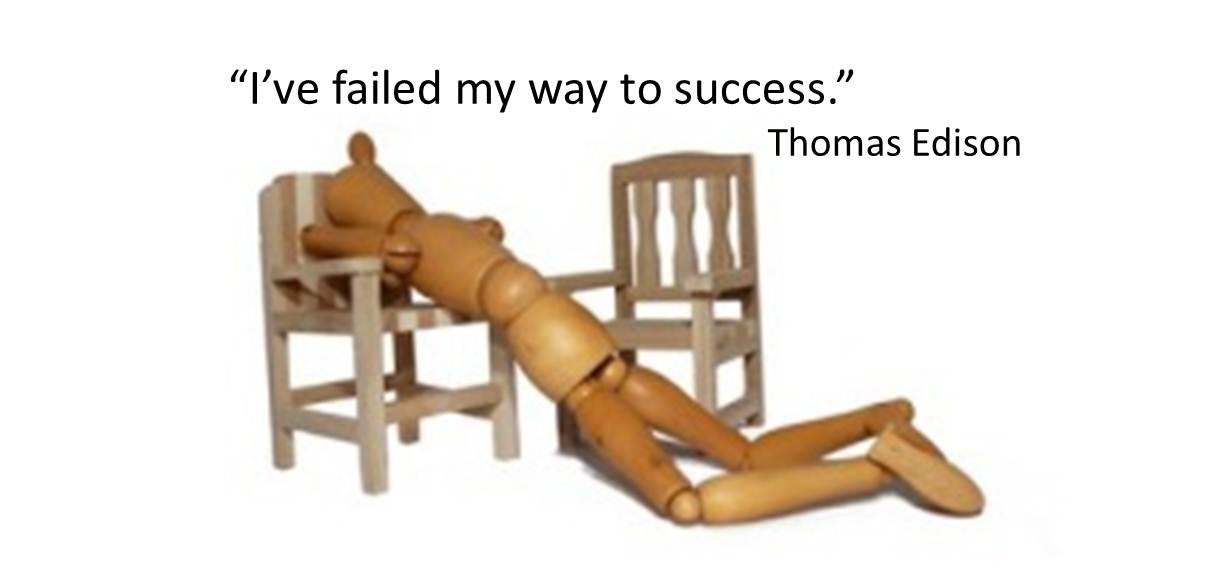
thomased

My advice in all of this: don’t spend your days avoiding failure. There are tremendous advantages of knowing failure directly.

These advantages are quite evident in the stories of practically all successful entrepreneurs I know. This is why it’s very easy for entrepreneurs to share “war stories.”

In our time now, we see winners lauded like never before (and failure more scrutinized than ever before) We see comfort and pleasure being considered as THE primary objectives for a lot of people.

I think this is dangerous, because it leads to a life when the easy path is always chosen. This is NOT the path to any kind of success. We have to get used to taking leaps.

Sort of like this guy.

(Want to hear from like-minded people sharing war stories and ideas? Why don’t you check out JGL’s next Open Coffee session? You can register here!)

Letting Yolanda Permanently Change You

taclobanWhen I arrived home Sunday night to watch news on what happened with the super typhoon, I was in shock. The first few aerial pictures of Tacloban were coming in. It was utter devastation. Worse, there was a blackout on how people actually were on the affected islands as all communication lines were down.

It was getting ominous.

News over the next few days confirmed our very worst fears. Thousands dead. Cities, literally wiped out. Lives destroyed. The next day, Inquirer hailed it as the worst Philippine disaster. Ever.

As media started descending on the island, the footage veered from bird’s-eye onto man-on-the-street.

I’m not so sure if anyone watching could hold tears back as you listen to the stories. People wailing as they tell gut-wrenching stories of their last moments with their beloved. Parents burying children. Children burying parents. Families watching each other slowly starve to death and beg for food on the air.

It’s almost too painful to watch.

I think we have to continue on watching though. We have to continue letting ourselves tear up while listening to the stories. We have to let ourselves be incredulous as to why the goods aren’t getting where they should go. We have to feel.

These are our people, after all.

This IS actually happening. Thousands HAVE died and hundreds more are sick, hungry, and desperate, all fighting for their very lives as the relief efforts unbelievably are having a hard time reaching them.

These are our people.

We have to keep watching.

We have to keep feeling.

The coverage has elicited an unprecedented response from people watching.

We all know about how much international and local aid is pouring in. By now, I know a number of you reading have already volunteered your time in packing and sorting relief goods. I know a great number of companies doing their own drives. Individuals have become quite entrepreneurial and creative in their efforts to raise money. Children in other countries have set up lemonade stands to raise their own funds to give.

lemonade

The response has been heartwarming.

The thing is, we all know this fervor WILL die down in perhaps a couple of months. The lemonade stands will close shop. The company programs will cease. There will be considerably less social media attention devoted to the victims.

This is where the wheat shall be separated from the chaff.

Post-fervor, will you be one of those people still helping in your own way? 

If you were watching footage, reading the stories, staring at the expressions on the unforgettable images – then you must have felt your heart get tugged.

Here’s my challenge: why not respond in a permanent manner?

The last few days, I’ve largely been a bit quieter than usual. I’ve been on some kind of existential self-questioning.

OK, if I know that I DO want to lead a life where I am involved in nation building and helping out, then is this the line of work I really want to do? Is what I am doing ultimately helping out my less privileged countrymen?  Can I do more?

Perhaps we need to let Yolanda disturb us to our core. Perhaps we need to let it float serious questions within us about our current lifestyle and career trajectory.

We all want something good to come out of all this, perhaps we should start with our own hearts.

Let Yolanda change you.

(If you think people would resonate and appreciate this article, be a blessing and share 🙂 

Entrepreneurial Thinking Needed in Yolanda Aftermath

Okay, so you’ve given both money and items in kind.

You’ve volunteered your time and helped packed goods.

Chances are though (especially if you’ve seen the gut-wrenching footage), you’re still asking:

WHAT ELSE CAN I DO WHAT ELSE CAN I DO WHAT ELSE CAN I DO?

Perhaps one thing is to do what this blog advocates.

Be an entrepreneur.

Being an entrepreneur is all about problem solving. It’s all about finding new, better ways of doing things in the harshest of conditions.

beanentrep

Yolanda has brought about all sorts of grand problems in the most unimaginable of conditions. Rebuilding – both immediate and in the longer term – will REQUIRE entrepreneurial thinking.

Amidst all the carnage, I see a lot of very inspiring, creative, entrepreneurial problem-solving that is happening.

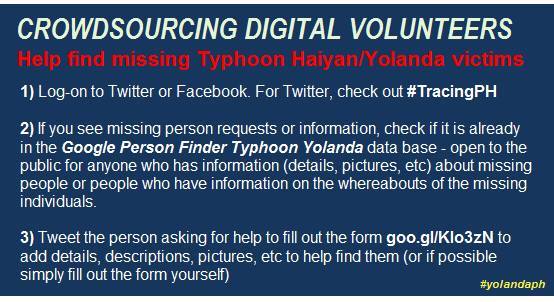
Like using crowdsourcing here:

crowdsourcing

Or getting programmers to rapidly develop useful disaster-management apps…

Screen Shot 2013-11-12 at 12.14.43 AM

Or even big companies doing something fairly unique by relying on their own strengths…

air asia
They’ll actually be flying volunteers into the affected areas for free!

I also see a lot of very inspiring “entrepreneurial” activities on social media: from individuals leading and organizing their own fund drives, to people trying to solve very specific problems (a friend of mine posted an emergency need for a plane/helicopter – she got it 🙂

We need more of these!

Let’s help in all the usual ways – of course. But let’s also dig deep and channel our entrepreneurial sensibilities towards this Grand Canyon of a problem set:

What problem areas aren’t being focused on? What are Blue Ocean solutions? 

How can we maximize our limited resources to achieve the biggest impact?

Which set of people can I help out? Which can I target? 

How can I best help out, calling to mind my own strengths and passions?

How can technology augment current solutions which are being utilized?

What are the long term ramifications? What strategy can I pursue or advocate which best serves the would-be status quo? How can long term solutions be sustainable?

How can jobs be built for the people in the affected areas?

(Be a blessing and share if you think this can be helpful to someone!)