Exactly 6 years ago, I was in Cardinal Santos hospital feeling an overwhelming mixture of happiness, fear, and excitement.
You see, for the first time, I was holding my son in my arms.
And there was something else I was feeling.
As I beheld my son, I felt an unmistakable tug of the heart.
It was the first time we met face-to-face, but never did I feel such an intense feeling of love for another person.
He was mine.
Then I had a quick realization.
I quickly looked for my dad.
Finding him, I gave him a hug and said, “happy birthday!”
It was also his birthday after all.
I then extended the hug a bit.
You see, it was also the first time in my life I realized and felt exactly how he loves me – as only a father can love his eldest, firstborn son.
It’s an amazing, surreal gift that has God designed for me – having both my son and my dad share the same birthdate. Every time July 26 happens, I get swathed with existential nostalgia.
Happy birthday Papa! Thank you for your expressive love, vulnerability, and your playfulness. I realize the way I love my children now stems closely to how you loved me growing up. Thank you for showing me how to treat others like myself. (won’t ever forget the time when I was a kid when you went down and helped that man)
Happy birthday to my son! My ultimate wish for you is that you get to know God and love Him. Well, perhaps I can also wish that you get out of your angry birds phase. It has been three years.
To my Father in Heaven, thank you for loving me so uniquely and intensely through these two people. Through them, I get a glimpse of just how much You love me. I love You more than anything.
Aside from my work in STORM and Juan Great Leap, I “incubate” firms.
It’s really just a passion of mine to look for the right ideas, find the right people to pursue them, and then try to build something from nothing. Sometimes it succeeds, sometimes it doesn’t.
So, if you can imagine, a big part of this hobby of mine is constant “founder-hunting.”
There are a great many challenges to “founder-hunting.” (I’ve covered quite a bit of this in this blog.)
Illustrated here is another fairly typical one:
Peter: “So…everything sounds good! This is the % equity you’ll be entitled to as Founding CEO. As for salary, obviously the startup can’t afford your current salary, but we can still squeeze out what I think is a substantial amount, ______.”
Founder: “Uhm…can the salary still be increased?”
Peter: “Dude, we went through the figures. You know this is the safest amount we can muster. Wait, what are you going to pay for? You didn’t get married and suddenly have kids last night, right?”
Founder: “Well, no, but I am paying for a car for the next two years.”
Peter: “Uh…don’t you live like 3 kilometers from your current office?”
Founder: “Yeah, but…doesn’t everyone get a car plan? It was a good deal.”
Peter: And you got a brand new one? (sighs defeatedly)
Founder: “Uh. Yes. I, uhm…also got a studio unit…”
Ah….The car-condo yuppie dream.
Most people I know who take advantage of these “good deals” CANNOT afford them – hence they do a loan. In effect, they give up a large amount of their monthly salary over the next 3-4 years not only to pay for the car, but also to pay for the huge interest expense (bank margin) generated in spreading the loan over 3-4 years.
(You know what, you could have used that money to bankroll a startup that could pay for 5 cars for you in the same amount of years)
People justify this expenditure with the very confident “I will increase my salary by this so and so amount every year, so this amount won’t look so big in a few years.”
Bad, bad move. (salary increases aren’t by any means guaranteed, emergency expenditures ALWAYS happen)
Even if you get buyer’s remorse, say, A DAY AFTER YOU RECEIVE THE CAR, you’re already done for. You will never ever make the same amount of money you just spent because a car’s value plummets disproportionately as a used vehicle.
Then the critical question comes in: okay, why a NEW car? Why a higher model? Why didn’t you stop with the car? Why get a home loan for a condo as well?
Eventually, if you keep asking why, the reasoning for a lot of people (whether they admit it or not) becomes apparent: it’s to keep up with the Joneses.
New car makes you more popular. The new car is “appropriate for your level.” (that’s what I thought)
Stop.
The Joneses will anchor you. There is no need to keep up with them.
Retain your fiscal flexibility. Fiscal maturity and flexibility are so important to a young entrepreneur. Most startups cannot survive with immediate high salaries (some cannot with ANY salary), necessitated by unnecessary financial anchors. Don’t ever destroy your long term dreams by chasing shiny, short-term objects.
The most entrepreneurial animated film you’ll ever see!
I watched TURBO last night with my family. The wifey liked it. The kids LOVED it.
Unbeknownst to them, I was loving it a little more than I probably should. Why?
Turbo is easily the greatest entrepreneurial animated movie I have ever seen!!!
(now that’s a sentence I’d never, ever thought about writing in this blog)
At the risk of spoiling the movie by detailing how exactly it achieved this, let me just enumerate several entrepreneurial themes that I managed to observe in the movie.
There were SO many.
To wit (when you do watch the movie, do see if you can tick some of these off – most are pretty obvious):
A “crazy” one dreaming of a big thing
The desire to leave the corporate assembly line
Unsupportive family/friends
Failing many times before succeeding
Raising money
Pitching to investors
How traction makes raising money easier
Virality and how mobile enables it
The value of PR
The value of key partners and alliances
Being the underdog
Racing with the big boys
Leveraging on agility when racing with the big boys
Not giving up
How “good enough” isn’t good enough
The rewards of entrepreneurship
The movie was fun and enjoyable enough by itself. Viewed through entrepreneurial lens, it becomes something much more.
Posting the last call for this Saturday’s Open Coffee event at the 47 East compound!
Do register here now and grab the remaining slots before we close registration.
What I’ve observed is, the larger the crowd, the more valuable the process becomes. When someone pitches a large crowd, there is almost always someone who has a very intimate level of information that’s extremely useful for the one pitching. The larger the crowd, the more chances someone finds another person who’s the perfect collaboration partner (I’ve seen this happen multiple times)
So…let’s make this one the BIGGEST ever!
If you haven’t been to our previous open coffee events, do let this Saturday be your first!
Last Saturday, Juan Great Leap and Hybridigm held Dare To Pitch at the STORM headquarters in Ortigas Center. It was a pitching forum where we invited startups to pitch to VC’s.
No winners, no prizes.
We just wanted deserving entrepreneurs to have a venue where they could pitch to institutional investors. At best, they could get funded, at worst, they WILL get valuable experience, feedback, and contacts.
The event was actually a non-public post-event, where ready attendees of the pitching seminar Pitchcraft could volunteer to do an ACTUAL pitch. There were a few audience slots which we opened up to the JGL subscriber base (there are benefits of becoming a subscriber!), which were gobbled up quickly.
We then invited veteran VC’s Dan Pagulayan, Managing Director of Angeon Advisors, and Nix Nolledo, renowned local tech investor, to hear the pitches and give feedback.
I thought there were generally awesome ideas behind each pitch – most pitches endeavored to solve real problems. VC Dan Pagulayan told me he’d want to further talk to 8 out of the 10 pitches presented, and that he’s really excited with the number of quality pitches presented.
Just some further observations on the event:
1) Value in witnessing pitches
As a very opinionated person, it was tough for me to JUST listen to the proceedings, but I gotta say, I learned a whole lot. Each pitch was basically an attempt to solve a specific problem in a specific area in our world: from OPM, recruitment, turbine engines, to geek couture, it was a thrill for me not only to learn about these different pockets from the pitchers, but also listening in on what the VC panel had to say. Horizon-stretching.
2) We need to practice with the time limit
7 out of the 10 people who pitched had to be cut off at the 5 minute mark. This for me indicates some lack of practice time. Pitchers have to maximize their airtime. In particular, what usually was part of what is cut is the ACTUAL money pitch: how much the startup needs, where it will go, and what’s in it for the investor. (I think these have to be conveyed quickly at the start)
3) Underlining go-to market strategy
Only a couple of pitches actually explained EXACTLY how the money they were trying to raise would be used in penetrating the market. I’ve seen this in particular with very technical founders who dive into the product, and sometimes miss pointing out how the startup would begin making money, and it intends to scale. For any investor, this is probably THE most crucial part – how exactly is this person going to make my money back?
4) Younger people are getting in on it
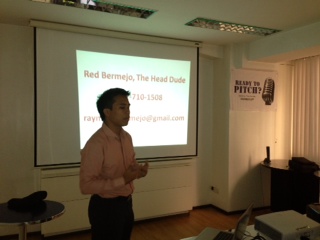
Current Ateneo student Red Bermejo pitching
I’ve seen this trend in our JGL open coffee sessions (do sign up now!), where more and more students pitch and participate. 3 of the 10 pitches were given by current students. I think this is an awesome, awesome development, and I hope it continues to trend up.
We’ve heard it from so many pundits and experts already (including me): there is SO MUCH opportunity now, the time to do a startup is now, blah blah blah.
I do agree with this, obviously. Wholeheartedly. Just compared to this same time last year, I’ve seen so many entrants, foreign and local, angel and VC, wanting to splurge their investment money on new ideas.
This is why I squirm around a lot. I see a lot of opportunity lost – good people pitching blah ideas. (Incredibly, I’m starting to see blah ideas get some funding, but that’s another topic)
I know that perhaps this is part of the learning process, but c’mon ANOTHER e-commerce site with no defensible niche? A whole startup banking on the success of ONE app on the appstore? (a dangerous proposition) Another ad-based web/mobile site? (a successful investor recently told me most shrewd investors now shy away from anything ad-based) Another nice-to-have?
I think we need to improve what we choose to focus on.
Startups should be all about solving problems, right? I think there is a great need for us to DIVE DEEPER within these problems.
Sexy vs. Urgent
Is your idea solving an URGENT problem? This is one thing I think a lot of ideas suffer from. They endeavor to solve problems which aren’t urgent. If they aren’t urgent, then people won’t open their wallets NOW to find a solution.
Look, I’m not saying doing another e-commerce site is a bad idea, but you know, if you are open, there just might be some other idea which just might be more interesting to focus on.
Not Playing the Field
Sometimes I think a lot of people just pick the first idea they get excited about. Perhaps we can ally with another person who’s also excited about the idea. Then we go all in already! One Great Leap! Game! Game!
Stop. Take a breather. Just try to see if there are other alternatives to focus on.
I think the big gap here is research. Let me simplify the term if it sounds too intimidating. I think the big gap here is talking to people.
Last week I talked to a friend who owns a startup-FMCG which manufactures and distributes powdered goods mainly to sari-sari stores across the country. In the sari-sari store, his brands compete with the big boys, like Nestle and Kopiko, etc….
Ever-curious, I asked him, “So dude, what’s your biggest prob… no wait, what’s the biggest problem of your industry?”
He quickly shares: “Collection. Since sari-sari stores do not have credit cards and pay our collectors in cash, we experience a lot of stuff like collector theft, owners disappearing, and so on.”
“How much are we talking about”
“As much as 3%-5% of total sales.”
“What?!”
(To have an idea how big “total sales” of ONE national brand is, ask your friends in FMCG’s. Go on, text them now)
“And EVERYONE experiences this?”
“Yep. Everyone. Big player, small player. Everyone.”
So immediately after my chat, I make a call to another friend who owns a national distribution company.
“Is this true bro, up to five freaking percent?”
“Yep.”
FMCG’s apparently lose BILLIONS because of this problem.
It’s a big problem. It’s an urgent problem. It’s a problem that’s probably seen in other countries like ours.
How do you solve collection at the sari-sari store level?
Isn’t a problem like this so much more real/interesting/rewarding to lean on and solve than say, “what app hasn’t been done yet and would go extremely viral?”
If you come up with a solution to this collection problem, won’t investors line up at your doorstep?
(you got an idea on how to solve this? hit me up 🙂
Well, guess what? If you look hard enough, talk to enough people, you will find that there are literally, HUNDREDS of opportunities like this. (coffee talks rule)
This fact makes a lot of serial entrepreneurs/investors giddy. They know how true this is and realize how we are all like kids in a candy store – but only if we open our eyes.
Talk to experts. Know what the MOST PAINFUL PAIN-POINTS are. Ensure the market will pay loads for a solution. And then, ONLY THEN, should you unleash your entrepreneurial problem-solving awesomeness on it.
Falling in Love With Your Initial Idea
A very promising young entrepreneur pitched an idea in Open Coffee awhile back. It was an e-commerce platform. As usual, people gave some suggestions. Then one person said, hey you know, maybe you could pivot it this way…
Then, the crowd just buzzed. Hands went up. “Hey, THAT could work!” Several people excitedly agreed.
Armed with this validating experience, what happened? Nothing. Last time I checked, the idea promising young entrepreneur was working on was exactly the same. No further research, no checking things out.
Two years
I know other people who’ve been pitching the same idea to investors for two years now. Hey, you know, there just might be a reason why no one’s picking it up.
Perhaps this is one weakness of our Filipino culture. Westerners will just tell you “it sucks.” We, however, are much kinder and supportive here. We will say, “Hey perhaps with a little tweaking this would work.”
or
“I think you have a great thing on your hands just keep at it.”
or
“This is super! It’s just not for me, but I’m sure other people will love it!”
Perhaps he’s just not that into you.
DON’T fall too much in love with your product or idea. This is the whole point of Lean Methodology – dropping things when they don’t work.
Don’t Roll Like Rick!
Look, I know it’s tough. It’s YOUR baby. It’s painful to hear. You’ve spent countless hours of blood, sweat, and tears working on this. Your friends and your mom say it’s cool and everything.
If you are to be successful though, a VITAL factor will be your ability to DROP stuff.
Research. Listen and learn from people who’ve been there. Select wisely. Lean in.
(The second of a two-part series on AWESOME CUSTOMER SERVICE, part one can be found here)
Before we proceed to rules 4, 5, and 6, let’s do some definition of terms first.
There are two types of culture in a given organization: there is the EXPRESSED culture, and there is the ACTUAL culture.
The expressed culture is what you see on Mission-Vision-Values statements or in organization “credos.” It is the culture that companies WANT their companies to be defined by.
The actual culture is, obviously, what your organization is really like.
To hardcore HR practitioners, the technical terms are actually “presumed” vs. “actual” HR. But I think “expressed” is a bit more descriptive than “presumed.” Expressed culture is the culture organizations SAY they have.
My underlying theory here in these articles is simple: producing documents and expressions are not enough. You need to be able to consciously MANAGE culture to have any effect on the ACTUAL culture.
What does this have to do with customer service?
Everything.
This flows now into rule #4:
4) Take culture by the horns
If you want to deliver kickass customer service, then it has to be ingrained in your ACTUAL culture. For this to happen, you have to consciously create a customer service culture.
You need to talk about it all the time with your employees, and say stuff like, “how do you think this affects our culture?” or “does this employee fit our culture?” or “we can’t do that, it’s against our customer service culture.”
You need to put visual cues on the wall. You need to make “creating a service culture” a key objective for your managers.
If awesome customer service becomes part of the norm, then you will easily see everyone in the organization “policing” themselves.
If everyone literally frowned upon telephones kept ringing, or delivering slow service, or lack of enthusiasm, then guess what – then it won’t happen.
A very powerful tactic is on anchoring a culture on a certain “rallying point.” (think war drums or a coxswain)
This deserves its own rule:
5) Create a Customer Service Mantra
Hanep!
This word is what our employees are given as an objective – the customer should be so inclined to express “hanep!” after transacting with them.
Rather than describing to our employees what awesome customer service is with jargon-filled definitions and scenarios, we just ask them to deliver “hanep!” (the second rule is extremely important in making this one happen)
This makes awesome customer service seem very real and very simple to our guys.
6) Never Fail to Reward and Recognize
Norms are created in an organization largely because of simple operant conditioning – the norm is positively or negatively reinforced.
If rule 2 is strictly followed, the need to do negative reinforcement (punishment) is lessened. We can then concentrate on positive reinforcement. (Much admired billionaire investor Warren Buffet is renowned for never using negative reinforcement and always giving positive reinforcement)
First, you have to REWARD your customer service personnel well. Since you are hiring empathic problem solvers, and not parrots – you have to pay them as such. Incentivize great customer service. Remember rule 1: this is an investment. While perhaps at first you may be paying more than you bargained for, done right should give you a very nice return. Remember, people are starved for good customer service.
Second, always remember that you should never fail to grab an opportunity to recognize good customer service rendered by your employees. It has been WELL DOCUMENTED that recognition – praising others – goes a long, long way in motivating people. Do this publicly.
Bonus Rule: Read Tony Hsieh’s Delivering Happiness
There was a time we were using scripts and carried on with customer service using practices garnered from BPO firms.
When I finished reading this book, I had a “stop the presses!” moment and met with our team. We needed to change everything. (the audio book’s pretty cool despite Tony’s sleepy-hypnotic voice)
(Know anyone who would especially resonate with this post? Be a blessing and hit those share buttons!)
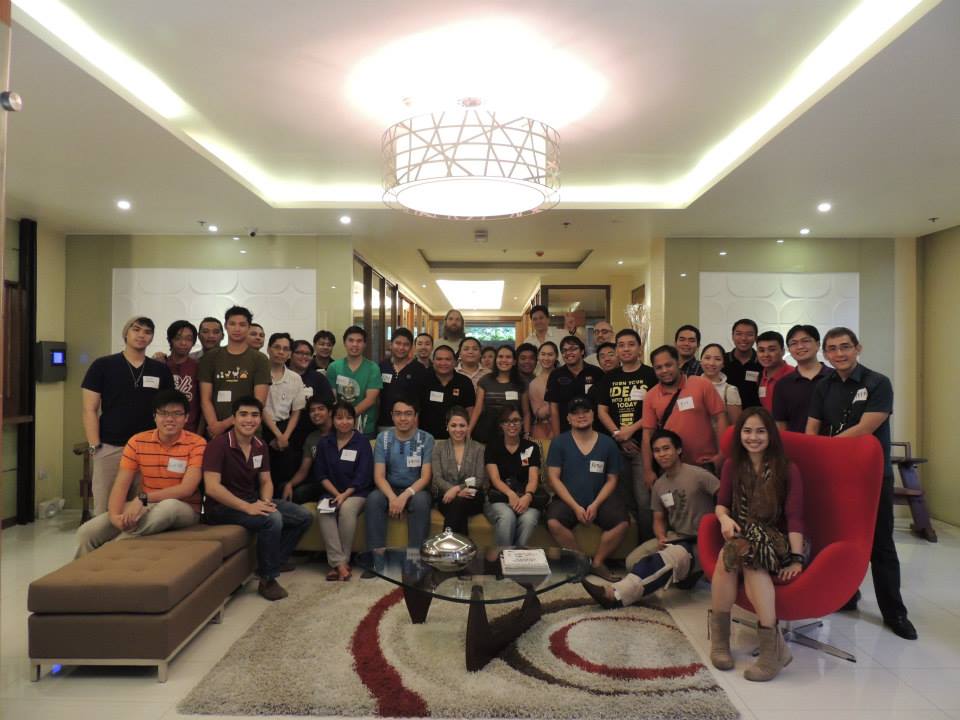
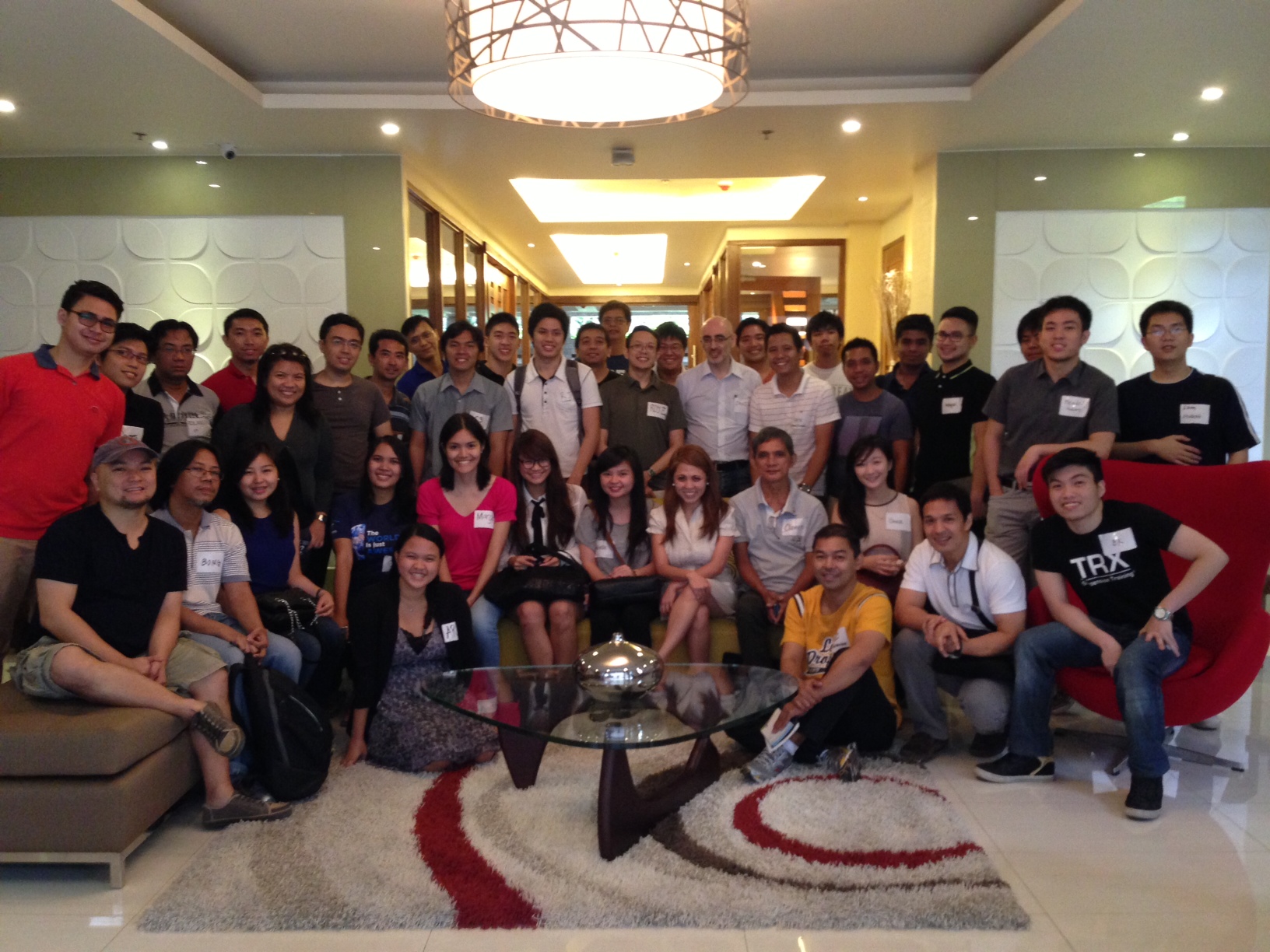
Do join us for the next JGL Open Coffee on July 27, Saturday. We’ll be doing it again at the beautiful 47 East Co-working facility at 47 Esteban Abada, Loyola Heights, QC.
Remember, the more we are, the more value the resulting networking and learning creates, the more chances cross-industry idea pollenation happens. Do invite more awesome people to go with you!
Do reserve your slots HERE, now! Don’t forget to bring P100 for the coffee and snacks.
Seeya!
(Know someone who would especially benefit from attending Open Coffee? Hit the share buttons and be a blessing!)
May Open CoffeeApril Edition at Bo’s CoffeeMarch EditionFebruary EditionNovember 2012 Open Coffee
Much of my opinions here are based on my own journey in helping build STORM‘s customer service function. (This is obviously a work in progress) Since STORM services thousands of employees across a growing number of firms, we had to make sure from the onset we were making the right choices as far as customer service is concerned.
Here’s what I’ve been learning on how to build truly differentiated customer service. As a startup or an SME (versus my experience in my previous life in HR of bigger firms), you will have a much greater chance of building a culture that’s TRULY centered on customer service.
First 3 rules below, next 3 up in the next post!
1) At the very beginning, DECIDE that customer service will be a priority
This first tip is the most important one. Your startup HAS TO DECIDE to make customer service a priority. Then you have to commit.
This is much easier said than done.
There will be a lot of cases wherein you will be tempted to look back on this decision and compromise – very typically to save money.
For example, as we have been growing in STORM, we have been increasing the number of people in our customer support group. We follow certain ratios which we believe lead to great customer service: such as “one person should not support more than 1000 people” or “one person should not support more than 3 clients.”
As we experienced further growth however, we inevitably were forced to confront the question: in the name of right “scaling,” do we compromise on our ratios? Do we overload our current team to save a significant amount of money in hiring?
We always went back to our initial decision: since customer service IS a priority, then no, we will not compromise on our ratios and our service levels. We figured, if we truly wanted to make customer service as a differentiating competitive advantage, then we CANNOT compromise.
A short-term, traditional thinker would always opt to choose the money.
If you, however, want to really hone in on customer service, and if you see the strategic value of doing so, then you bite the bullet and spend.
2) Recruit the right team
This is another tip that’s very hard to actually implement. Here are some of the things I’ve learned in forming a customer-focused servicing team:
– Hire happy people. If you feel bad vibes during the interview process, don’t second-guess your intuition. The airplane test (if you were stuck in an airport, would you enjoy hanging around with this person?) works especially well with customer service.
– Hire empathic people. The book Strengthsfinder has a good description of what to look for. These guys are naturally able to put themselves in the shoes of the client and say the right things. Hunt for these people.
– Be extra cautious with hiring ex-BPO employees. This seems to be counter-intuitive, after all, aren’t customer service what BPO companies do best? That’s what we thought also – so we hired a number of BPO people for our own customer service team. Then a pattern began to show – we were having problems with them.
Of course, we have to be careful in judging and making hasty generalizations, but this was the pattern we experienced. Perhaps it’s because people from the BPO sector are so used to “traditional” customer service practices – scripts, the faster calls are done the better, having little real freedom to solve problems for the caller – that they get thrown off when we tell them to do something very different. In any case, when you do hire one, you have to make the person realize your definition of “customer service” is vastly different from where they came from.
(for one thing, a company who’s TRULY invested in customer service and considers it a value and its CORE business would NEVER outsource customer service to another company. Think of the companies you would associate with “great customer service” – I bet not one of them outsources it)
– Make the TEAM do the recruitment. Eventually, as you hire happy and empathic people and putting them on one team, something interesting occurs. By the very nature of their personalities (if you recruited well) and shared work, they become a close-knit group. Instead of force-feeding people you (or your HR) select in that close-knit group, make this GROUP decide if they feel someone is a fit to join them.
3) Empower and Trust
Once you’ve hired happy, empathic, helpful problem solvers to work in your customer service team, you have to:
Empower them – they need to be able to have enough resources and accessibility at their disposal that will allow them to REALLY solve problems.
Give them access to decision makers in every department in your firm which affects your service. Give them access to complete client data. Give them enough rope to make calls. Here’s a biggie: give them enough freedom to exercise their natural THOUGHTFULNESS for the clients they service.
If we delivered the wrong item to the customer, aside from apologizing and explaining to her what happened, can we also give the right item to her for free?
If the customer waited 20 minutes for his food, will the customer appreciate a 50% discount?
In order to be truly effective, your guys need to be able have the freedom to make thoughtful decisions like this.
Once they are sufficiently empowered, you now have to TRUST that they will do the right thing. Then just let them do their jobs. Don’t pressure them in a way that they second-guess their decisions.
NO SCRIPTS. No process map. Nothing canned. (we already know these suck when they are used on us, right?)
Let the good people you hire service your clients uniquely. This is what we expect and want when we call any customer service hotline or go to a service center right? We have a unique problem we need help in solving. We have particular needs. We want information as to what’s REALLY happening. We want people to be honest and upfront. We want people truly talking and trying to solve our problems – not be bombarded by scripts we can smell a mile away.
You want to meet (and exceed) these expectations? Then nothing should be canned. You need to empower problem-solvers and give them the needed leeway to their jobs (and more).
A couple of weeks ago, I was waiting in line at a Toyota Service center, waiting for someone to estimate the costs for the damages done to my car. (by a brake-free 20-wheel truck going down a flyover – but that’s another story) I waited around one hour. Then, someone signalled for me to proceed to a chair in front of an assessment officer’s desk. I waited for around 30 minutes more.
Wait, was there no one at the desk, you ask?
That’s the unbelievable part! There WAS SOMEONE at the desk. I was ignored for 30 minutes as he was doing something else (picture below). Then, once he finished whatever paperwork he was doing, ONLY THEN DID HE LOOK AT ME to say, “Can I help you sir?”
I find it just amazing that virtually ALL companies have “Customer Service” as a Company Value. A number state these values on a huge wall in their offices or sites. This obviously means that Customer Service is something that companies take very seriously right?
In light of this, isn’t it funny how we just brace ourselves when we need to call a customer service hotline, or cue up at some customer service desk? Don’t we all have stories such as the one I narrated above?
(Sadly) We EXPECT bad service.
If I only had a ketchup bottle in the picture above…
Please, please, promise me you won’t be a customer service cliche as you service the clients of your startup/business.
Our country now has such low expectations when it comes to being serviced properly. There is a big opportunity to stand out as a provider of awesome customer service.
NEXT POST: Tips on how to build a kickass customer servicing team!
























 JUAN GREAT LEAP