Forget the search for the next great idea. Look for your inner fire, instead.

A couple of days ago, I was talking to an “idea guy” with 6 startup ideas he wanted to pursue. I listened and gave my opinion on each. Then he looked at me and asked:

So what do you think?

Puzzled, I replied:

About what?

Coyly, he then asked:

What should I choose?

No mentor, confidante, or adviser can answer this sort of question.

Only you can.

It’s easy to get carried away with money potential, or how “sexy” an idea is. Careful. Choosing a startup solely based on these will almost guarantee failure.

The process starts internally. Follow your heart.

We have heard this from thousands of successful entrepreneurs: your passion will fuel your startup. 

So what ignites you?

August 8 JUAN GREAT LEAP startup event is now FULLY BOOKED at 250 pax

The August 8 event, Ayala Foundation Presents: Juan Great Leap is now fully booked at 250 registered participants.

For those who have been able to register:

One, please don’t flake.

Two, if you suddenly cannot make it to August 8, please do be considerate enough to email me ASAP that you are relinquishing your slot so another person can attend in your stead.

For those who did not make it to the 250 count: 

There will be more startup events and activities you can participate in the very near future. I’d like to recommend that you subscribe to the Juan Great Leap newsletter (punch in your email on the right side.) Juan Great Leap blogposts, announcements, and other activities are sent directly to your email address by subscribing. Needless to say, I will never spam you nor sell your email addresses.

Also, like I mention above, if slots are freed up, I’ll announce it. If ever, these new slots will be available on a first come, first served basis.

Friends, you know I’m really humbled and honored that we’ve reached 250 this fast. To think when I started the blog, I thought, “if 10 people read the blog, I’d be happy.” I’ll do everything in my power to ensure we all learn as much as we can from August 8.

Cheers!

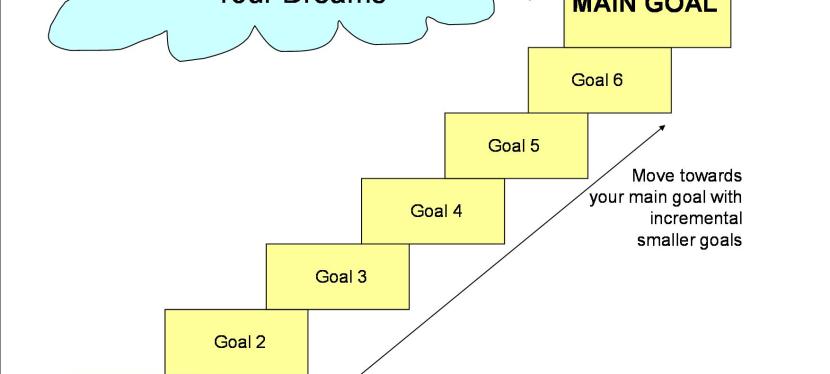
Your Goals Should Be Dreams With Deadlines

Every start of the year, our corporate bosses talk to us and we are given our “annual targets.” These are quantitative or qualitative goals which we are instructed to focus all our attention on.

It could be something like:

            P12 million quota for someone in sales,

            Reducing costs by 20% for an operations guy,

            Improve the satisfaction index by 5% for an HR guy, or perhaps

            Increase total calls serviced by 15% for a BPO team leader

The side effect of this process? If we are not careful, these goals become our personal goals for the year. To illustrate, when you ask the guy in sales what his career goal is for this year, he will most likely say, “P12 million.”

This is dangerous.

Soon, with our head down working, 3-4 years of this can seem to zip by in a flash. Then we are left wondering:

OK, so what have I accomplished?

The seeds of quarter-life crisis.

After we graduate, when we go out into the world and start our careers, we often forget about who we really are, don’t we? We almost unconsciously put aside our own dreams and ambitions, and enter the corporate rat race. Our goals become the corporation’s goals. This is further drilled into our heads by annual targets.

The HR guys in Career Management will forever preach (I should know):

Company goals should align with your personal goals. Tell us what your personal goals are so we can help you manage what will surely be a long and satisfying career here. 

Uhm, yeah – but only if your goals can exist within the company’s narrow field of vision. Try to see what happens when you tell them this:

I want to be my own boss, have freedom with my time, and work on an idea which involves movies.

Taking our cue from the corporations themselves, shouldn’t WE think about alignment?

We should ensure that our annual goals are very much aligned to our dreams.

Is it your dream to create a startup? To pursue a freelance consulting career? To be a restauranteur?  To create a satisfying career doing what you love but at the same time affording you more time to spend with your kids?

What can you do this year which can help you inch your way to your dream?

August 8 startup event is now 200% booked, 45 slots left

In only a week after the event announcement, we realized that the planned 100-person attendance was going to be blown to bits, so we  increased capacity by removing tables and altering the original space format.

As agreed upon with Ayala, we shall be limiting registration to 250 heads. As of 3:40 today, the attendance rate is at 205 heads.

There are 45 slots left.

For those of you planning to go, please sign up here now. We shall be closing once we reach 250 heads.

Again, please do not be a flaker! As we are getting closer to the date, I know we are also finalizing our respective schedules. If you are just now finding out that you cannot make it, please email me at pcauton@yahoo.com so we can give the slot to another person.

Thank you so much and see you at the Technohub on the 8th!

Startup Funding: The FIRST option should always be doing it on your own

I’ve been blessed to have talked to a growing number of young entrepreneurs over the past few months. One common concern for the would-be-startup-owner is funding. How do you get the funding to start?

The two general answers are bootstrapping and raising investment money.

There are other interesting fund-raising strategies arising, like crowdsourcing, but that’s a topic for another post

Before I give my bootstrap-biased opinion on this, let me give the easy answer first, which is: it depends on the idea. 

THE EASY ANSWER:

Generally, you can look at the following things when determining which path to take:

1. Do you need a huge capital investment to break even?

2. How big is the market and how fast will it develop?

3. How strong are the barriers to entry?

Capital Requirements

This is a bit obvious. If your idea plans to generate a huge sum of money, but needs, say, P20 million in initial capital to start, then you probably need funding. If you are making a significant play on retail and do not have generous family members or friends, then you probably would need funding. This is why technology firms are so  attractive – a mere ten years ago would need millions to set up an internet firm. Nowadays, the costs are becoming almost negligible. If you do not need a large sum to start, bootstrap.

Market Size and Growth

If you are planning to immediately take on a huge market, or a market which will grow really, really fast, then you probably need to acquire funding. Capturing a sizeable market requires investment (usually for marketing and sales). Witness Serenitea. They were the first milk tea place of its kind in the country (as far as I know). When competitors started appearing left and right, they suddenly had to put up a lot of sites (and invest in new technology, like those circular buzzers) to defend their position. Putting up those sites required funding.

Barriers to Entry

If your idea has low capital requirements to get started AND has the potential to be a big business, then it will boil down to barriers to entry. If your idea is NOT defensible (an individual with deep pockets can set up a competitor really fast), then it is advisable to acquire funding to capture market share immediately and seize the opportunity. If there is little chance for a competitor to beat you to scale because you are doing something really unique, or IP, then it might be best to bootstrap.

The guidelines above can be considered as general guidelines for figuring out how to finance your startup. Here’s my opinion though:

MY OPINION: As much as you can, always bootstrap. 

Short story.

Early this year we had an idea which, according to the guidelines above, was much better suited for funding than bootstrapping. So my team went around fundraising for P4-5 million. Established venture capital firms found the idea a bit too small to fund.

note: venture capital firms raise millions of dollars of funding for startups – but they can’t spread themselves too thin by spreading it out to too many small opportunities, they’d rather select few, bigger opportunities which have the potential multiplying their investment 10x, or even more, in 4-5 years

We then tried to go after Angels and other investment houses. Basically, we were trying to sell 20% of the firm for around P4 million of funding, at a P20 million company valuation. This was a typical way startups in the US did it, according to my extensive review of the literature.

Here’s the typical response:

“Idea sounds great, but if we are taking on the entire risk, then we would require 60%-80% of your firm.”

After getting the same quote from a good number of investors, we figured it was just a bit different here than what US literature suggests.

A team of bootstrappers, there was NO WAY we would have been amenable to those terms. So we regrouped, re-calculated our figures, tightened our belts, and basically, innovated. This new firm will now be launched within a month.

Here’s three reasons why you should try bootstrapping first before resorting to funding:

a) You are forced to be more creative

Spending your own, hard-earned cash will force you to have an augmented sense of fiscal responsibility, create a deep sense of urgency, and will make you exhaust all possibilities for solutions. Sounds like the ingredients necessary for a successful startup.

Spending other people’s money is very much akin to how most of us manage our credit cards – poorly.

b) You will have more power on the negotiating table

Once you generate traction (your business starts making money), then it is but logical that you will find yourself with more leverage on the negotiating table, in the event you want to seek investor money to finance further growth. If you have shown NO PROOF that your idea can work and you need money, then that 80% equity request will seem to be logical from the point of view of the one shelling all the cash out. Oh, and investors won’t treat surveys nor “research findings” as traction. You have to show money to show you are making money.

c) We often over-estimate market size, market growth, and competition

A number of the pitches I’ve seen reflect eye-popping numbers when it comes to market size and growth. Bluntly speaking, these are just guesses – and more often than not, the numbers will prove to be more earth-bound. More earth-bound numbers lessen the actual need for funding (in accordance to the general guidelines above).

Competition is also typically exaggerated. (Once people get a hold of this idea, it will spread like wildfire! So we have to act now!) After years of listening to ideas, I’ve yet to see an idea “spread like wildfire.” After all, it’s really in the execution.

Instead of market guesses, the best thing to do is to build an actual low-cost MVP, try to sell it, and gain traction.

In other words, bootstrap.

d) Why hire a captain of your own ship?

One HUGE reason I went the entrepreneur route was freedom. I wanted to be my own boss. If someone else buys 60% of your firm, then guess what?

You aren’t the captain anymore.

e) Raising funds is distracting

The first order of business when you have a startup is taking care of the product. You have to learn more about it, talk to potential and current customers, iterate, strategize, create. In raising funds, it’s easy to get distracted about the allure of raising millions for your startup. Then there’s all the “due-diligence” you need to work on, meetings to attend, figuring out the numbers. This can become a real attention grabber, keeping you from focusing on what is truly important.

An Entrepreneur’s Thank-You List

I’m writing this as the final minutes of my birthday tick away. I’m trying to assess how I feel. On most birthdays, I feel sentimental, nostalgic, and often existential. Tonight though, I feel blessed that more than anything else, I feel an overwhelming sense of gratitude. I just feel compelled now to pump out this list of people I need to thank on my 37th year of existence. My own little public shout-out for the people who’ve meant so much to me. Hope its not too care-bear sappy! Here we go:

  • Mama, papa, thank you for your unconditional love and support. In having kids of my own, I’m now beginning to understand what sort of love and dedication you showered upon me. Thank you the struggles you went through in raising us siblings and in making ends meet. Thank you for raising me the way you did. Being entrepreneurs yourselves, I think it’s where I got the gene. You also gave me male pattern baldness. This helps in branding, somehow. Also helps me get remembered by village guards when I enter villages without the right stickers.
  • My brother Gian, thank you for your friendship and unwavering dedication to the family. You are one person I know I can count on unconditionally. Too bad our legendary NBA 2K battles are looking like a thing of the past – I know it’s there where you like learning about humility.
  • One very familiar topic you will find in this blog is on finding the right co-founders. What a huge favor from God that the timing was just right when Paolo said yes 7 years ago in forming STORM with me. Pao, thank you believing all these years. It’s amazing to think about what we’ve shared – crazy-bad hires, “dude, we need to put money in the bank again” moments, part-time/full-time dynamic, finding our faith, finding our wives, the thrill of landing massive deals (and losing them), body-weight fluctuations, and now five office movements! 7 years seems like a long time, but you know what? I really feel we’re just getting warmed up!
  • To the naysayers – thank you for helping motivate me (no really). It’s crazy that I remember all the lines in verbatim:

Why would he pick to do that if he has a stable job?

I wouldn’t invest in that idea. 

Companies would never decide to go for flexible benefits. 

  • To all the people who work with me in the companies I’m engaged in – it’s an honor to work for you and with you. Dino, Suzy, Yana, Gino, Paulo, Patrick, Eljane, Aimon, Bien, Lincong, John, Jhe, Kris – you have no idea how much I appreciate all the hard work and effort. Let’s kick some serious behind, eh?
  • To all people I’m incubating ideas and startups with – thank you for your passion, ideas, and creativity! More than anything, thank you for believing and trusting me.
  • To my Living Hope community – my friends, thank you for being family. Thank you for always inspiring me and being my safe place. Thank you for constantly guiding me towards the right perspective. You are my spiritual compass and support. Thank you for keeping me sane.
  • To my three children. One day soon you will be old enough to read this. Thank you for letting me feel a new, profound sense of joy I’ve never felt before. You hold my hopes and dreams.  I love you and will always be there for you.
  • To my wife Pauline – thank you for being my rock. Thank you for always standing by me, for being patient with me, and for bringing me closer to God. Thank you for holding my hand, crying with me, singing with me, watching our kids with me, and being with me. You are my best friend and my idol (except for physical activities, grocery shopping, and restaurant ordering),  my wife and my life. Thank you.
  • To my Almighty Father – I am unapologetically Yours. You have given me everything: all I can do, all I have, all I love. I can never thank you enough. Thank you for loving me so completely. May all I do be always in accordance to Your will.

August 8 Startup Event Now 50% Booked

If you’re planning to attend the August 8 Startup Event at the UP Technohub in Quezon City:

Ayala Foundation Presents: Juan Great Leap – Transforming Your Idea Into Startup Success, 

then you better register here now, as the 100 slots are now half-filled after we released the announcement just a couple of days ago.

I’m really excited to get to meet all of you on the 8th – I’m sure we’ll all learn from the panel and from each other!

See you then!

You can choose your own adventure!

It’s not just about the money. It’s not just about making a dent in the world.

It is very much WHAT SORT OF DENT  and WHERE YOU WANT TO MAKE IT. Ultimately, the answer boils down to WHO YOU ARE.

What do you like doing? How and when do you do your best work? What are you good at? Bad at?

In corporations, you usually pick a department or a function you think you can grow in. So as a green-behind-the-ears fresh graduate, the thinking would be a bit simplistic:

“uhm…I like people so HR might be the field for me”

or

“I like numbers so I’ll give finance a try”

It’s obviously not so simplistic.

It might be the right field, but not the right industry. It could be the right field and industry, but not the right company. Nor the right boss. Nor culture. Nor pay. Nor workmates. Nor morality. Nor a plethora of so many other things.

Some months ago I had lunch with a reader who finished near the top of his class in an IT course and promptly spent the next 10 or so years programming for large firms. I was just astonished at how direct he was in saying he completely hates it. 

Now he’s on the path of reinvention.

In corporate, you always wind up conforming a bit – because no company or position will ever fit perfectly.

In startups, it’s a bit different.

A founder CREATES rather than conforms. She chooses the field she wants to operate in, chooses the battles she wants to be involved with. She chooses the people she wants to work with. She also chooses what role to take.

What should dictate these decisions is the founder’s knowledge of WHO SHE IS. If she creates a startup which makes money doing something she finds completely boring  – then this quickly becomes torture, and soon, the entrepreneur will feel inevitably trapped.

The thing is, we usually need to experience things before we realize whether “this is me” or “this is not me.” This is why we end up trying out different companies, and even different careers throughout our corporate life.

In startups, it works a bit differently.

Logically, you will pursue opportunities and ideas which interest you. So hopefully, you are already building a startup densely populated with “this is me” elements.

As far as role is concerned, when you start, you do EVERYTHING in a startup. And oh boy, what a tremendous learning experience that is – because you find out SO much about yourself. From 10 years of doing HR in corporate, I suddenly did finance, marketing, sales, HR, operations, admin, and many more for STORM. Eventually, you find out more about yourself, and what you love doing.  It’s like getting a job in a dozen different departments at the same time.

As your startup grows though, you can then slowly focus on the stuff you love. You can then change roles internally with a snap. You can hire for your gaps.

For example, if you find out that rocking the “startup CEO” role just isn’t your thing because you hate client work and only wish to work with numbers, then you could just hire a CEO or get a partner who can do that role. You can then work on your numbers.

If all you want to do is program, you could just get someone who can sell.

You can make it what you want.  You can build around who you are.

(Subscribe now to Juan Great Leap and get the email newsletter!)

Who Wants To Buy HOPELESS HAPPINESS? (Always Test Your Marketing Materials)

Check this ad along EDSA:

So When I first saw that sign, I was confused: wait, why would a company – in health insurance at that –  want to sell hopeless happiness?!

Then, upon, closer inspection, I saw what they were trying to accomplish with the shadow and stuff. Since I always pass by that part of Edsa, I’d always ask my co-passengers what they read or saw when they saw this sign. The results would always be:

Hopeless Happiness

I’m not so sure who did this ad for Medicard, but I don’t think the intention for this ad was:

When people see this ad, they should immediately think “Hopeless Happiness!” When they closely inspect it though, they should see that Happiness is the shadow Hopelessness casts. (whose symbolism I still can’t really figure out)

There are numerous other examples of this. (you can post more examples in the comments section!)

Lesson here: it’s not enough that we triple-check our marketing materials and copy. We have to TEST them with other people.

It’s not enough that it passes our own paradigm. Oftentimes, we are too close to the material that we don’t get to see what the everyman will get to see.

No need to hire an expensive marketing research firm. You can start by sending the copy to 20 different friends through email and ask for suggestions (people love to give their opinion in stuff like this). Post it in Facebook for a few friends. Grab a projector, project it on the wall and let the whole office comment without you rendering judgement.

Test. Test multiple versions and make people choose.

More importantly, try to simulate the actual medium the copy will be reflected in. If it’s website copy, don’t show it to people in Word format, plug it in a Powerpoint presentation which simulates the website to be developed.

(so if you have a 50-foot bllboard, don’t post it in EDSA first. Unravel the thing, hang it by a wall, and see how people take it – and yup, I think it’s worth the hassle)

ADDENDUM: Apparently, it’s not the only MEDICARD sign of its kind. There’s another sign, also along EDSA. The same idea but with these two words instead: “ANXIETY ASSURANCE” 

Anyone with a pic? 


Ayala Foundation Presents: JUAN GREAT LEAP! Transforming Your Idea Into Startup Success

WHAT: Ayala Foundation Presents: JUAN GREAT LEAP! Transforming Your Idea Into Startup Success

WHEN: August 8, 2012, 6:30 pm

WHERE: AYALA TBI,UP-AyalaLand Technohub, Commonwealth Avenue, Diliman, Quezon City

HOW MUCH: FREE!

WHERE TO REGISTER: HERE

Limited to 100 slots. Food and drinks shall be served in the venue.

——————————————————————————-

Here. We. Go!!!

As I promised a few days ago, I cancelled the last Juan Great Meet to make way for a bigger event.

The Ayala Foundation- TBI (Technology Business Incubator) is sponsoring  the next Juan Great Meet (not naming it MEET first so its more accessible to a wider audience)

The event is designed to let the participants learn and understand what exactly it takes to build a successful startup from idea to product delivery and development. We’ll be learning from four different entrepreneurs.

I’ll be hosting the event and will be delivering the keynote address (What it takes to achieve startup success).  Then we’ve invited 3 successful entrepreneurs to share with us how exactly they’ve taken their ideas and transformed them into profitable and meaningful ventures. We’ll be asking them to share real experiences and practical tips we can all use.

Here they are below:

Howard Go: Mobile Game Developer, Co-founder of Mochibits

Glenn Santos: Writer, Serial entrepreneur, Founder of Memokitchen

Dr. Denton Chua: Medical and tech entrepreneur, CEO/President of Health Cube

(I’ll be posting a more detailed account of their backgrounds soon)

Then, I’ll be facilitating a panel discussion / Q&A with our three guests. Exciting stuff!

We’ll be ending the night with networking and drinks.

Just 100 slots! Register now! (don’t flake!)

Seeya on the 8th!