

STOP CHRISTMAS SHOPPING! (and other different ideas to help Typhoon Yolanda victims)

yolandapic

Coming from a weekend retreat, I only recently saw footage of the utter devastation wrought by Yolanda. For a good hour, my wife Pauline and I were just silently watching, with a hand on our mouths. I’ve never seen this kind of footage from Ondoy, Habagat, or even the recent 7.2 Bohol earthquake.

It was heartbreaking.

I have some friends with families in the regions affected who still cannot call to confirm whether or not their loved ones are alive or not.

It was also particularly shocking to see our countrymen resort to looting. I think this is the very first time I’ve heard of this happening, even if we seem to be hit by a disaster every quarter. This is one proof for me why Yolanda is unprecedented.

(this morning’s Inquirer headline confirmed this: The Worst Disaster To Hit PH)

I don’t think we’ve ever been hit this way. Not like this.

So you know what?

Let’s respond with something unprecedented. 

Let’s respond radically. Let’s give till it hurts. (because a massive amount of people are hurting at an unimaginable, exponentially higher rate)

Here are some ideas:

stop

STOP CHRISTMAS SHOPPING

Instead, give them cards that tell them you’ve donated in their name. Better yet, give those “I donated ______ to Typhoon Yolanda in your name” cards NOW as an early Christmas gift. Then, very importantly, encourage them to do the same.

The gifts you DO get during Christmas? Donate them. Better yet, tell your family and friends now NOT to give you a gift and donate the proceeds instead.

Perhaps we can all spend Christmas in a humbler, more austere way. (you know, like Jesus did)

tell your boss

TELL YOUR BOSSES YOU WANT TO DO MORE

Is your company doing enough to help out? If not, stop being a silent mouse and tell your boss. He should listen earnestly and at least hear you out. If not, then this is your big sign that YOU SHOULD RESIGN. You can suggest ideas like calling work of for a day to volunteer, or asking employees to donate a day’s wage.

strengths

GIVE ACCORDING TO YOUR STRENGTHS

Think like an entrepreneur and play according to your strengths. If you have a lot of money, then by all means, give until it hurts. But one can give so much more than just cash. Are you a gifted writer? Then write and stoke the hearts of hundreds to give even more. Can you cook well? Then cook simple food with flair (say, fancier-than-usual lugaw) and organize a charity dinner at P2000 a plate at your house. Do you have a great social media network? Then help your friends the writer and the cook. You can be creative with your giving.

clothes

DO A COMPREHENSIVE HOUSEHOLD AUDIT

I’ve never seen an efficient house which optimally everything it contains. Go around your house and do a quick audit. All the clothes you’re not using (and yes, when you do lose those 20 pounds, just reward yourself and buy new clothes), all the kitchenware you’re not using, all the toys who are Toy-Story-Dreaming to be played with – don’t give yourself time to think: just pack them in a box and donate them.

(photo from www.philstar.com)
(photo from http://www.philstar.com)

THINK LONG TERM – DO NOT FORGET ABOUT THE CORRUPTION

There is one sick set of people who actually might find this carnage good news – the ones who would want us distracted from the recent whisteblowing going on in the government, especially concerning the recent Napoles hearing. This has EVERYTHING to do with our disasters.

Time and time and time and time again, we something like “the disaster could have been minimized if we had better infrastructure.” Unfortunately, as long as Rolexes and Porsche’s are being bought instead of bridges and buildings, we cannot hope to maximize our level of preparedness. Do not forget. Exhaust all means necessary to prevent corrupt people from taking office. Exercise your right to vote.

PRAY UNCEASINGLYpray

If you typically pray mostly for your own problems, then it’s a very good time to start praying for others. Pray for those who passed. Pray for those who survived them. Pray for those who have no one to pray for them. Pray often. Pray like you’ve never prayed before.

Remember, this time, RESPOND UNPRECEDENTEDLY.

(Be a blessing! If you found this post and the ideas it contains to be helpful and you think they will be helpful to others as well, then SHARE unprecedentedly!)


On Scaling, the Recent SOFTCON, and the Wonder of Technology

Recently, I took a picture of the weekly FLEXIBLE BENEFIT products we received in our office and now had to deliver to our clients:

flexproducts

There were hundreds of items ordered in a span of a few days.

It was the very first time I’ve seen this many orders made in our system. We had to find a room to keep all the items secure.

The problems we’re facing in STORM now are very different from what we’ve faced over the last few years. Before, we would just be consumed mostly by sales and developing the technology further.

(and you know, startup stuff like “where the hell do we get the money for next month’s payroll?!”)

Now, while the above-mentioned things are still supremely important, we find ourselves worrying about corporatey stuff, like inventory, supply chain, financial ratios, and high-grade efficiency.

I realize these are good problems.

STORM is scaling.

By the end of this year, we would have something like 12,000 corporate users. We’re aiming for much larger things in 2014.

I then reminisce about how STORM started some years ago, and I find myself feeling quite blessed to have ended up choosing a TECH idea.

Soft Spot

Yep, Juan Great Leap is all about GENERAL entrepreneurship. It’s all about taking the leap and the process of being captain of your own ship – regardless of the type of ship.

As a tech entrepreneur though, I guess I’ll always have a soft spot for tech startups.

It is after all, what I think is the great equalizer. 

In almost any industry, you would need to spend a fortune to build an industry leader. Want to get into retail? You need to invest millions in machinery, R&D, and the right supply chain infrastructure. Want to do a resto? Yep, it would require a ton of capital as well. Want to build a benefits firm? Without tech, you’d be looking at creating a new HMO, or a new insurance firm. Again, millions.

Technology changes everything though. It disrupts.

Technology has allowed a nobody like me to START FROM SCRATCH, and build what is now the largest local flexible benefits provider.

You got a laptop? Internet access? Some programming skills (you or a partner)? Then guess what? Armed with the RIGHT business model, you too can create a scaleable startup right out of your living room. Like we did.

SOFTCON

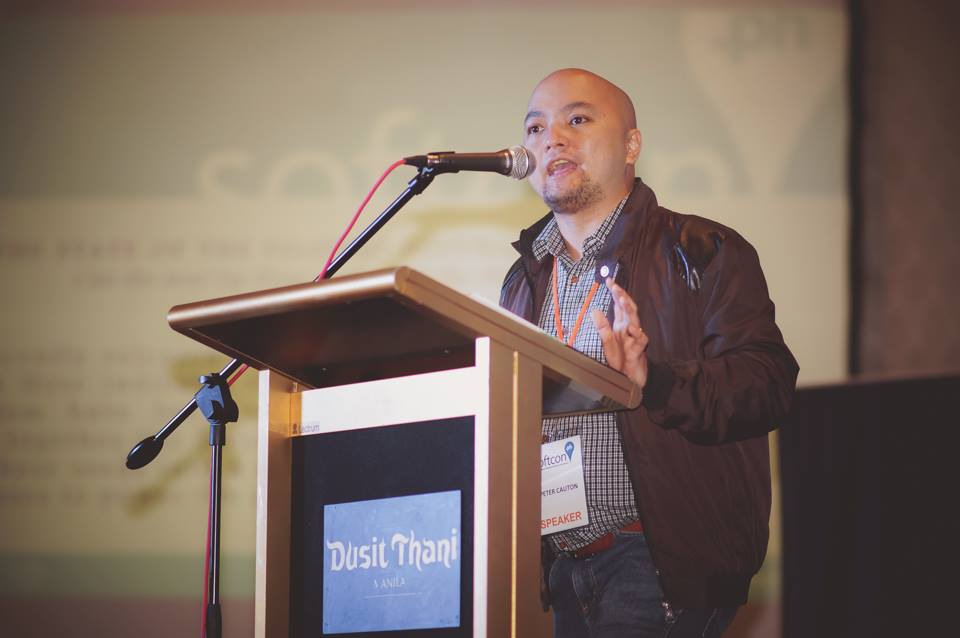
A couple of weeks ago, I had the privilege of being invited to the very first SOFTCON.PH (software conference), which was being organized by the Philippine Software Industry Association or the PSIA.

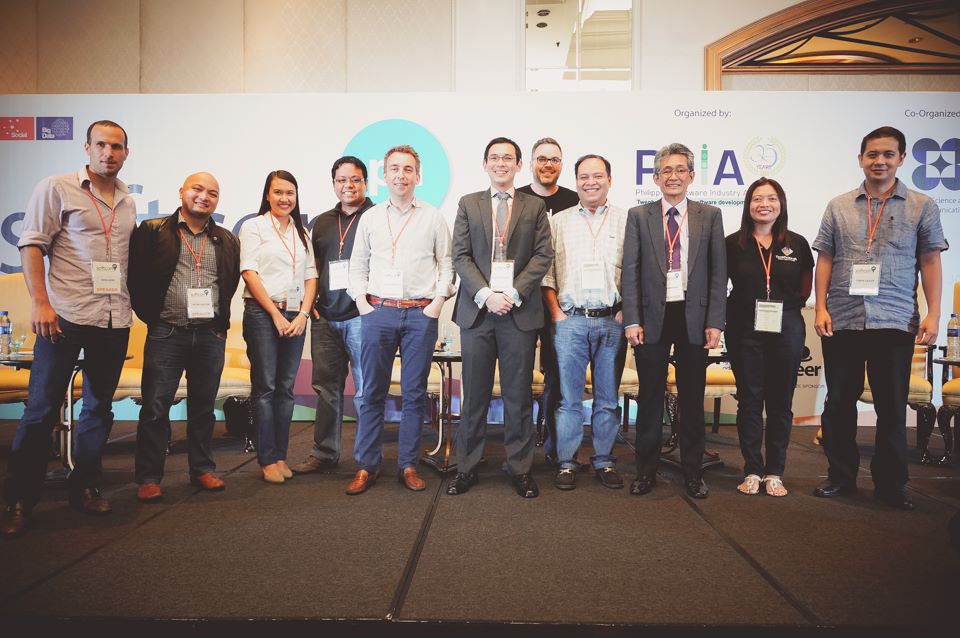
I was invited to moderate the startup panel (which was, as I found in the photo op after, a group of really tall people).

I looked at the agenda. More startup stuff! There was another panel “From Startup to Exit.”

I thought to myself, “Hmmmm…for a software conference, man, they sure talk a lot about startups.”

(I was thinking they’d be more talks like “Data Warehousing in 2013 and Beyond” or something)

Then it hit me.

Most of the member groups – and almost all of the most active players – of the PSIA are LOCAL Filipino software firms. Gurango Software. Pointwest Technologies. Seer. Stratpoint. Blastasia.

Startups. Some time ago, these guys were also building their businesses in someone’s living room.

Yep, the PSIA member lists reads like a who’s who of Philippine tech entrepreneurs.

You can tell.

Because this group is breeding even MORE startups.

In the room adjacent to the main conference room, they had an exhibit of 20 or so startups that PSIA was helping develop in some way, shape, or form.

exhibit
Main Startup Exhibit Area
perxclub
Perxclub!
skedly
Sked.ly

I found this to be a joy, an inspiration, and really logical, all at the same time.

A joy – because I just LOVE seeing people go for it.

An inspiration – because I found some of the ideas (and more importantly, the execution) to be brilliant.

Logical – because the one thing that you can’t stop true entrepreneurs from doing is to be themselves. Some of our most successful entrepreneurs are STILL going after new ideas.

Panel

host action shot
Moderator Action Shot!

Moderating the startup panel was a great privilege for me, because it was a who’s who of some of the biggest names in the Philippine startup ecosystem.

It was also quite literally the biggest panel I’ve ever seen. So it was a challenge for my moderator-powers.

The panel discussed the state of the Filipino Software Startup.

tall man panel
Startup Panel from Softcon.ph (the tall man panel) (from L-R) So that’s towering Ron Hose (author of the Phil. Startup Report), me, Rio Ilao (founder of Perxclub), Sulit founder RJ David, Kickstart’s Christian Besler, Ideaspace (and Meralco CIO) Marthyn Cuan, Payroll Hero’s Stephen Jagger, Plug and Play’s (based in Silicon Valley) Jojo Flores, Mon Ibrahim (DOST-ICTO Deputy Executive Director), TechTalk’s Tina Amper, and PSIA’s Spring.ph Co-founder (and Seer CEO) Joben Ilagan

We talked about a lot of interesting stuff, but the main takeaway I want to share with you?

It’s early. The Philippine startup ecosystem is in its veritable INFANCY.

TRANSLATION: Take the leap NOW people!

Opportunity Everywhere

Last week, I pitched an idea I had to a well-known Filipino entrepreneur (free, courtesy of a cross-country Skype session – technology is amazing if you think about it!) to get some input.

He gave a lot of very useful advice.

Then, I finally asked him to summarize: wait, do you think it would work?

His answer: “I think it’s a good idea. Though now there are good ideas everywhere if you just apply technology to an old concept. The key really is how your execution will be.” 

TRANSLATION: Take the leap NOW people! Sniff out those good ideas, because he’s right – they are EVERYWHERE if you know where to look and train your eye

My quick advice: think long and hard about doing a TECH startup. If you have a non-tech idea, think – how can I I apply technology to it?

My Year in the Philippines: Reflections On Starting Up and Development

Miarayon, Bukidnon, Philippines

I’ve been in the Philippines for almost exactly a year now.

Oh, what an incredible ride it has been so far. Within the year, I’ve had so many different experiences from starting things up with JGL to a brief stint at co.lab to being part of the launch of Ashoka Philippines.  Life has been unpredictable. I’ve been exposed to so many new and different ideas. So many different people. I’ve gained a sense of belonging in a country that has opened my eyes to the world.

The year has really been such a gift and a strong driving force of change for me.

I remember the days when I only had one peso in my pocket. I remember the days when I was so desperate for blog content that I would write about playing board games with my nephew. I remember the days when I’d use the term social enterprise at least once a day. I remember the days when everything seemed so new and fresh…when every opportunity that presented itself seemed like a great one. I remember the days, as if it were a distant past and as if I were a different person.

Why do I feel like I’ve changed so much within the last year?

I guess it’s the feeling of being challenged because of people. For example, a two-hour conversation with a passionate and well-informed changemaker would turn my world upside down. From learning about problems in our healthcare system to peace conflicts to education reform, I felt as if I were learning something new everyday from individuals who were really immersed in the world.

I don’t know which direction these reflections are taking me…but I guess that’s how development works. One starts something, learns from it in an ever-changing environment, and works towards progress.

I am developing in my work and my thoughts, as a young person and would-be entrepreneur. I urge young people to soak in everything that the world is willing to teach them.

Never be afraid to speak your mind in hopes of understanding your life and the world that you live in. It is a helpful exercise that will help you get to that aha moment.

Thanks JGL for giving me a platform to start and grow. Cheers to a full year in the Philippines!

JGL’s One Great Leap!

vision

There’s a lot going on now with two of my startups, STORM and STRATA.

People movement, scaling, fire-fighting, creating processes, client meetings, projects, you name it, we’re doing it right now. For STORM specifically, we usually do systems implementation around this time in preparation for the coming year. Plus we’re also renewing with all our current clients. These next few weeks leading up to the first quarter of 2014 will be quite taxing for our team.

I wish there were two of me sometimes.

November marks the 2nd year anniversary of JGL’s first post. While the blog has been growing and our events have been successful. There’s so much that I’ve wanted to do in JGL which we didn’t get to do.

Two of the things we were ABLE to do was launch two projects, two concepts. In lean startup parlance, these were two “experiments.”

Event Poster (Facebook)

The first one was Startups Unplugged. The questions it wanted to answer: can a musical-chairs type of entrepreneurial event attract people?

It did. It attracted 20 of some of the best entrepreneurs in the country.

It also attracted hundreds of people. We filled up a big venue. The event was free. It was paid by sponsors. It made a little bit of money.

PitchCraft_v4-01

The second experiment was Pitchcraft (joint project withy Hybridigm). The questions it wanted to answer: will people pay for to learn entrepreneurial concepts in a classroom-type environment? Can the JGL platform attract enough people for it to be sustainable?

Yep, people paid. That event made almost 6 figures net.

I was supremely excited. The vision for me was getting clearer – JGL was to be primarily an entrepreneurial education and advocacy play. We drew up a lot of plans. A startup “school” with both classroom and online features. Perhaps a startup or two could be incubated in the process.

There was one problem.

Me.

Since this was my passion and my “baby,” I was really hesitant in ceding any control or equity (I’ve been burned a lot of times in the past). So everything was on me – veritably doing yet ANOTHER startup, this time by myself, going against a lot of the very things I’ve written in this blog.

Since my time was taken up by my other responsibilities in my other startups, none of the other JGL plans transpired.

This was frustrating.

So the past few days I’ve been pondering and praying.

Do I keep things as is, or do I try to change things? 

Conclusion: I want to go after that vision. And I want to do it more aggressively than before. This will mean changes.

I would need two very crucial (and familiar) things: funding and an entrepreneur.

JGL IS RAISING MONEY

I’m going to be raising capital. I’m thinking of raising it from 4 individuals, ideally representing 4 very different areas of entrepreneurship. (maybe one from tech, one from social enterprises, etc….). They will also serve as JGL’s advisory board. The capital will go mainly to hiring 1-2 people who will be on the ground and as capital to set up the first few courses. There’s also an online content strategy I want to pursue.

What’s in it for the investor? 

1) First and foremost, you get to help Philippine entrepreneurs. Call me corny, but this for me should be the primary motive of the investor. I won’t partner with anyone who doesn’t share the same passion for the Filipino startup ecosystem and the country as a whole.

2) Second, yes, this will monetize. (see “experiments” above)

3) Third, networking. First crack at getting to know up-and-coming entrepreneurs and startups. I think this is a huge thing. There’s now a growing number of entrepreneurs who have acquired funding from JGL events.

Note: I want this process hopefully done by this year, so JGL can “relaunch” at the start of 2014. I will be approaching investors from my circle as well, but I would like to talk to as many people as possible (as this is VERY important to me, and I want no stone left unturned).

Entrepreneur

Resident Entrepreneur Needed

So, because of the update above, obviously I would needing someone to help me run JGL. I was thinking of what the official job title should be – GM? Operations Head? Business Manager? CEO?

I thrashed all that and ended up what I thought was the most functional one-word description.

Entrepreneur.

The key elements of what I think an entrepreneur should be are: used to uncertain environments, used to risk, creative problem solver, maabilidad (there is no english translation), and a great sense of urgency.

Because of the nature of JGL, I would ideally love it if you would be: a good writer, used to online content management, can handle events, has charisma.

One thing I’m REALLY going to take a look at: integrity.

Man, I’ve been burned so many times by not screening for this enough. (if you KNOW  you don’t have any integrity, please don’t bother reaching out to me)

So there you go. I thought long and hard about making this public. Obviously I’m going to approach people in my circle (and I have already) for both these needs. But I wanted to make this public here as well so I can cast a wider net. (Stealth sucks.)

Interested in helping out? Send me an email at peter@juangreatleap.com

Let’s do this!

Ah! Open Coffee! (October Edition Postscript)

October open coffee

I have to admit, I was worried about the 2-month absence of Open Coffee.

Would we lose momentum? 

Would people still go? 

Will the pitches be just as good? 

It turns out, my fears were unfounded.

I thought October Open Coffee was super!

For starters, after the 2 months, it was great to see the holdovers / familiar faces (around 20 or so, you know who you are) who keep on coming back. You practically feel like family.

Next, I thought, we just had the MOST DIVERSE SET OF PITCHES we’ve ever had. And if you’ve been to Open Coffee before and heard the pitches, you’d know this is saying a lot.

Let’s see….

We had an OFW-children’s support group, a fashion data aggregator, kite-camera artwork (my pick for pitch of the night!), a pitch for Trade School Manila, a government headhunting firm, an observation-based research firm, an inventor pitching wearable air filters, an artwork preservation concept, and many, many more.

The ideas – and the awesome, awesome group feedback that was generated to help them out – are SO much better than how the words above describe them.

You HAVE to have been there. The energy was uncontainable.

Then of course, in something that we should have done from the very first open coffee, around 20 or so of us had awesome lunch after at J-Jay’s Inasal. It was a blast, and we stayed chatting until mid-afternoon.

Lunch was F-U-N!
Lunch was F-U-N!

More pics below! You have to join us next time!

cam basa

I should have been in this picture!
jovitt trinidad holding court
Our coffee sponsor: audacious pinoy retail startup MASKAPE! (pretty good coffee)
Our coffee sponsor: audacious pinoy retail startup MASKAPE! (pretty good coffee) Thanks NATHANIEL GO and MASKAPE for the LOADS of coffee we got!
Fun after the formal pitches!
Group pic! SMILE!
Group pic! SMILE!

Why Startups ARE For Everyone, part 2

(Part one of this series can be found here)

everyone

In part 1, I talk about how the combination of how EVERYONE having something special to offer and the current technology infrastructure now enable ANYONE to build her own startup.

So the question is: why isn’t everyone rushing to do so?

Here are 3 factors why:

ignorance

1) The Information Gap

The first reason is simply ignorance.

We live in a society where our school systems still (by and large) marshall us and train us for the corporate and factory environment.

For a typical college graduate, her primary (and chances are, only) professional concern after graduation is “to get a job.”

The thought of pursuing her own thing and standing on her own two feet does not merit any immediate consideration, if at all. Doing her own thing is a pipe dream.

Even if so many people say in interviews that they want to “someday own a business,” so precious few actually do so. Even the response sounds like a pipe dream: “someday….”

This is what this blog actually wants to address. You CAN do it and here’s how…

For me, entrepreneurship HAS to be part of any university’s CORE curriculum. Think about it. ANY and ALL college courses can be the subject matter for a future startup or freelance career.

If I’m an artist, I might want to someday be a freelancer.  If I’m a programmer, I might one day decide to set up a software development firm. If I’m an engineer, I might someday want to set up a consulting firm. 

So why not equip ALL graduates with the rudiments of entrepreneurship?

fear2) Fear

Ah.

Good old-fashioned fear. (VERY related post here)

The fear can come in many forms: fear of failure, fear of what people will say, fear of not being enough, fear of losing luxuries…

Real or imagined (and I’d say most are imagined) – it’s enough to dissuade the would-be-startup founder.

Stop him dead in his tracks.

3) The Dip

My hairstyle idol Seth Godin has many vaunted books: Tribes, Linchpin,and so on. But I think one of his most useful books for the entrepreneur is a book called The Dip.

It’s been a long time since I read it, but what I’ve always taken from the book – at different parts of my entrepreneurial life – is that the pursuit of the most worthwhile things almost always involve some sort of “dip” – right before things get better. Here’s a graphical representation (click to get a better resolution):

the dip
(Picture from http://www.bennadel.com)

I know a lot of people who quit when they find themselves at the Dip.

At first, its exciting right? Its idea creation time! Or the time to assemble your entrepreneurial avengers! These are fun, fun things.

Then you start.

Then the problems crop up.

Money running out. Founder not carrying his weight. Sales have flattened. Your biggest client drops you. Customers fry you on social media. You have 20-30 problems which need solving, You get punched in the mouth. 

For those who do manage to conquer ignorance and fear, FAILURE could be the one which does them in.

I think this is one thing experienced entrepreneurs understand pretty well. They know its darkest right before the sunrise – so they persevere. (or pivot, but that’s another story)

As you can see, there is nothing in this list that you CANNOT manage.

The barriers aren’t physical, monetary, even concrete.

The only barriers exist right between our ears.

Juan, its time to break through.

(Good way to start? Attend JGL’s monthly OPEN COFFEE and meet like-minded people talk and solve problems!) 

Why Startups ARE For Everyone, part 1

wag

“Startups aren’t for everyone.”

I’ve written this considerably in this blog. (very prominently here)

We’ve also heard it uttered by every other entrepreneur, it seems, right?

“Entrepreneur you say? Well, ho ho ho! You have to have a unique skill set: a combination of cast-iron will, uber-magnetic charisma, the ability to laugh in fear’s face, and space-age technical skills. Oh, and you need to be stupendously lucky.”

(I guess in a way, talk like this validates what we’ve done and makes us feel good about ourselves a bit)

Lately, however, I’m starting to feel differently.

I think startups are for everyone. 

Before you hurl tomatoes at me (especially existing entrepreneurs :), do hear me out…

Defining What a “Startup” Is

Obviously, I’m not talking just about the Googles, Apples, Facebooks, or even the Jollibees and Mang Inasals of the world. Not everyone will build startups like that (believe it or not, not everyone wants to).

One paradigm to take is that being a startup founder is all about independence and the quest for it. 

It’s about not needing a corporation to survive on salary. It means having the ability to build something which enables you to not only pursue a dream, but also to stand on your own two feet.

freedom

Under this definition, small micropreneur ventures who are able to eke out a living ARE startups. Fulltime freelancers who reside on Odesk and Elance? Yep, startups.

That small hotdog stand sideline business you manage to give you extra cash apart from your corporate salary?

It’s a startup if you plan on quitting your day job someday to commit to it. It’s mere sideline if its got no ambition.

Armed with this broader definition, startups are still the small, small minority.

Do witness the vast majority of fresh graduates enter corporate year after year after year.

I believe things are starting to change though. (related blogpost here)

Everyone NEEDS to realize – the perfect storm is here!

This is something I want to shout out with a country-wide megaphone.

I really believe that if one WANTS and DESIRES to, ANYONE can harness his natural talents and passions into a business which earns enough money to pay his monthly bills.

The perfect storm for doing this is now out there.

coming together

For one, information is free and flowing. 

ALL the resources on how to build a startup and be independent is available online.

You want to build a skill? There are FREE courses to be found on the web. High quality.

I know a doctor-turned-cake designer who started her new career viewing youtube clips and then just applying her natural talent.

There are meetups and courses galore, both free and affordable, for hundreds of different interests and topics. You just need to use this thing called Google.

Moreover, the other barriers to putting up a business are just falling like the rain.

Wanna build a website? You can do it for free.

Need to reach people? Social media allows you to reach thousands like never before.

Need a market for your skills? Odesk, Elance, 199jobs, and Freelancer are available at a click. (you will join a growing, great number of pinoys)

picking

The necessary infrastructure for startup success is THERE and ripe for the taking. 

You just need to bring something unique and special to the table.

“But I don’t think I have something unique and special…”

This is where my belief structure comes in.

I think God made each and every person unique and special. Every person HAS something compelling  to offer – enough to make (at least) a decent living out of.

If we add these elements then:

Uniqueness + Infrastructure = Startup Potential

I think there is an entrepreneur in each of us.

What’s stopping the 99% of us in pursuing this?

Information gap, Fear, and The Dip.

Will cover these on part 2!

The Rise of the Free Agent Era and 5 Strategies to Survive It, Part 2

(This is part 2 of a 2-part series. Part one can be found here.)

3) Build Free Agent Skills

So what sort of skills are highly useful in this free-agent era?

Skills which maximize your ability to be independent – skills which can allow you to be highly mobile and flexible.

Here are three really strategic ones you can work on:

iknowkungfu

a) Learn How To Learn Real Fast

Two common realities of the free agent era: there’s always something new to learn, and you have to learn it fast. If you learn things fast, then you can work in vuitually any condition and won’t be a victim of obsolescense.

Adapt and live.

So don’t get married to a skill set (especially technical ones, which get obsolete fast). Learn how to acquire skills fast, especially the tricky personal ones, like negotiation, leading, and reading people. Read up on current trends in your industry of choice. Read books (I can’t recommend an Audible membership enough). Talk to experts and be conscious of your learning process.

b) Selling

selling

Here’s something which I think won’t change anytime soon:  people will buy stuff.

This is how every person, every company, survives.

If you know how to sell – yourself, your ideas, your products, your vision – then that is a HUGE advantage in the free agent world.

If you’re going to have to move UPWARD from company to company, if you’re going to be a great entrepreneur, if you’re going to be an awesome freelancer (really still an entrepreneur), then you’re going to have to get people to BUY what you have to offer.

There is an art and science on how to do this. (and a great amount of literature) Start learning now.

c) Networking

????????????????????????????????????????????????????????????????

Know-who trumps know-how.

I think this is a very obvious characteristic of all the highly successful people I know thriving in the free-agent era – they’ve built great personal networks.

A great network can act like a great parachute in the free agent world.

You got downsized? Good thing you know that HR Director who happened to have job openings.

Your new company is low on funds? Good thing you know a few investors who can give you a bit of help.

But a great network does so much more than be an insurance. I think its a crucial element for those who really want to thrive in the free agent era.

Looking at it from an entrepreneur’s lens, the free agent era is an era of humungous opportunity. The very elements which are disrupting big businesses are the very same elements creating great opportunity. There are SO many industries undergoing disruption.

The MORE people you know, the MORE information you garner about these opportunities, the more likely you can spot those which suit you.

Then you just pounce.

4) Build a Brand 

brand

Let’s say you have two people of exactly the same competency level vying for a marketing manager position.

One person has a marketing blog where he shares his thoughts on best practices regarding his job. He has an updated and comprehensive Linkedin account, and he is a member of several marketing-related groups.

If you google his name, the whole first page is filled with marketing stuff he’s written about and intelligent dialogues with peers.

The other person, meanwhile, isn’t so active. When you google his name, only a few entries come up.

Who do you think gets the job?

Think about it folks, every time you apply for something – a job, a co-founder role, a partnership, a contract – you WILL get googled and investigated.

Use this to your advantage. Build a brand around your strengths and interests.

I can’t tell you how much running this blog has helped me get into contact with several key people, or even get new clients to say they read my blog on sales meetings when I represent STORM.

In the free agent era, there are hundreds of people vying for the same things. Stand out by building your brand.

5) Get away from the herd

herd

I think this is the most important piece of advice in this post.

In case you haven’t noticed, the herd gets ultimately marginalized (a bit ironic if you think about it).

What do most graduates do?

They look for a job in corporate, most without even thinking what they truly want.

They look for the highest bidder.

They will spend 3-4 years and then move on to another firm, moving again in another 3-4 years. )This cycle is markedly faster in the BPO industry.)

Perhaps most are even unaware they are in this groupthink cycle.

Stop.

You want to standout?

Think and act differently.

Zig when the herd zags.

The free agent era rewards uniqueness and being special. Embrace what makes you special (yes, we each have unique God-given gifts which make us special) and get away from the herd. Don’t be afraid of the slight separation anxiety you might feel separating from the pack.

The free agent era obviously loves free agents. (and isn’t so nice to herds) So the best advice I can give in the free agent era?

Go and be one.

(Know anyone who would especially resonate with this post? Be a blessing and share!)

The Rise of the Free Agent Era and 5 Strategies to Survive It, Part 1


(This is the first of a 2-part post)
freeagent

When I was in college in the mid 90’s, I was still hearing the phrase, “employed for life” a bit.

This was when an employer could virtually guarantee an employee’s financial well-being from fresh-graduate to even beyond retirement.

Twenty to thirty-year careers were commonplace and a societal norm.

If you managed to be employed by say, San Miguel Beer in the 80’s, you were literally set.

All you had to do was to work hard, and the company would take care of you – for life!

When I graduated in the late 90’s, I think this sort of reality was already facing upheaval and was rapidly fading.

In 1998 (just as when I entered the job market – what great timing I had), the global financial crisis (and the first internet bubble) happened.

The desperation of firms to save costs, coupled with the latent internet technology base, resulted in the widespread adoption of outsourcing and offshoring – further pushing us into a brave, new global economy.

This new economy was (and is) marked by blazing technological advances – fueling revolutions which now occur at an alarming pace.

Bottom-line? We live in an era of unmitigated dynamism. Nothing can be forecasted with accuracy anymore.

When I graduated, companies were talking about 5-year, even 10-year plans. Nowadays, its almost folly to plan that far – because the newest revolution could just make your plan obsolete overnight (literally).

How does this sort of dynamism affect careers?

No employer wants to make a long-term commitment anymore.

“Employed for life” is extinct. (it now exists in typically very marginalized positions)

Like it or not, everyone is now a free agent.

Trust me, even if your employer says “we value and take care of you,” some global decision in Bucharest can lead to the dissolution of your department. Your company can merge with another and you can be declared redundant. Your company can decide to outsource your job to a crowdsourcing site the new marketing manager recommended to the COO.

You can work like a dog for years, do an awesome job, and STILL be out of a job.

You know I’m right about this – you probably KNOW people who have had this happen to them. (I can rattle 2 dozen names off very very easily)

So what do you do? Here are five strategies to live by.

1) Here’s what NOT to do – Float Aimlessly

lost at sea

If you ever take anything from this post, let it be this. The LAST thing you want is to just act like flotsam, riding it out where the waves take you. There is an infinitesimal chance you end up where you want to be if you don’t plan for it.

I spent the first 7-8 years of my career like flotsam.

I wanted to do marketing, but there were no marketing positions around (you know, during the 1998 global financial crisis). An HR job was presented to me. I took it and justified it in my mind while saying, “I like people, so I must like HR.”

My family got into financial trouble, forcing me to move companies and go to greener pastures. Then, to another greener pasture. Then after around 8 years, quarter life crisis rammed me at full throttle.

How can it be?! I’m not happy in HR!

This was when I started planning a startup where I could one day end up in.

DON’T wait around 8 years floating endlessly. Take your career planning seriously.

Start drafting a plan.

2) Aim for Ownership

owner

In corporate, we aim for positions. Throw this paradigm out the door. Aim and WORK for ownership.

I can’t tell you how rewarding it is to own equity in a firm that’s blessed with success: your equity earns passively, appreciates in value, and is a powerful source of motivation (you work harder for something you own). You can also be very flexible with it – you can hold on to it or sell it. You can never be fired. You get board votes.

How can a free agent make a firm loyal to him in this day and age?

Well, he can own part of it.

Be a company owner and develop a startup.

Want to stick it out in corporate? Insist on shares and equity rather than cash compensation.

(Watch out for the last three tips on the next post!)

Avoid These 5 Absolutely Crippling Startup Choices, Part 2

(This is part 2 of 2-part series. You can read part 1 here)

3) Reluctance to Get Down and Dirty

dirty

Take a gander at some of the Lean startup methodology books. There is a reason why this line of thinking has become quite severely influential for startups around the world.

The principles are quite sound: information and validation over guesswork and assumption.

Getting to that information? You have to talk to a lot of customers. You have to SYSTEMATICALLY do it in an unbiased manner. You have to do it over and over. You have to iterate your product over and over.

This is serious, rigorous work. You want success, as with anything worthwhile, you have to pay the piper.

But I think this pitfall goes beyond merely fulfilling lean requirements.

You have to want it.

You have to want it hard enough that you are willing to do the things you don’t want to do.

Programmers? You will have to do more than code and build. You have to talk to customers. Yes, you’re going to have to help LOOK for them. You have to RUN the firm, keep it afloat.

“Marketing” guys? You’re going to have to have to go through detailed product development. You’re going to have to set up internal processes.

Raise funds. Recruit. Corporate governance. Financials. Managing other founders. Managing investors. Customer service. Selling. Researching.

To any individual, one (or more likely, a bunch) of these tasks is just sheer torture to do.

Each of them can be extra-crucial at different times of a startup’s life. You’re going to have to suck it in and do them.

As a founder, you don’t have a boss, so you have the freedom to do what you want when you want. The temptation then is to just choose to work on the stuff you like.

I know a whole lot of startups that have quietly faded away because of this. Not for lack of talent. But a lack of want.

4) Choosing Optimism Over Realism

half full

I’ve heard or I myself have uttered the following phrases in the last eight years of startup work:

“He’ll come around.” (referring to a partner or employee not pulling his weight)

“Our funds will last.”

“We’ll land that client.”

As a startup founder, you NEED to be an optimist. I mean, that’s exactly what an entrepreneur is, right? Someone with a vision of the future. You can bet its a rosy picture that’s painted in the entrepreneur’s mind.

Ah, but here is the irony of it.

You also need to be a realist at the same time. (perhaps the better term is pessimist)

You have to assume the worst, and prepare for it.

I think as a people, we can be prone to being fatalistic (bahala na), sometimes just HOPING for the ideal scenario to magically appear, choosing to actively ignore the danger signs.

I know some entrepreneurs who ignored obvious warning signs, doing nothing about huge problem areas THEY KNOW are there, but for some reason, they choose not to directly confront. (a number of these perhaps have to do with another Filipino trait we need to overcome – being non-confrontational)

Are your funds looking like they might not last the next 3 months. Do something about it.

Having problems with a founder? It will not magically disappear. TALK to the person. If

A related tip here? You HAVE to be decisive. In a whole lot of startup scenarios, making ANY decision is so much better than INdecision.

5) No Compelling Vision

road-blur

This often stems from either of two reasons:

a) The idea isn’t compelling enough to be worth of a “vision”

Another milk tea wannabe.

An idea with no clear customer. (when you cannot explain who exactly will DESPERATELY want it)

An idea you’ve been pitching for 3 years that no one seems to want to bite at.

A small idea.

You know how to identify a good idea? It generates excitement. Energy. When you talk about it with people, you see eyes light up, and people throw around their own ideas on how to build on it. Then people begin asking “fishing” questions like, “So what are your plans with this idea? Where are you taking it?” (hoping you’d ask them to help out)

A bad idea tends to generate a lot of questions and pauses. It generates awkward moments when the person you talk to WANTS to get excited about your idea (you did talk to him about his idea), but is a lousy actor. They begin to ask you questions covering areas you ALREADY THOUGHT you explained like:

“Who is the target market again?”

“Why do think this will work again?”

(and usually, there’s a spattering of non-words thrown in, like “uhm” or “ahhh,” like “Uhm…who will be buying this product again? (waits for your answer) Ahhhh”)

On the other hand, a good idea is typically absorbed quickly by the listener. The listener also will tend to expand the subject matter by talking about how it can be applied to situations in HIS circle of influence, for example, “Hey, that’s a cool idea! And you know, aside from administrators, I think even the teachers I work with in school will just LOVE that.”

Don’t get married to an idea. Validate with people in the industry you are targeting. Allow people to build on your idea without getting defensive. (Huwag mong agawin yung idea ko!)

b) The CEO is not compelling enough

There is a HUGE advantage if your CEO is a great pitchman. What a great pitchman does is to sell the vision.

Steve Jobs was just AWESOME at this. In fact, people who work with him say he had a “reality distortion field” around him. You might be convinced of one thing before you talk to Steve, but after speaking to him, he’ll have you believe HIS vision instead.

Selling the vision is EXTREMELY important. You have to be compelling. Compelling enough that you get co-founders to go all-in with you. That you get the BEST employees. Compelling enough that potential clients will trust you enough to do business for you even if your startup hasn’t proven itself. Compelling enough that investors will part with their hard-earned money for you.

These are ESSENTIAL startup activities.

Even if you have a GREAT idea, if your delivery falters, then it almost doesn’t matter.

If you cannot COMMUNICATE a compelling vision, then the answer is simple: get another co-founder to be CEO. Don’t sabotage your startup and force yourself to play a part you know someone else can be better at.

(Do you know someone who will resonate with this post? Perhaps someone whom you know is cooking up a startup? Be a blessing and share!)