Avoid These 5 Absolutely Crippling Startup Choices, Part 2

(This is part 2 of 2-part series. You can read part 1 here)

3) Reluctance to Get Down and Dirty

dirty

Take a gander at some of the Lean startup methodology books. There is a reason why this line of thinking has become quite severely influential for startups around the world.

The principles are quite sound: information and validation over guesswork and assumption.

Getting to that information? You have to talk to a lot of customers. You have to SYSTEMATICALLY do it in an unbiased manner. You have to do it over and over. You have to iterate your product over and over.

This is serious, rigorous work. You want success, as with anything worthwhile, you have to pay the piper.

But I think this pitfall goes beyond merely fulfilling lean requirements.

You have to want it.

You have to want it hard enough that you are willing to do the things you don’t want to do.

Programmers? You will have to do more than code and build. You have to talk to customers. Yes, you’re going to have to help LOOK for them. You have to RUN the firm, keep it afloat.

“Marketing” guys? You’re going to have to have to go through detailed product development. You’re going to have to set up internal processes.

Raise funds. Recruit. Corporate governance. Financials. Managing other founders. Managing investors. Customer service. Selling. Researching.

To any individual, one (or more likely, a bunch) of these tasks is just sheer torture to do.

Each of them can be extra-crucial at different times of a startup’s life. You’re going to have to suck it in and do them.

As a founder, you don’t have a boss, so you have the freedom to do what you want when you want. The temptation then is to just choose to work on the stuff you like.

I know a whole lot of startups that have quietly faded away because of this. Not for lack of talent. But a lack of want.

4) Choosing Optimism Over Realism

half full

I’ve heard or I myself have uttered the following phrases in the last eight years of startup work:

“He’ll come around.” (referring to a partner or employee not pulling his weight)

“Our funds will last.”

“We’ll land that client.”

As a startup founder, you NEED to be an optimist. I mean, that’s exactly what an entrepreneur is, right? Someone with a vision of the future. You can bet its a rosy picture that’s painted in the entrepreneur’s mind.

Ah, but here is the irony of it.

You also need to be a realist at the same time. (perhaps the better term is pessimist)

You have to assume the worst, and prepare for it.

I think as a people, we can be prone to being fatalistic (bahala na), sometimes just HOPING for the ideal scenario to magically appear, choosing to actively ignore the danger signs.

I know some entrepreneurs who ignored obvious warning signs, doing nothing about huge problem areas THEY KNOW are there, but for some reason, they choose not to directly confront. (a number of these perhaps have to do with another Filipino trait we need to overcome – being non-confrontational)

Are your funds looking like they might not last the next 3 months. Do something about it.

Having problems with a founder? It will not magically disappear. TALK to the person. If

A related tip here? You HAVE to be decisive. In a whole lot of startup scenarios, making ANY decision is so much better than INdecision.

5) No Compelling Vision

road-blur

This often stems from either of two reasons:

a) The idea isn’t compelling enough to be worth of a “vision”

Another milk tea wannabe.

An idea with no clear customer. (when you cannot explain who exactly will DESPERATELY want it)

An idea you’ve been pitching for 3 years that no one seems to want to bite at.

A small idea.

You know how to identify a good idea? It generates excitement. Energy. When you talk about it with people, you see eyes light up, and people throw around their own ideas on how to build on it. Then people begin asking “fishing” questions like, “So what are your plans with this idea? Where are you taking it?” (hoping you’d ask them to help out)

A bad idea tends to generate a lot of questions and pauses. It generates awkward moments when the person you talk to WANTS to get excited about your idea (you did talk to him about his idea), but is a lousy actor. They begin to ask you questions covering areas you ALREADY THOUGHT you explained like:

“Who is the target market again?”

“Why do think this will work again?”

(and usually, there’s a spattering of non-words thrown in, like “uhm” or “ahhh,” like “Uhm…who will be buying this product again? (waits for your answer) Ahhhh”)

On the other hand, a good idea is typically absorbed quickly by the listener. The listener also will tend to expand the subject matter by talking about how it can be applied to situations in HIS circle of influence, for example, “Hey, that’s a cool idea! And you know, aside from administrators, I think even the teachers I work with in school will just LOVE that.”

Don’t get married to an idea. Validate with people in the industry you are targeting. Allow people to build on your idea without getting defensive. (Huwag mong agawin yung idea ko!)

b) The CEO is not compelling enough

There is a HUGE advantage if your CEO is a great pitchman. What a great pitchman does is to sell the vision.

Steve Jobs was just AWESOME at this. In fact, people who work with him say he had a “reality distortion field” around him. You might be convinced of one thing before you talk to Steve, but after speaking to him, he’ll have you believe HIS vision instead.

Selling the vision is EXTREMELY important. You have to be compelling. Compelling enough that you get co-founders to go all-in with you. That you get the BEST employees. Compelling enough that potential clients will trust you enough to do business for you even if your startup hasn’t proven itself. Compelling enough that investors will part with their hard-earned money for you.

These are ESSENTIAL startup activities.

Even if you have a GREAT idea, if your delivery falters, then it almost doesn’t matter.

If you cannot COMMUNICATE a compelling vision, then the answer is simple: get another co-founder to be CEO. Don’t sabotage your startup and force yourself to play a part you know someone else can be better at.

(Do you know someone who will resonate with this post? Perhaps someone whom you know is cooking up a startup? Be a blessing and share!)

Avoid These 5 Absolutely Crippling Startup Choices, part 1

oops

Its a shame that most of the talks we find on startups and entrepreneurship center more on the successes. This is perfectly understandable – it is painful to talk about failures.

Yes, we say stuff like “it’s a badge,” and “failing is a necessity,” but you know, if one really poured her heart and soul into a startup and it fails – it can be a real heartache.

It’s a shame because there can be SO much to learn from those who have experienced failure, specifically, how to avoid certain decisions and tendencies.

I just realized I’ve just marked the fifth year anniversary of my startup leap a few weeks ago. It’s mind-boggling to consider that I’ve now been working full-time with startups for five years now (with 3 additional years part-time). In this time, I’ve now been involved directly with close to ten startups now (with varying degrees of success), plus coaching dozens more. I’ve made, seen, and experienced a lot of mistakes.

In particular, here are some pitfalls you drastically need to avoid when building your startup.

1) Selecting The WRONG Partners

square peg

I’ve belabored this point in this blog. It remains the single biggest reason for some of my own startup failures, and why I’ve seen some other startups fail. NEVER take this step for granted. Take the necessary time and effort to get to know potential partners before you get married to them by co-sharing equity. In particular, I’ve experienced two particular forms of erring partner selection:

A) Wrong fit

Remember the rule: get someone with COMPLEMENTARY skills and COMMON values. The first one is easy enough to filter: you have to have a keen idea of the level of the required skill in your mind and search relentlessly until you find someone who meets it. It’s the second one which takes time to decipher in a person. It’s also the second one that’s much harder to recover from.

B) Your startup is a second (or worse) priority

I remember having a killer team in TWO tech-related startups I started before. However, everyone had other things as their first priority (their own startups, full-time jobs), leaving the said startups as veritable orphans. Startups need committed people who will dedicate maximum time and effort in ensuring its viability. No matter how brilliant your startup team is, if ALL of them are working on it on a part-time and unfocused manner, your startup HAS NO CHANCE.

I think this is becoming a real problem in the Philippine startup scene as a number of people are diving headlong into doing simultaneous startups (without the great benefit of a successful FIRST one, read here).

Get someone who will focus SOLELY on your startup.

2) Selecting Too MANY Partners

too many

I remember my friend Ryan, who works in construction, tell me that there is an optimum number of people that can work on a given project.

I found this fascinating.

If you put MORE than the ideal number of workers on a construction project, things actually SLOW down because there is less accountability – people figure they can get away with not working that hard because other people can take up the slack.

I think this is true for startups as well.

I think 2-3 is the ideal number. 4 is a bit of a stretch. At 5 people, you can be sure 1-2 people are already slacking. If these 1-2 people are equal equity owners, then immediately, rifts can be created because the working founders will feel shortchanged (and rightly so).

This can be a temptation to beginner founders who can’t say no to the first talented person who butter them up and says their idea is awesome.

Resist. Stick to 2-3.

(Three more pitfalls to avoid, next!) 

Fast-Track Your Startup Dreams By Joining A Successful One

successfail

Learning From Failure Might be a Tad Overrated

By now, we’ve all heard a lot about how important it is to fail, how we need to start failing immediately – in a sense so we can find about what NOT to do the fastest way possible.

Of course, we’ve all seen this happen, so I’m not about to debate its veracity.

There might be an alternative though.

Instead of learning from failure, why not learn from success? Instead of concentrating on what NOT to do, why not focus on WHAT to do?

How can you do this as someone who wants to develop his own startup?

One way is to go join a successful one.

My Chikka Days

When I think about it now, my five-year stint in Chikka really fast-tracked my own startup career. I didn’t exactly realize it then, but it did. 
chikka
I remember the first few weeks I was in Chikka, and coming from 2 very “corporate” companies, it was quite the culture shock. No manager rooms. First-name basis with everyone. A disdain for anything “formal.” (I believe their term for it was “Ponstan.” Long story)

I loved it! It was certainly very different from what I was used to – and I found myself gravitating towards it.

The more time I spent in Chikka, the more interesting things I soaked up. I noticed how then-CEO Dennis Mendiola and then-COO Chito Bustamante worked. Dennis worked on products and strategy. He would do off-the-wall stuff like ask waiters for their opinion on a product during formal meetings. He would leave the execution to Chito – and boy, did he execute. I remember one director describe Chito’s execution style as suave. Chito had a way of getting things done.

As a company, I remember hitting deadlines I never thought we’d hit. We just sort of willed things to happen.

I remember the little traditions. Lechon during a founder’s birthday. Top ten lists during events.

I remember dreaming big.

I actually started conceptualizing STORM at the same time that I was interviewing for Chikka. In retrospect, I think this was awfully good timing. It was the best of both worlds – I was starting my startup part-time while learning from a very good one full-time.

The Advantages of Joining a Startup (specifically if your ultimate goal is to put one up)

1) Learning First-Hand

arn

I can read, say, Disciplined Entrepreneurship and learn all about startup execution. I can memorize the whole thing and still, it could never compare to seeing first-hand how Chito pushed Chikka in executing strategy. Seeing that day-to-day, seeing what it takes – was truly an eye-opening experience. I carried all these lesson with me in developing my own firms.

One caveat here – following this logic, you have to choose a successful one. The whole point is to learn WHAT to do before doing it yourself. This only happens if you join a startup with some degree of success. This can be a bit tricky. Joining a startup which is too early in the game might not give you the “winning” lessons you are seeking. On the other hand, joining a fairly seasoned one might not give you “startup” lessons anymore.

2) Supportive Founders (mostly)

One thing with founders of startups – a good chunk of them will be passionate proponents of entrepreneurship.

So if you ask them, “hey can I do a startup on the side while I work with you fulltime?”

As long as it isn’t a competing product and it doesn’t interfere with your job, I’m guessing a fair number will actually be supportive. This is very different from a number of bigger corporations whom I know frown upon part-time work.

3) Less Risk

less riskThis is a biggie. By definition, a successful startup can probably afford to give you a competitive/semi-competitive salary (in contrast, for a number of startups, salary might not even be a given).

The most common risk in joining a startup is that you sacrifice immediate practical considerations (salary, benefits, position) for future glory. In those first few months/years in running a startup the most important factor is your learning curve(the essence of lean startup thinking). How fast do you learn what the right things are (the right market, the right product, the right strategy).

By joining a startup, you essentially can have your cake and eat it as well: you get to learn loads without necessarily sacrificing practicality.

4) Internal Social Proof

For me, THIS was probably the biggie.

As a startup founder, what I constantly wrangled with was doubt.

Will this even work? Is what I’m doing stupid? Is this worth all the trouble?

Being in Chikka really helped in convincing me that hey, not only is it possible to develop a successful startup (especially back in the mid-2000’s when the startup ecosystem isn’t what it is now), but it is actually quite possible to build one which scales.

That psychological edge can sometimes be all the difference.

I’m Back!

imback

If I’m not mistaken, I think this has been the longest time that has elapsed that I haven’t written here.

(where I wasn’t sick or indisposed)

Apologies.

Given the rains, I actually had a lot of time to write, but I found myself spending a lot of time thinking and regrouping instead. Given all things I’ve been diving into and experiencing lately, I think I needed to take a step back.

Needless to say, we’ll be back to standard programming by tomorrow!

Enjoy the week!

Sometimes, Interest Can Trump Passion

idea

It’s probably THE MOST overused cliche in the entrepreneur world, right?

Find something you are passionate with!

You will never work a day again!

This is true of course. (which is why its a cliche)

I do think though that for some people, this gets in the way because people try to look for their passion in the SUBJECT of the idea, when sometimes, DEVELOPING A STARTUP itself is the passion.

There are a number of entrepreneurs now I talk to who I think face this dilemma.

“Peter, there are these ideas I have which are interesting and I think can make money, but I’m not really sure I’m SUPER passionate about. What I am REALLY passionate about are comic books and food, but I can’t really find an idea in those areas which I think can work yet.”

Look, finding a subject matter which you are really really passionate which CAN be transformed into a profitable venture is a tremendous blessing. It can also prove to be a time-consuming, frustrating endeavor, since a lot of times, the things we are passionate with just cannot be monetized.

But what if the very thing we are passionate with is entrepreneurship itself? Being the guy who calls the shots? Building something and working with people in building it?

If this is the case, then we can find something we are not necessarily passionate about yet, but are interested in. Something we can GROW to be passionate about.

In my case, when I started STORM, I wasn’t like, super passionate about flexible benefits. I didn’t have flexible benefit posters, think about flexible benefits when I woke up in the morning, or named any of my kids Flexter Cauton.

But I WAS interested in it enough that I could talk about it for long periods of time, or read a book about it, or go on the internet and research about it for long periods.

What I REALLY was passionate about is entrepreneurship, building teams, and leading them. These were the things which scratched my primordial existential itches.

So you know what? It worked. Many years after, work still doesn’t feel like work.

So yes, by all means, go search for a passion play. If you don’t find it, don’t fret. There’s a significant chance that you’re passionate about the general elements entrepreneurship itself. In this case, try an interest, something that you know you can GROW to be passionate about. INTEREST is still quite important, no matter how passionate I am about entrepreneurship, I doubt if I’d have enough interest to invest time and energy on say, construction, or fishing.

What’s the most important word in all these?

TRY.


Nine Book Reviews for the First Half of 2013

Haven’t done a book review in awhile!

I have plowed through more than a couple of good books (and some meh ones) over the course of the last few months.

Here’s are some quick recommendations:

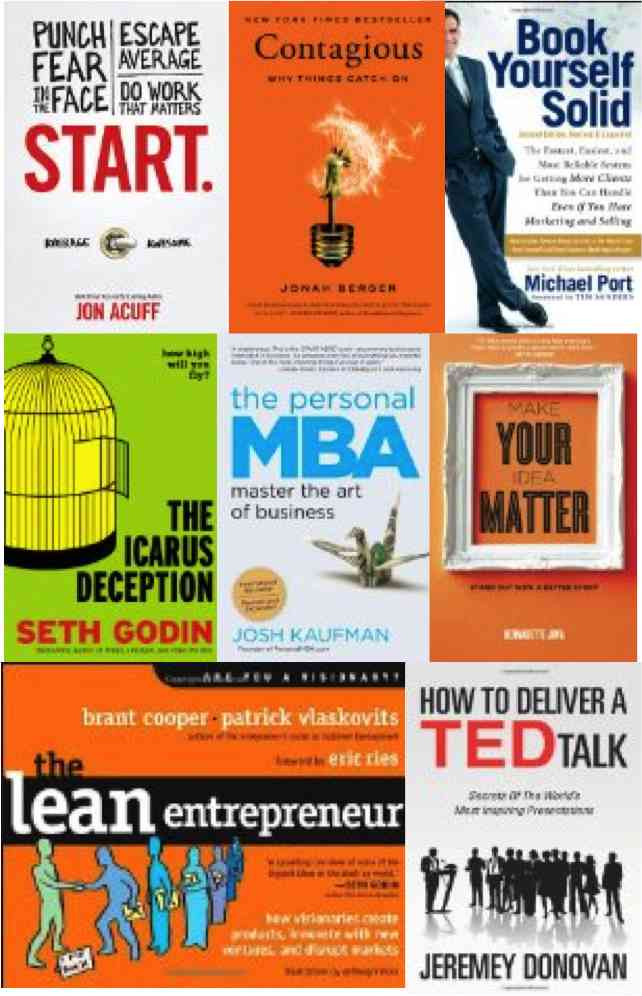
1. The Icarus Deception, Seth Godin

As a big Seth Godin fan, this was the book I was drooling about in 2012. So much so that one of the first activities I did in 2013 was to read it. (it was released January 1)

I have to say – I was a bit disappointed (something I never would have imagined I would say for an SG book). The book is mainly about not being afraid to pursue your dreams. If I read it in a vacuum, I probably would have enjoyed and gotten more out of it. But coming from reading ALL of SG’s books, I found this one mostly retreads ideas from his other books. Moreover, his other books (namely, Tribes and Linchpin) were more focused than this one.

Recommendation: If you’re a Seth Godin fanatic, then I know you’re going to read this anyway. I think you’ll feel the same way I did. If you’re new to Godin and want to try one of his books out, I’d pass on this and pick up Linchpin, Tribes, or even We Are All Weird.  

2) The Personal MBA, Josh Kaufman

The best book I’ve read for 2013 so far.

I have actually seen this in bestseller lists, but I’ve avoided it because of the title (not another “pocket MBA”). An entrepreneur highly recommended it to me though, and I gave it a shot.

I’m really glad I did.

The whole riveting first chapter about why NOT to go get an MBA is alone worth the price of  admission.

What the book does is it breaks business down into very simple parts and explains why you don’t need to look at business in a needlessly complex way. It’s an awesome, refreshing way to teach business.

Recommendation: if you are into business, no matter where you are in the spectrum (new, old, want, still in corporate) this is a MUST read. Buy NOW. 

3) Make Your Idea Matter, Bernadette Jiwa

This isn’t so much as a chaper-for-chapter book as it is some kind of guide / resource book. There are different topics – all on how to make your brand and your story better – arranged in self-contained 1-3 pagers (for example, “20 Ways To Tell a Better Brand Story”). I absolutely love formats like this, where you can just open the book anywhere and pick something up. When I finished the book (not a long read), I found myself yearning for more – a sign of great content.

Recommendation: Don’t let the title mislead you  – it’s not really an entrepreneurial-make your-idea-into-reality book. It is a good read / resource book, though, especially if you are in marketing/sales. 

4) The Lean Entrepreneur, Brant Cooper and Patrick Vlaskovits

Just finished this a few days ago. I think it’s the best of the recent “Lean” books I’ve read (being Eric Ries’s Lean Startup and Ash Maurya’s Running Lean). To be fair though, this new book builds on the precepts established in the earlier books, so rather than saying its better than the previous books, perhaps its better to say they expand the knowledge base the other two books established.

What I think the book does a good job of is explaining the concepts well with real-life examples and analogies – which was a must considering “lean startup” could get to be pretty technical.

Recommendation: A must read especially if you are putting up a tech startup (although still very relevant for non-tech) Might be too technical to be a “first book” for a new entrepreneur. 

5) Warren Buffet’s Management Secrets, Mary Buffet and David Clark

I didn’t really know a lot about the “World’s Greatest Investor” so one day in a bookstore I thought I could remedy that by buying a random Warren Buffet book. Did I pick the wrong one. While the book has some fascinating anecdotes about Buffet, I think the book’s main points are quite unremarkable (pick passions, hire good people, don’t live beyond your means, etc…).

Plus, I still don’t know much about Warren Buffet.

Recommendation: Waste of time, if you’ve read ANY other general business book. Pass.

6) Start: Punching Fear in the Face escape average and do work that matter, Jon Acuff

Having enjoyed his previous book, Quitter. I went to Audible and bought his latest work, Start. (I love audiobooks which are read by the authors themselves).

It was an enjoyable “read” – the author writes with a lot of humor and I found myself laughing out loud a couple of times while I listened to the audio during my morning walks.

What did I learn from it? Unfortunately, nothing much when I think about it. The content becomes familiar if you’ve read Godin or Steven Pressfield (the author of the wondrous War of Art and Do The Work), and I think these alternatives do a better job in presenting the same ideas.

Recommendation: There are inspiring moments and the humor is great, but it isn’t a MUST read. If you’ve spare change, go for it. 

7) Contagious, Jonah Berger

Tipping Point 2.0!

The author builds upon Gladwell’s ideas and goes into fascinating detail as to WHY things go viral (6 factors) and how you can design your own campaigns with a much-increased chances of going viral. Tons of relatable examples and researched evidence. Even if you aren’t in web marketing, there’s a lot of stuff you will find useful and immediately applicable: from pricing, to crafting your marketing headlines, to making videos which will get shared. Well worth the time to read.

Recommendation: A must-read for any entrepreneur in today’s ultra-connected environment. 

8) Book Yourself Solid, Michael Port


I don’t like books which read like an informercial. This is one of them.

“If you use my Book Yourself Solid System you will find yourself having more clients than you can possibly handle.”

I think the author references this “system” in every other sentence.

I’m not so sure there’s a readership who likes reading something like this, but its not for me.

Recommendation: I bought this book because a number of freelancers come to me for advice and I thought I could get some insights on helping them get “booked solid.” There are a number of good insights and tips available, but nothing original. Plus, the infomercial quality was just too much for my preferred reading style. (I already bought your book – there’s no need to sell anymore!)  By the third chapter, I was rueing my purchase, but I forced myself to read in the hopes of gaining…something. By the 7th chapter, I just quit. Avoid this book.

9) How To Deliver a Ted Talk, Jeremey Donovan

I love books which are both quick reads AND where you feel you’re a better person than before you read it. This book is one of those. The book talks a bit about the TED format and gives you tips on selecting a great “TED” topic. I’m not really sure these will be useful for me (unless I go on to give one), but what I did find very very useful were the public speaking tips – all very relevant for ANY public speaking endeavor.

Recommendation: If you ever do ANY form of public speaking, this is well worth it, especially considering the not so big investment in time and price.  

bookreview

The Compass, The Anchor, and The Propeller

PR

When we moved into our new office, we were in a momentary quandary about what to do with a good-sized room that was right smack in the middle of the layout.

We could turn it into another meeting room – you could never have enough of those.

Or perhaps a designated interview room?

Incubate a startup idea (or two)? (such a temptation!)

Then, it hit Pao and I at the same time – we just HAVE to turn it into a prayer room.

It’s obviously not the bottom line-friendly alternative, but knowing our history, it just made too much sense to put a prayer room in the middle of the office. This was our little way of honoring the God who has been so faithful to us and our journey.

Prayer has been absolutely essential in my life as an entrepreneur.

I know “prayer” and “entrepreneurship” don’t really mix that well in the eyes of some people, but for me the opposite is quite true – I think prayer is absolutely critical in the life of the (believing) entrepreneur.

compass

COMPASS

“I want to be the CAPTAIN of my own ship!”

This was my battle cry all those years in corporate. Then, one day, I made it happen  –  the big leap.

Then I felt it.

It was very clear to me from day 1 as a “captain.”

…I felt that I had NO CLUE whatsoever on how and where to steer the ship.

That was a HUGE adjustment I had to make. In corporate, everything was (mostly) laid out for me. I had a boss. He had goals and objectives for me. The company had overall goals I had to align myself with. There was an accepted method of doing things.

As an entrepreneur though, everything was MY CALL.

This amount of freedom – without any accountability – is very dangerous.

Sure, you can lead your firm to quick profitability and success, but if you don’t watch it, the subtle costs can lead you to be someone you don’t want to be.

I remember years ago, at a time when we were just starting to turn it around as a startup, we got an opportunity to service a motel chain.

We certainly needed the cash, but after going back and forth on the matter, we declined.

I would probably get a lot of flak from that decision from most entrepreneurial experts (an employee actually questioned me about this), but ultimately, my prayer led me to the conclusion that it wasn’t a project aligned to what I wanted the company to stand for, and ultimately, to what I wanted to stand for.

There are many, many, many other morally ambiguous items which you would have to decide on when you run a firm. These ultimately will have an impact on the company culture you create, and perhaps, more importantly, to who you become. (our decisions make us, after all)

Tread carefully.

This is where prayer has really come in handy for me as a discernment medium. As a much-needed COMPASS, prayer helps me navigate the sea of infinite choices and options I find myself in.

Anchor

ANCHOR

I’m not so sure if I blogged about this before, but I remember many many years ago when I happened to find myself doing some work for one of the richest men in the country.

As I would come to know after a few months working with him, he was – bar none – the most power/money hungry person I’ve ever met.

What I remember mostly were his eyes. There was something about them. Even before I knew about how he was, I remember looking at his blank eyes and finding something off.

They were soulless.

I remember vowing to myself NEVER to walk that path, never to love money that much.

This isn’t easy. It’s an incredibly slippery slope.

When most of an entrepreneur’s time is spent safeguarding and ensuring “bottom line”, it’s very, very difficult not to obsess over it and make it the ONLY target.

This is where prayer comes in as a much-needed anchor. Prayer has helped me, over and over and over, realize that my worth does not lie in money…nor in my startup, for that matter.

It lies with the fact that I am God’s child.

Prayer helps me put things into perspective.

But it does more than that.

I realize now that prayer has become my propeller.

propellerPROPELLER

Without prayer, I would still be in corporate. Without prayer, I wouldn’t have had the right amount of serenity to realize there was a call for me to give back and encourage other people to take their own leaps. Without prayer, there would be no blogging. No JGL.

Prayer is where I draw the necessary strength (the secret – it isn’t mine) to do big, hairy leaps.

The Grand Design

So, my friends and fellow entrepreneurs, never forget and take prayer for granted.

Pray.

Fight for your prayer time. Don’t pray much? Start. Don’t pray much in conjunction to your work as an entrepreneur? Start the integration.

Do you believe we all have a specific purpose here in earth? I do. I believe in a Grand Design. This is why I am so excited about today’s entrepreneur-friendly world. I think we can pursue our truest passions (inextricably linked to our purpose) in a much easier way than it ever was. I think it is much easier now to stop compromising and live up to what OUR grand design is.

The MOST efficient and effective way to figure this out?

Talking often with the Grand Designer.

comanchller

6 Tips to Ensure Your Idea is BIG Enough

Don’t fall into the trap of the small idea. Here are 6 tips on how to avoid doing so.

pill

1) Pick a painkiller

I touched on this a bit in a recent post. A painkiller is something someone very urgently needs. He would be willing to pay for it NOW if you could make the pain go away.

On the other hand, a vitamin is a nice-to-have.

Ask potential customers if your idea is a painkiller or a vitamin.

CHOOSE to go after painkillers. (no matter how sexy an idea the vitamin is, you’re bound to have better success with the painkiller)

Clipart Illustration of a Group Of Businessmen In Colorful Shirts, Carrying Briefcases And Holding Their Resumes Up At A Job Interview

2) Don’t stop with founder credentials

“Hey I like travel! I really could use an app which could tell me where all the best restos and resorts are when I visit a province. And I know you can do killer Android apps. Why don’t we make a Android-based, travel-app?”

For all the talk on lean startup, there are still a lot of entrepreneurs who KNOW about the lean startup model, but still, for some reason, refuse to incorporate even some of its more rudimentary principles. (namely, doing the necessary work to validate before building)

Don’t make your founder credentials the core of your startup (“I love traveling and know about it, he’s an Android apps man, we can make this work, baby!”).

Rather, let SOLVING THE PROBLEM be your core.

What is the problem? Why is it a problem? Who are the people who have this problem? What are the nuances? 

Startups are all about solutions. Solutions are all about problems. Dive deep into the problem set before deciding on anything.

monopolies

3) Look to monopolies or things that just have never improved

Banking. Farming. Education(!). Medicine. Government.

Solve systemic problems in these areas and I guarantee startup success.

I think sometimes – a lot of times –  people take these problems for granted, thinking, “this will never be solved” or “It always be like this.”

So not a lot of people even try.

Big problems? Not a lot of people trying to solve it?

That’s opportunity.

For instance, in HR, compensation and benefits is often regarded as a “boring” category. When we were doing our customer research with STORM as we were starting, we saw why. Everyone had the same “core” benefits – leaves, life insurance, and health insurance. As in EVERYONE had the same thing. And because of a rule called “diminution of benefits” companies couldn’t really change things. People were stuck. Benefits weren’t being used as a competitive advantage for a lot of firms.

We saw this as an opportunity to solve a problem not a lot of people were looking at.

Look around. There are a lot of problems people are taking for granted. Choose one you are interested in and GO DEEP.

(note: this won’t be easy, and in the case of going after monopolies, they do fight back)

dirty

4) Accept that you have to get your hands dirty to identify big ideas

I think one of the reasons why some people just go ahead and ignore lean startup methodologies is that it’s just plain hard.

Customer validation, for example, is harder than it sounds. You have to zero in on a customer segment. Then you have to identify who they are exactly, get their contact details. You have to book interviews with a lot them. They can blow you off. They can completely ignore you. This takes a lot of time and a lot of effort.

From this standpoint,  it’s so much easier to fall into the trap of just going with your original idea and building it immediately.

Do the work. It’s worth it. 

thinkbig

5) Don’t be afraid to think BIGGER

Quick, what’s your startup idea?

IMMEDIATELY ask – how can it be bigger?

Sometimes we can let our original designs limit the potential of an idea.

How can our idea be BIGGER? How can this be sold to a larger market? How can this go global?

Don’t be afraid to dream.

Think of the Social Network. It took Sean Parker to show Zuckerberg his idea could be so much more than a college network.

On that note, don’t be afraid to LOOK for your Sean Parker as well. Ask around – how can this idea be bigger, better? Don’t rely on one person’s (yours) opinion.

glimpse

6) Build for the Future

We live in a world of incredible change, where revolutions now happen on an annual basis.

All the devices you are holding now – your laptop, your tablet, your phone – will be obsolete in 2-3 years. By that time, you might be wearing an iWatch or a rocking Google Glasses.

How will your company hold up in this sort of climate in 2-3 years? Will it grow and evolve with how technology and society are growing and evolving? Will it be considered a dinosaur?

If you are building for the present market, your potential is already capped. Plus you are in danger of being disrupted.

Instead, build for the future. Learn to LOOK for trends, read them correctly (tricky), and build accordingly.

And I think you have to be two steps ahead already.

For example, if you’re building something based on “smartphone prices dropping” or “Filipinos buying increasingly online” then you might be a tad late – there are a number of firms already capitalizing on this. (Witness the number of local online stores sprouting the last few years – while some of them ALREADY are profitable now, that profitability will pale in comparison to what they will earn in a few years riding the trend.)

So look for NEWER trends you can capitalize on.

(Will this post especially resonate with someone you know? Please go and share!)

July 2013 Open Coffee Postscript

JGL's July Open Coffee
JGL’s July Open Coffee

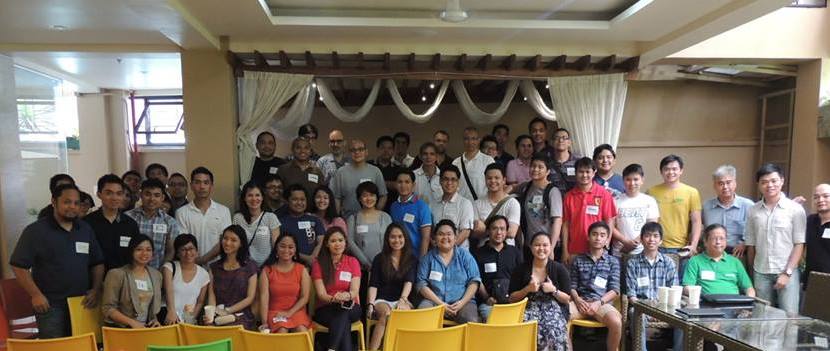
There was a moment during the actual pitching proper last Saturday’s Open Coffee event that I looked at Matt and AR of JGL and said, “I love this…I love it!”

It was one of the many times when someone in the audience had the the RIGHT contact or the RIGHT information and then just generously offers it to the pitcher who needs it.

This encapsulates the whole point of Juan Great Leap: collaboration and learning. The JGL Open Coffee format pushes this to another level: there is no “sage on the stage” or a central source of information. It’s just entrepreneurs and entrepreneur-minded people helping one another out.

As usual, last Saturday was very, very different from every other Open Coffee event we’ve had. The pitches were very varied.

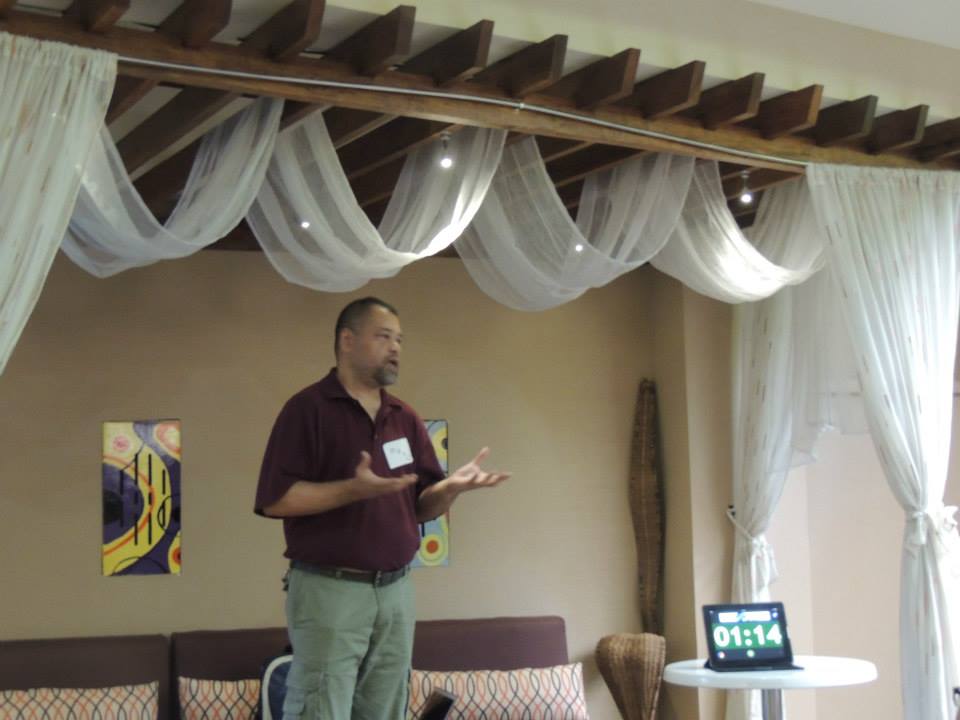
Mano Abello got the “first pitch” honors and started the ball rolling.

mano abello

Animator/entrepreneur Dennis Sebastian shows off his awesome animation short and asks for collaboration on marketing original Filipino content:

dennis Sebastian

In a very peculiar sequence of events, we then get three people pitch different travel-related ideas back-to-back-to-back.

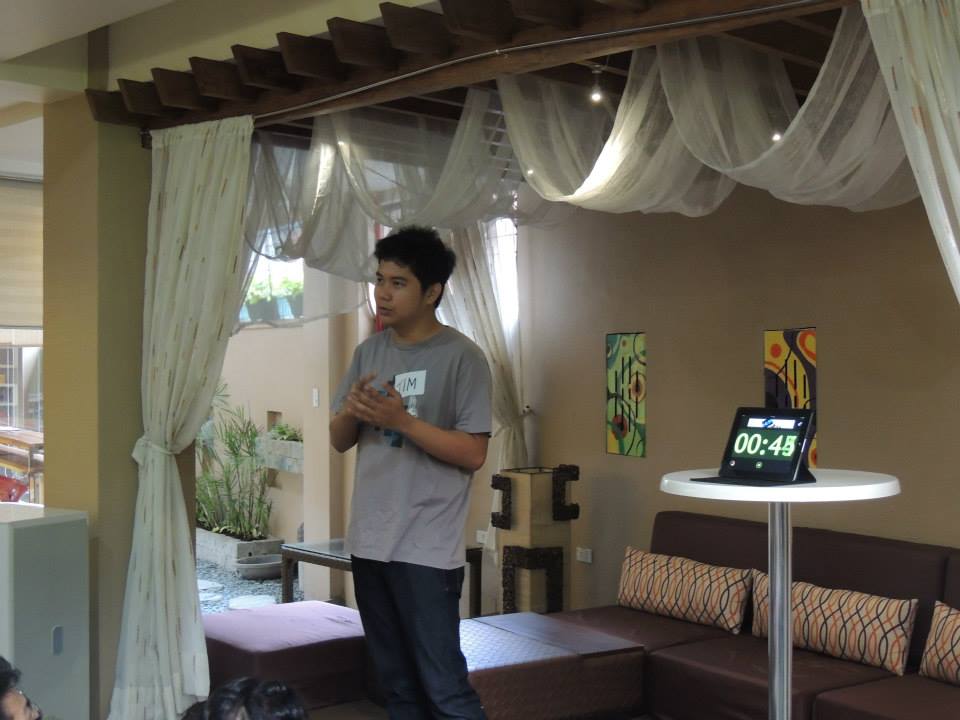
tim
Tim’s second Open Coffee pitch
gerard cruz
17-year old Gerard Cruz making his travel app pitch
matt lapid
JGL’s very own Matt Lapid pitching his tourist video idea

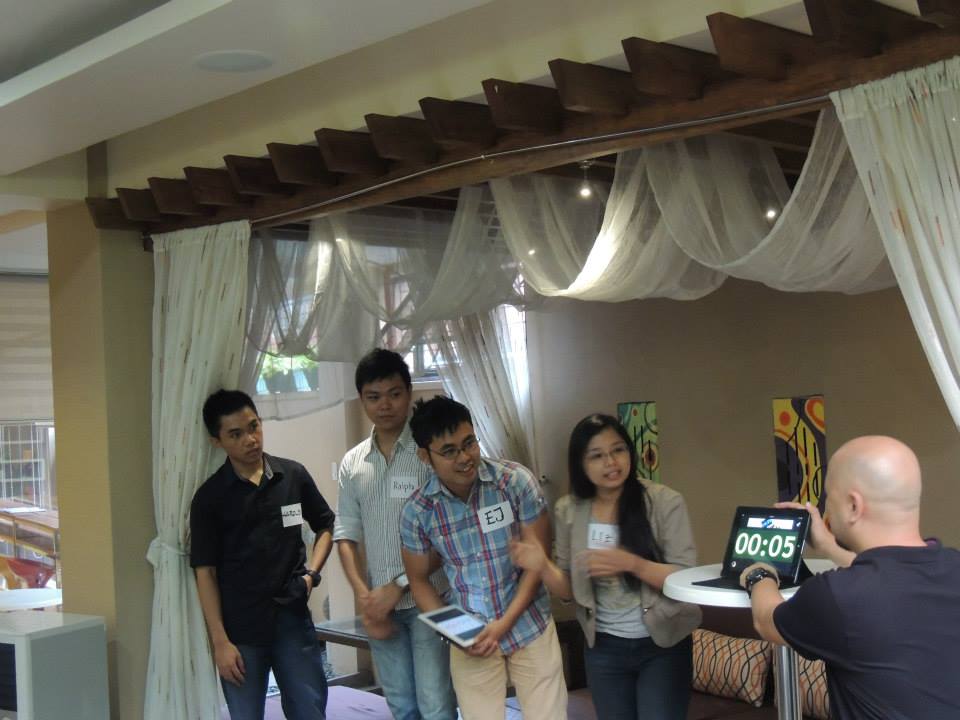
Then, we get our very first 4-people pitch when the folks at Minda-Now! make their pitch and collect feedback for their awesome idea/advocacy.

Minda-NOW
Wasn’t sure here at first if we would give them 2 minutes as a group or two minutes each. Ended up doing one minute each.

Next we had dessert entrepreneur Christian elicit a lot of feedback from fellow-restauranteurs in the audience.

christian
note to future food entreps: bring samples 🙂

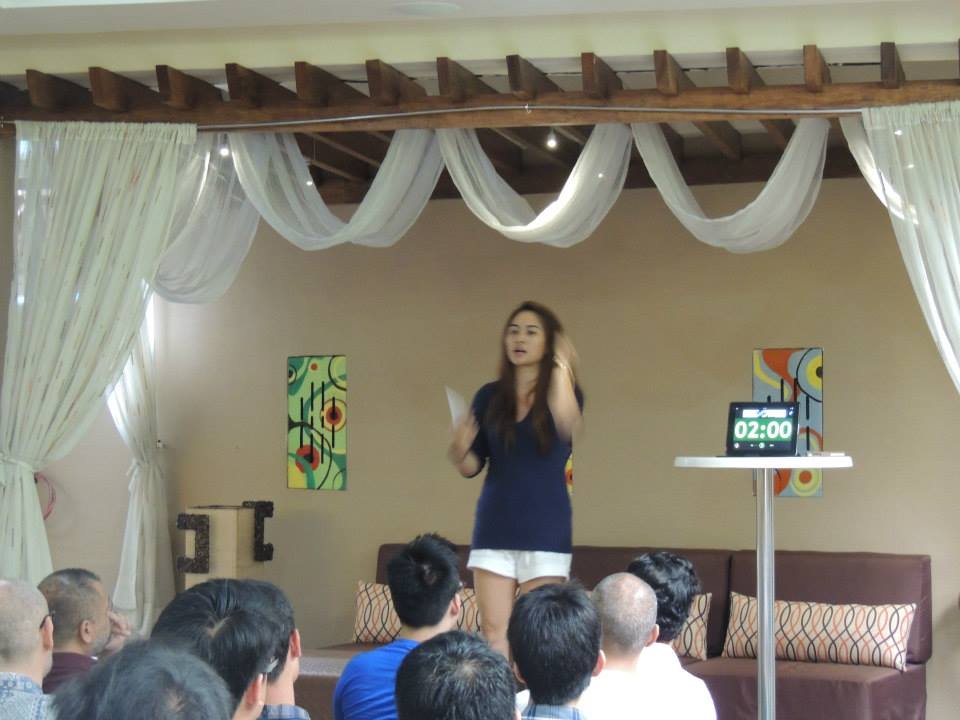
In another back-to-back, Florence and Barney close the pitching proper by pitching their social enterprises

Florence of Route 63, a travel-related social enterprise
Barney pitches his learning-based social enterprise, TEAM

Finally, we had Zar Castro of talk about the awesome 47 East site.

zar


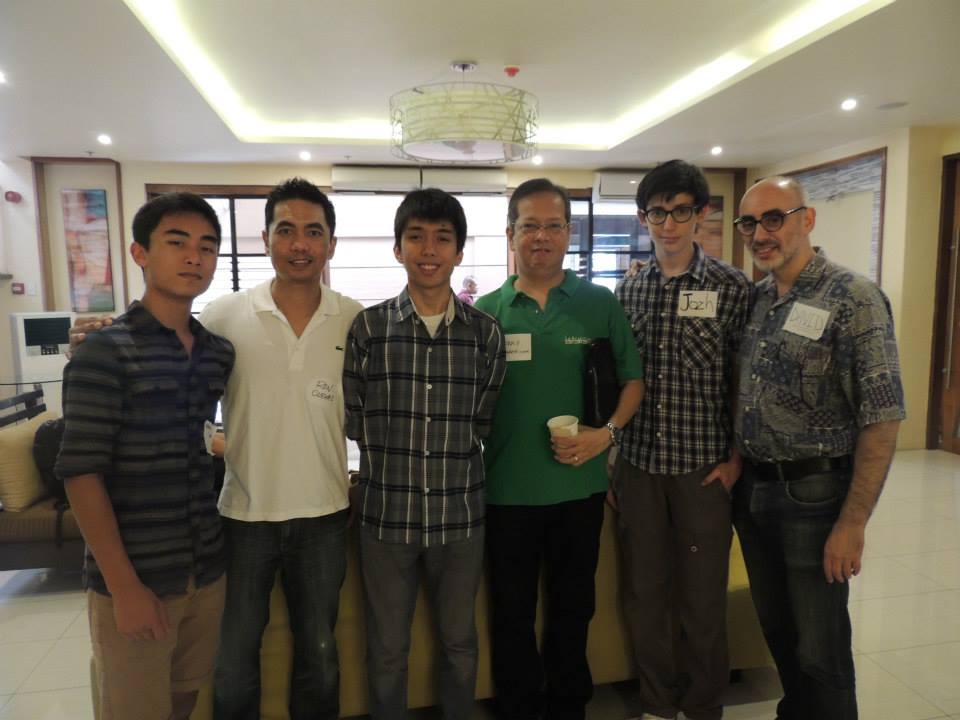
Here’s one interesting observation from last Saturday: It’s becoming a family affair!

Take a look at this pic.

family affair

That’s THREE father and son pairs in Open Coffee. I think this is very interesting and stems from two factors. One, I think there’s a felt need for entrepreneurial parents to expose their children to entrepreneurship and startups. A big number of entrepreneurs I know feel that our traditional learning institutions don’t exactly give the right “real world” exposure to entrepreneurship and startups. So parents feel that they need to strongly “supplement” their children’s learning.

The other factor is that there are more and more young people getting interested in startups. The three teenagers here weren’t dragged in kicking and screaming. They WANTED to go. (In fact, one of them pitched) In fact, maybe a fifth of the people who went to this one were students. That’s awesome.

I’m ALREADY excited for the next one.

Fathers and Sons

father son

Exactly 6 years ago, I was in Cardinal Santos hospital feeling an overwhelming mixture of happiness, fear, and  excitement.

You see, for the first time, I was holding my son in my arms.

And there was something else I was feeling.

As I beheld my son, I felt an unmistakable tug of the heart.

It was the first time we met face-to-face, but never did I feel such an intense feeling of love for another person.

He was mine. 

Then I had a quick realization.

I quickly looked for my dad.

Finding him, I gave him a hug and said, “happy birthday!”

It was also his birthday after all.

I then extended the hug a bit.

You see, it was also the first time in my life I realized and felt exactly how he loves me – as only a father can love his eldest, firstborn son.

It’s an amazing, surreal gift that has God designed for me – having both my son and my dad share the same birthdate. Every time July 26 happens, I get swathed with existential nostalgia.

Happy birthday Papa! Thank you for your expressive love, vulnerability, and your playfulness. I realize the way I love my children now stems closely to how you loved me growing up. Thank you for showing me how to treat others like myself. (won’t ever forget the time when I was a kid when you went down and helped that man)

Happy birthday to my son! My ultimate wish for you is that you get to know God and love Him. Well, perhaps I can also wish that you get out of your angry birds phase. It has been three years.

To my Father in Heaven, thank you for loving me so uniquely and intensely through these two people. Through them, I get a glimpse of just how much You love me. I love You more than anything.