The Unlikely Journey of Our Newly-Minted COO

9581ec0a-6040-49d6-a9d2-037552e089be

We’ve all been through those moments in life when everything seems to be falling apart.

That was where Kellda was when I first met her two years ago.

You wouldn’t know it through my interview process with her. A former Unilever achiever and fastfood startup founder, she was introduced by a mutual entrepreneur friend. She was in-between jobs.

Kellda dazzled us in the recruitment process with her intelligence, strong will and demeanor. Even if she had no prior exposure to tech, she was obviously eager to learn more about our industry. I wanted to woo her into joining our company as one of our product heads.

Soon, I gave her an offer. I knew it wasn’t going to be easy. She had bigger brands pursuing her. Fingers crossed.

After some waiting, we arranged a meeting. I had a good feeling.

We met in our office and I started giving her the offer.

It then evolved into one of the most bizarre job offers I’ve ever been involved in.

Right there and then, she said yes to my offer…but then she started to tear up! And these weren’t exactly tears of joy. (this was VERY hard to mentally process when it started happening!)

With emotions still very fresh from her very recent personal challenges, she started to emotionally narrate the difficult things she was going through.

I then asked her if she would want to take some days off first before starting immediately as we had planned.

I think the work will do me good,” she replied

I asked if what she was experiencing right now would affect her work.

She told me that she was at “80% of her usual capacity, but that that would be enough.”

After chatting some more, she was effectively telling me that she was accepting this job because it was an immediate offer and that she badly needed the distraction.

Uhm, not really what you want to hear in a job acceptance meeting.

I was trying to be supportive, but I remember that it was at this point that I mentally stepped out of our conversation and thought this job offer might not be such a good thing. I was already thinking of ways on how to stop this train from leaving.

But then, I remember thinking to myself that all of us go through bad days. I was thinking of the very worst days I had and how I would sound like if someone talked to me at that precise point. So…

Fingers crossed.


We started to get to know Kellda in the next few weeks.

Brilliant. Very operational. Great with detail. Dots her I’s and crosses her T’s. Short temper. Explodes.

Soon, there was a nickname going around.

Kill-da.

A month or so after she started working with us, I invited her to this retreat the community I belonged, Living Hope, was organizing for young professionals. I thought attending might be good for her. It’s good that she said yes.

Long story short, it was in this retreat that she realized that this God whom she felt so distant from, this God whose existence she started to doubt, was in fact, very real. And did, in fact, love her with such immensity.

It was from this point on that I noticed a difference.

We would talk about her legendary temper, but she now struggled with it. And month after month, I would see improvements in this area.

She had also more bounce in her step. She was just happier.

It showed in the work she was producing, too.

Our company eventually assigned her to handle E-commerce operations, where she just flat-out killed her performance metrics. She transformed her function: our customer service teams did MORE with less people, our fulfillment teams shaved weeks off of their delivery times, our merchant teams added a record number of merchants. Her people, while still being a bit afraid by her, grew to respect and love her. They began to appreciate all that she brought to the table. All this, while learning about tech and how tech platforms work.

I was so excited with her development in the company. But I was also so excited about the person she was becoming month after month.

Then, of course, one day she asks me, “Peter, can I talk to you?” (nothing good ever comes out of this question, nothing)

We met at Figaro in Taipan Place in front of our office. She had a job offer from another company which doubled her pay. (like being in so many startup moments like this before, I struggled to maintain a calm expression while the blood drew from my face)

My mind…raced.

My gut instinct was to just launch into a whole argument why that was such a bad decision and why staying would be best for her.

But I realized that this was her journey we were talking about, not STORM’s, not mine.

I told her, “Pray and discern. Seek out what God wants for you. I will be at peace and will be happy with whatever direction He says you should take.”

Well, I don’t know about happy, but I meant every other word in that statement.

A few days later, she said she was staying. (hoorah!)

(She would also just BAFFLE her headhunter by explaining that she was declining the lucrative job offer because God had told her so. Her headhunter couldn’t properly explain this to her boss, so she asked her boss to call Kellda directly)


Fast forward to the very end of 2016, where I really felt a powerful need for someone to take on the COO role in STORM. While I could do the job, I felt I could do a lot more for the firm by focusing on some of its more strategic, future direction, and let someone else operationally focused handle the day-to-day.

It was an easy decision, not only to me, but to everyone I asked in STORM.

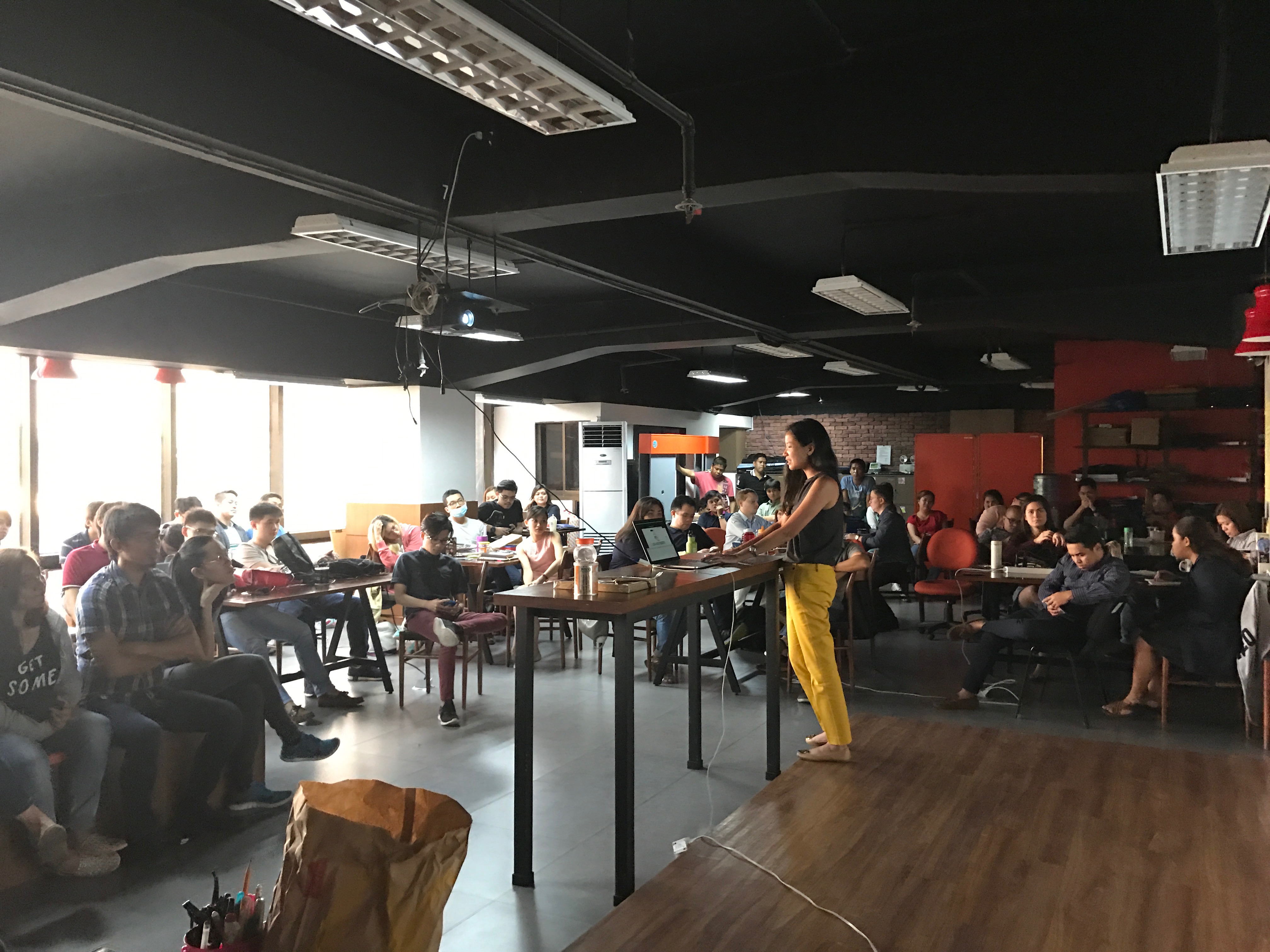
During the second workday of 2017 (yes, first day would have been MUCH more dramatic, but I got sick and I couldn’t make it), we announced that Kellda Centeno would be promoted as the company’s new Chief Operating Officer.

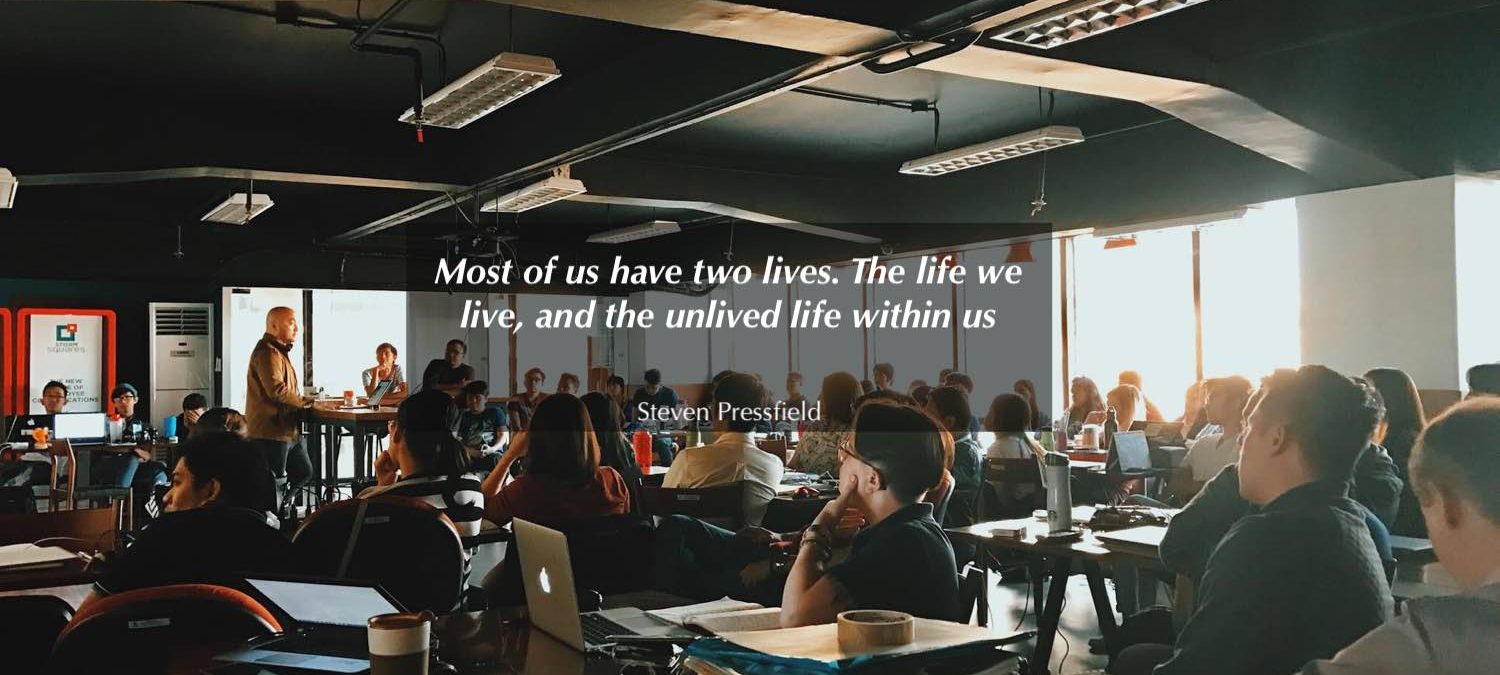
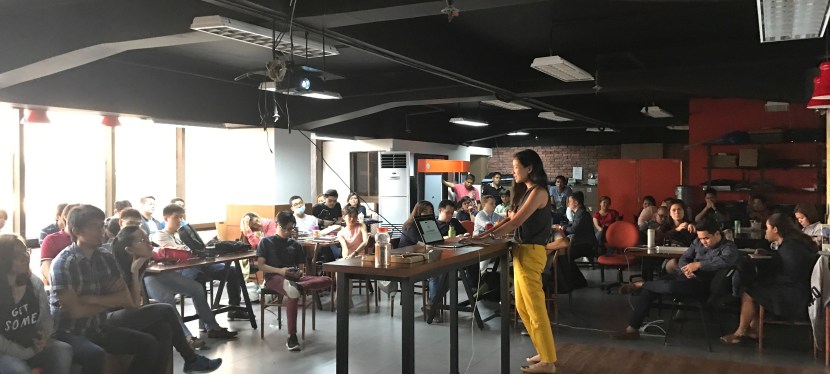
You know, in that picture above when she took the stage I’m usually in…I couldn’t be prouder of someone.

I am incredibly excited. I CANNOT WAIT to see the great impact she will inevitably bring.


What’s the best thing about your job, Peter?

I would always answer that question by saying it’s the sheer learning.

I’m beginning to think something else is better.

There is just tremendous fulfillment I feel when people adopt and share my startup dream, make it their own, open up their lives, and start journeyingwith me.

Are you a manager of people? Are you putting up a startup? Are you scaling and hiring more people?

I think it’s important to remember just what a privilege it is when someone decides to work for or with you.

They are making you, your company, your idea, part of their journey.

It’s important to remember that each person is a blessing God has given us the duty to take care of and nurture — not merely as professionals, but more importantly, as people.

The sooner we realize this, the sooner we see people doing just amazing things.
Listening Is The New Reading

listening

I rarely have time to read books anymore.

I used to accumulate sizeable bills on my Kindle doing a book a week, now I don’t even remember the last book I read in print form. My babies, both actual and startup, have been occupying a whole lot of my time. I’ve also re-committed to writing on a particular blog. My weekends I’ve mostly closed off to family.

I do have a LOT of wasted time in traffic.

Living in Antipolo, sometimes I spend a good 2-3 hours a day in the car. 4 on bad days. (Waze sometimes I feel guides me INTO traffic)

It didn’t take me long to put two and two together.

I might have stopped reading, but I haven’t stopped learning.

Now, a huge chunk of the data on my phone is reserved for audio books and downloaded podcasts. My Kindle budget has now been transformed into an Audible budget (the best!).

Here are some very useful tools/resources I’ve found:

1) Audible

This is now one my favorite mobile apps. Buy a book from audible and it instantly loads on your mobile device. It’s also cool that it’s synced across all your devices – you can listen from your phone, stop, and then listen later on your tablet at the exact time you left it on your phone. It’s amazing.

I’m on the $14.95 per month plan, where you can purchase an audio book – ANY BOOK per month. This is a great deal because the books are typically much more expensive than $15. I usually end up buying more credits per month because it’s cheaper.

Do buy any of Gary Vaynerchuk‘s books on audio form – even if you’ve already read the print form! He reads the book himself, adds SO much more material, and delivers his audio performance with such panache.

I’ll soon do a review of some of the great books I’ve “read” over the last 6 months. (aside from The Alliance)

2) Podcasts

Podcasts are so awesome because they are very current (some books miss trends which happen during the gap between the book is finished and when it is published) and a lot of them come in conversation form – which, if the interviewer is semi-decent, can be very compelling to listen to.

Some podcasts I recommend for the entrepreneur-at-heart.

A) This Week In Startups – Jason Calacanis

The first podcast I subscribed to. Jason talks weekly to both successful entrepreneurs/investors and those who are new. He has a very interesting “news panel” format also where a selected group of panelists talk about startup news. If you’re not listening to this, make the Chris Sacca interview you first listen.

B) The Tim Ferriss Show – Tim Ferriss

He of the “4-hour workweek” fame, and perhaps not too many know, is a very very active angel investor. Not all startups, but what Tim does here is he interviews very successful people in different fields and tries to deconstruct what made them successful. Tim also does a lot of  productivity tips as well.

C) Entrepreneurial Thought Leaders – Stanford eCorner

Look at that list of guests. It’s a who’s who of the absolute best entepreneurs/investors ever – Zuckerberg, Evan Williams, Ron Conway, Brad Feld, etc…

Cons: 1) is the guest list becoming less impressive? 2) the monologue format is a killer (not awesome, but more of “just kill me now”) for entrepreneurs who aren’t good speakers.

D) The James Altucher Show – James Altucher

My newest find. James is an entrepreneur/investor/author. His podcasts are just…different, as he has a different take on things and it shows in his questions. Guest list is awesome…Mark Cuban, Huffington, and this guy…

E) Seth Godin’s Startup School  – Seth Godin

I’m a huge Seth Godin fan (largely because of his hairstyle), so this was a no-brainer. The podcast is just 15 episodes recorded from his just-one-time weekend startup seminar. He offer a different take from the usual startup science (lean startup, MVP, etc…), which is a bit more marketing driven.

Enjoy! Do let us know if you have your own recommendations!

 (Subscribe now to Juan Great Leap! You’ll never miss a post and have access to insider info!) 


Why Startups ARE For Everyone, part 1

wag

“Startups aren’t for everyone.”

I’ve written this considerably in this blog. (very prominently here)

We’ve also heard it uttered by every other entrepreneur, it seems, right?

“Entrepreneur you say? Well, ho ho ho! You have to have a unique skill set: a combination of cast-iron will, uber-magnetic charisma, the ability to laugh in fear’s face, and space-age technical skills. Oh, and you need to be stupendously lucky.”

(I guess in a way, talk like this validates what we’ve done and makes us feel good about ourselves a bit)

Lately, however, I’m starting to feel differently.

I think startups are for everyone. 

Before you hurl tomatoes at me (especially existing entrepreneurs :), do hear me out…

Defining What a “Startup” Is

Obviously, I’m not talking just about the Googles, Apples, Facebooks, or even the Jollibees and Mang Inasals of the world. Not everyone will build startups like that (believe it or not, not everyone wants to).

One paradigm to take is that being a startup founder is all about independence and the quest for it. 

It’s about not needing a corporation to survive on salary. It means having the ability to build something which enables you to not only pursue a dream, but also to stand on your own two feet.

freedom

Under this definition, small micropreneur ventures who are able to eke out a living ARE startups. Fulltime freelancers who reside on Odesk and Elance? Yep, startups.

That small hotdog stand sideline business you manage to give you extra cash apart from your corporate salary?

It’s a startup if you plan on quitting your day job someday to commit to it. It’s mere sideline if its got no ambition.

Armed with this broader definition, startups are still the small, small minority.

Do witness the vast majority of fresh graduates enter corporate year after year after year.

I believe things are starting to change though. (related blogpost here)

Everyone NEEDS to realize – the perfect storm is here!

This is something I want to shout out with a country-wide megaphone.

I really believe that if one WANTS and DESIRES to, ANYONE can harness his natural talents and passions into a business which earns enough money to pay his monthly bills.

The perfect storm for doing this is now out there.

coming together

For one, information is free and flowing. 

ALL the resources on how to build a startup and be independent is available online.

You want to build a skill? There are FREE courses to be found on the web. High quality.

I know a doctor-turned-cake designer who started her new career viewing youtube clips and then just applying her natural talent.

There are meetups and courses galore, both free and affordable, for hundreds of different interests and topics. You just need to use this thing called Google.

Moreover, the other barriers to putting up a business are just falling like the rain.

Wanna build a website? You can do it for free.

Need to reach people? Social media allows you to reach thousands like never before.

Need a market for your skills? Odesk, Elance, 199jobs, and Freelancer are available at a click. (you will join a growing, great number of pinoys)

picking

The necessary infrastructure for startup success is THERE and ripe for the taking. 

You just need to bring something unique and special to the table.

“But I don’t think I have something unique and special…”

This is where my belief structure comes in.

I think God made each and every person unique and special. Every person HAS something compelling  to offer – enough to make (at least) a decent living out of.

If we add these elements then:

Uniqueness + Infrastructure = Startup Potential

I think there is an entrepreneur in each of us.

What’s stopping the 99% of us in pursuing this?

Information gap, Fear, and The Dip.

Will cover these on part 2!

Fast-Track Your Startup Dreams By Joining A Successful One

successfail

Learning From Failure Might be a Tad Overrated

By now, we’ve all heard a lot about how important it is to fail, how we need to start failing immediately – in a sense so we can find about what NOT to do the fastest way possible.

Of course, we’ve all seen this happen, so I’m not about to debate its veracity.

There might be an alternative though.

Instead of learning from failure, why not learn from success? Instead of concentrating on what NOT to do, why not focus on WHAT to do?

How can you do this as someone who wants to develop his own startup?

One way is to go join a successful one.

My Chikka Days

When I think about it now, my five-year stint in Chikka really fast-tracked my own startup career. I didn’t exactly realize it then, but it did. 
chikka
I remember the first few weeks I was in Chikka, and coming from 2 very “corporate” companies, it was quite the culture shock. No manager rooms. First-name basis with everyone. A disdain for anything “formal.” (I believe their term for it was “Ponstan.” Long story)

I loved it! It was certainly very different from what I was used to – and I found myself gravitating towards it.

The more time I spent in Chikka, the more interesting things I soaked up. I noticed how then-CEO Dennis Mendiola and then-COO Chito Bustamante worked. Dennis worked on products and strategy. He would do off-the-wall stuff like ask waiters for their opinion on a product during formal meetings. He would leave the execution to Chito – and boy, did he execute. I remember one director describe Chito’s execution style as suave. Chito had a way of getting things done.

As a company, I remember hitting deadlines I never thought we’d hit. We just sort of willed things to happen.

I remember the little traditions. Lechon during a founder’s birthday. Top ten lists during events.

I remember dreaming big.

I actually started conceptualizing STORM at the same time that I was interviewing for Chikka. In retrospect, I think this was awfully good timing. It was the best of both worlds – I was starting my startup part-time while learning from a very good one full-time.

The Advantages of Joining a Startup (specifically if your ultimate goal is to put one up)

1) Learning First-Hand

arn

I can read, say, Disciplined Entrepreneurship and learn all about startup execution. I can memorize the whole thing and still, it could never compare to seeing first-hand how Chito pushed Chikka in executing strategy. Seeing that day-to-day, seeing what it takes – was truly an eye-opening experience. I carried all these lesson with me in developing my own firms.

One caveat here – following this logic, you have to choose a successful one. The whole point is to learn WHAT to do before doing it yourself. This only happens if you join a startup with some degree of success. This can be a bit tricky. Joining a startup which is too early in the game might not give you the “winning” lessons you are seeking. On the other hand, joining a fairly seasoned one might not give you “startup” lessons anymore.

2) Supportive Founders (mostly)

One thing with founders of startups – a good chunk of them will be passionate proponents of entrepreneurship.

So if you ask them, “hey can I do a startup on the side while I work with you fulltime?”

As long as it isn’t a competing product and it doesn’t interfere with your job, I’m guessing a fair number will actually be supportive. This is very different from a number of bigger corporations whom I know frown upon part-time work.

3) Less Risk

less riskThis is a biggie. By definition, a successful startup can probably afford to give you a competitive/semi-competitive salary (in contrast, for a number of startups, salary might not even be a given).

The most common risk in joining a startup is that you sacrifice immediate practical considerations (salary, benefits, position) for future glory. In those first few months/years in running a startup the most important factor is your learning curve(the essence of lean startup thinking). How fast do you learn what the right things are (the right market, the right product, the right strategy).

By joining a startup, you essentially can have your cake and eat it as well: you get to learn loads without necessarily sacrificing practicality.

4) Internal Social Proof

For me, THIS was probably the biggie.

As a startup founder, what I constantly wrangled with was doubt.

Will this even work? Is what I’m doing stupid? Is this worth all the trouble?

Being in Chikka really helped in convincing me that hey, not only is it possible to develop a successful startup (especially back in the mid-2000’s when the startup ecosystem isn’t what it is now), but it is actually quite possible to build one which scales.

That psychological edge can sometimes be all the difference.

APRIL OPEN COFFEE NOW BREWING – TO BE SERVED ON THE 27th!

WHAT: APRIL OPEN COFFEE

WHEN: Saturday, April 27, 930 AM

WHERE: Bo’s Coffee, Bonifacio High Street

HOW MUCH: Just buy a cup of coffee as a form of thanks to Bo’s for hosting us

For those who missed the last Open Coffee (which included this part), you just HAVE to join us for the next one! As usual, the level of generosity, idea-sharing, energy, learning and overall do-goodery are expected to be at awesome levels.

For the reservations for this one, I’m going back to Googledocs, as it seems to have a lower flaker rate and we can ask for more information from you (to help us improve JGL content).

Do reserve a seat NOW by clicking HERE. Limited seats.

The Software Guru tells the Real Story: On Startups, Bankruptcy, and Attitude (Part 1 of the Joey Gurango Series)

I remember texting Peter right after my interview with Joey Gurango, which was just days before Startups Unplugged. In my text, I asked Peter about what he thought about posting an uncut version of Joey’s interview on JGL. The reason for my suggestion was that after my interview with Joey, I was completely taken aback by the incredible knowledge that he was sharing with me; even though I wasn’t a techie, Joey’s stories resonated with me and schooled the heck out of me. Everything Joey shared with me just seemed so important, so I wanted to post everything that he said. While I must admit, I’ve omitted some parts of the conversation to be practical, this is still a very raw version of what Joey shared with me. I hope this piece will allow Joey’s stories and insights to speak for itself. The other portions of his story will be coming soon! In the meantime, sit tight and allow the sublime to take its course.

Joey Gurango of Gurango Software

When did you start and why? 

Joey: My first business was in 1981. I was at the University of Washington and I did a pizza delivery business. Out of necessity, I figured that most college kids living in dorms were too lazy to go down to the pizza place to get their own pizza, so I just setup a phone and gave out fliers. Then, I waited for people to call me and ask for an order. I had Dominos, Godfather’s, and Pizza Hut menus and they [the customers] would call and tell me what they wanted. I’d put a 15% surcharge on whatever they ordered, but I would get their money first (Joey chuckles). The pizza delivery business was actually my first real business. My first real tech business was in 1984. I had worked for apple computer for a little over 2 years. The Macintosh just launched, and I got this idea to make something called desktop furniture for the Macintosh. So with that I started a company with some money because back then it was really expensive to build injection mold products by the mold. Everything was going great…and then in 18 months we went bankrupt, so that was my first experience.

Why’d you guys go bankrupt?

Joey: ‘Cos we spent more than we made. Real simple. We were making a lot of money. I think the first 6 months, we had over $1 million in revenue. But then the next 6 months, it didn’t quite reach a million dollars. Then after that, I decided that I didn’t want to be in hardware anymore. I started my first software company… that was 1987…Match Data Systems. I started that doing excel custom programming. In 1991, I decided to move the company back here [Philippines]. By then Windows had come out, so we moved from Macintosh to Windows. We were one of the first, as far as I know in Asia, that were doing Windows development work. One thing led to another. In 1999, by then we kind of branched out into ERP software, a company called Great Plains software acquired us, so we become Great Plains Philippines. Two years later, Microsoft acquired Great Plains, so I become a Microsoft employee. Then, I stayed with Microsoft for two years in 2001. I’ve basically had three jobs in my life. My first job was with Apple computer. My second job was with a training company for less than year. My third job was with Microsoft. Then I started my first software company and haven’t really worked for anybody else, until my company was acquired, so technically I was working for a multinational company, but it never really felt that way, which is why I left.

Why did you move back to the Philippines?

Joey: My first company did custom software development. First for the Macintosh. We did a lot of excel work…a lot of data base programming for the mac. The problem was, since we were doing a lot of excel work, I would train these fresh grads on developing for the graphic leisure interface, and then because Microsoft was really heavy into doing Windows development back then, they kept hiring them away from me. Microsoft would give them double the pay. I was getting frustrated because we were losing programmers in the US. Our office was literally a 5 minute drive away from Microsoft headquarters. At the time, my brother was visiting the States from the Philippines. He says, “You know we have programmers in the Philippines?” “Really? Do you even have PCs there [in the Philippines]?” I said. He replied, “Oh yeah! We have dBase programmers.” So that’s when the idea struck me that I could have the company in the Philippines and continue servicing my US customers. And it would be cheaper, and I wouldn’t have to worry about losing these guys because nobody else would hire them because we were doing stuff that nobody else was doing. That’s why I came back. We were doing offshore outsourcing before it was even a term.

What experiences or skills from abroad did you find most valuable for starting up in the Philippines? 

Joey: The one thing I’d say it’s not really a skill or experience, but more of an attitude. Through the years I’ve realized that the only difference, in general, between people in the countries like the US and here, when it comes to things like business and startups, is not knowledge, skills, IQ or EQ, but the big different shader is the willingness to risk and face failure. In the US, it’s not a big deal if you’ve started a company or even failed for that matter. My first real company went bankrupt after 18 months. We raised $250,000 in investor funds to start that company and in 18 months it was all gone. We never gave the investors back a single cent. Nobody was coming after to me trying to have me assassinated. There’s no shame in it. There’s no social stigma with that type of failure in the US. If I were to say what was the most helpful thing was to bring that mentality over here. Compared to most of the local technical guys, I was pretty fearless. I was willing to buy stuff that nobody else would consider. However, I’ve come to learn that taking the entrepreneurial path is not that risky. If you do it in the right way –like all the things I’ve learned just in the last five years- if you know how to do business modeling, practice lean startup and customer discovery, test and validate assumptions, it can be quite low-risk. It’s still not as low-risk as getting a job and a consistent paycheck, but it can get pretty close. I think if I knew what I knew today, it [the business] wouldn’t have gone bankrupt, but I would have shut it down a lot sooner. Now I can say that it’s not really that risky to be an entrepreneur, if you know how to do it right.

The crucial art of finding business partners

I’ve written about this matter extensively in this blog – I can’t over-emphasize how important finding the right partner is. In fact, I think I can say that for my case, this factor has been THE biggest factor determining a startup’s success or failure.

I recently wrote an article for homegrown.ph summarizing what I think are the most important items to consider. Do check it out here. 

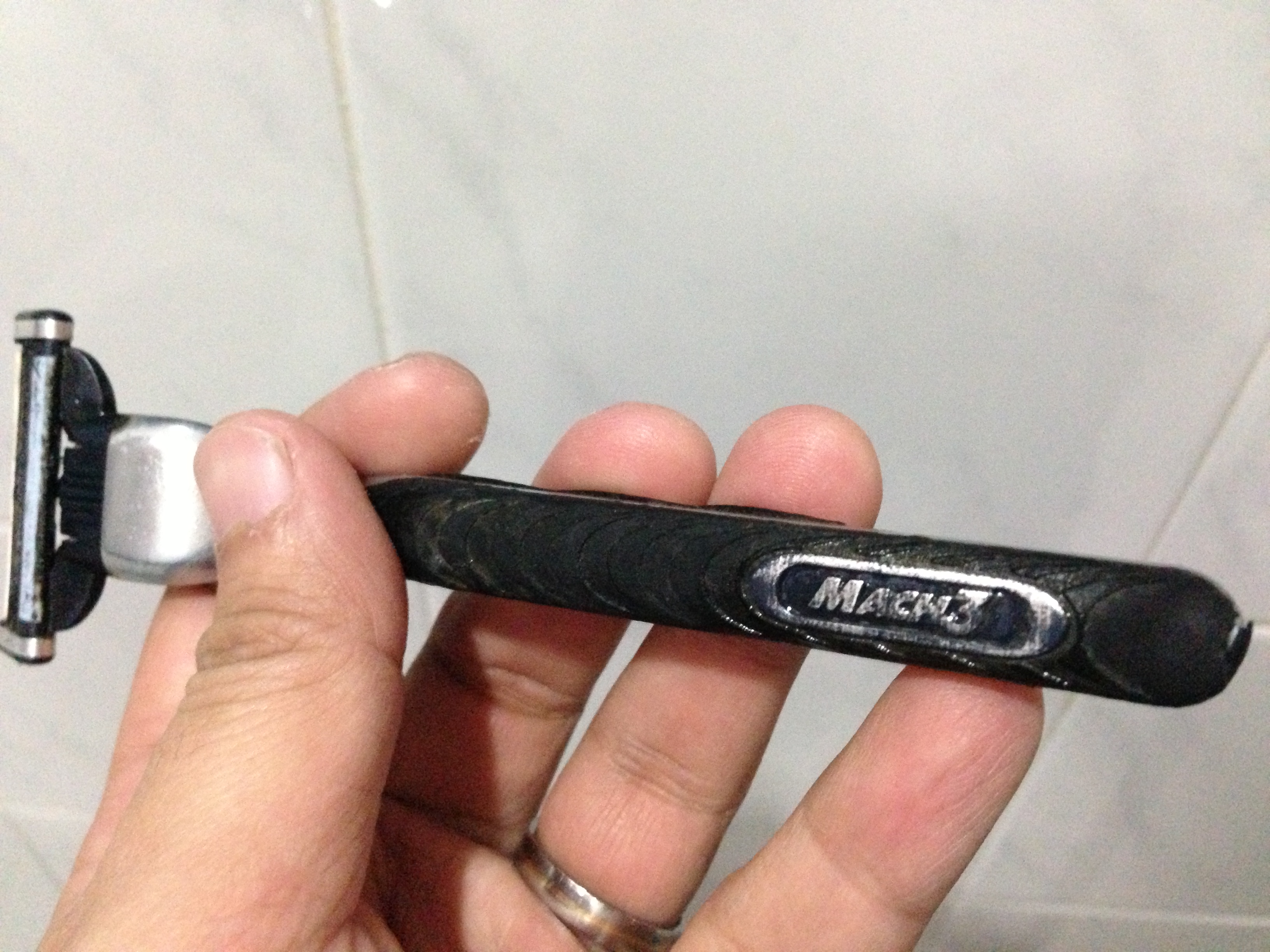
Employing The Mach 3 Strategy

Yep, this baby's 15 years old
Yep, this baby’s 15 years old

I was shaving my head this morning in the shower with my trusty Mach 3. I thought the blades needed changing. I made a mental note to myself to buy a fresh pack of blades – the woefully overpriced ones at the grocery counter.

I had been buying these blades for FIFTEEN years already – I had been paying Gillette a small fortune.

Funny, because I had never wanted these high-end blades in the first place – I won this Mach 3 way back in the 1998 Christmas party in my first corporate job.

Once I got the Mach 3, somehow I just made a habit of buying the blades.

I represent recurring revenue for Gillette. They must love me.

If your startup idea can operate with a recurring, “evergreen” business model, SERIOUSLY look into trying to adopt it.

I remember lucking into this business model when we started STORM in 2005. We wanted to sell a flexible benefits system to the market. We were looking at possible business models out there. A popular one was simply selling the software. We ask the client for a huge sum of money, in return, we would develop a customized solution for them and support it for 2-3 years. We loved the idea because it gave us immediate, usable cash.

Of course, no company would be insane enough to give a startup a huge sum of money – its just too much risk. So instead, we opted for a monthly “software as service” fee. With a lower barrier, we were soon able to land our first few clients.

Then, aside from the technology monthly lease,we built even more benefits services around it – also paid per month. If your company wanted, we could use our system to service your employees directly – less hassle for you.

It became a platform.

This “evergreen” strategy has a whole lot of advantages, namely:

1) Less dependence on day-to-day sales

Do you know how nerve-wracking it is for a startup founder to sell products day after day so he could pay the bills?

In this scenario, you just need to sell to a consumer ONCE. Then, it boils down to delivery. If you take care of your business, you can expect this consumer to consume repeatedly. The caveat? Your delivery team or your product has to be kickass.

2) “Forecastability”

(Is there really such a word?)

When we landed clients in STORM, we would know EXACTLY what the monthly revenue would be. 60K a month for this client. 84K for this client. Month after month after month.

This revenue pattern made planning so much easier for us as we grew. Can we afford to hire another employee? Will we have enough to pay 13th month?  We would know definitive answers to these questions. This makes a whale of a difference versus businesses which essentially, makes guesses future sales figures.

The whole challenge of startups lies in the uncertainty of it all. Any item which adds even a smudgeon of forecastability goes a long way.

3) You are forced to be always on your heels

Our clients would pay us every month – with the usual contract provisions that if they are not satisfied with the service, we would get docked on the monthly. Guess what effect this had on our operations?

We were forced to look at the way we did things and ALWAYS improve on them. We would put supreme importance on customer servicing. We would make sure bugs would get stamped out ASAP.

Or else we wouldn’t get paid next month.

That’s tremendous motivation to always deliver what the client expects and more.

4) Smaller bites > One big bite

As I mentioned earlier, its MUCH EASIER to ask a client to pay several bite-sized payments than one big, one-time purchase. This is especially true if you’re a startup. So don’t be afraid to lower your pricing significantly – you’re after the the longterm payoff.

Another advantage with smaller bites? You create a habit. This is extremely strategic.

Does your current business model employ elements of the Mach 3 strategy? If it doesn’t, these advantages are more than enough reason to seriously consider an overhaul.

Are you setting up a consulting firm? Perhaps you could come up with a related monthly service you can offer to outsource on a monthly basis.

Putting up a local bakeshop? Perhaps you can arrange to deliver your freshly baked pan de sal every morning to nearby homes at a significantly cheaper rate.

Tech firm? Perhaps you could build a platform  on which you can deliver repeat products/services on.

Design studio? Perhaps you can find clients in industries who need to have things designed on a consistent basis (not the usual one-time website creation for say, startups). Lower your prices and go for long term contracts with monthly or weekly deliverables/payments. Just off the top of my head, you can try publishing (online or print), HR (monthly newsletters to employees), and maybe events.

Who knows, with the right model, you can develop a customer like me – a lifetime consumer. (well, fifteen years and counting)

smooth sheen like could only be accomplished by a Mach 3!
smooth sheen like this could only be accomplished by a Mach 3!

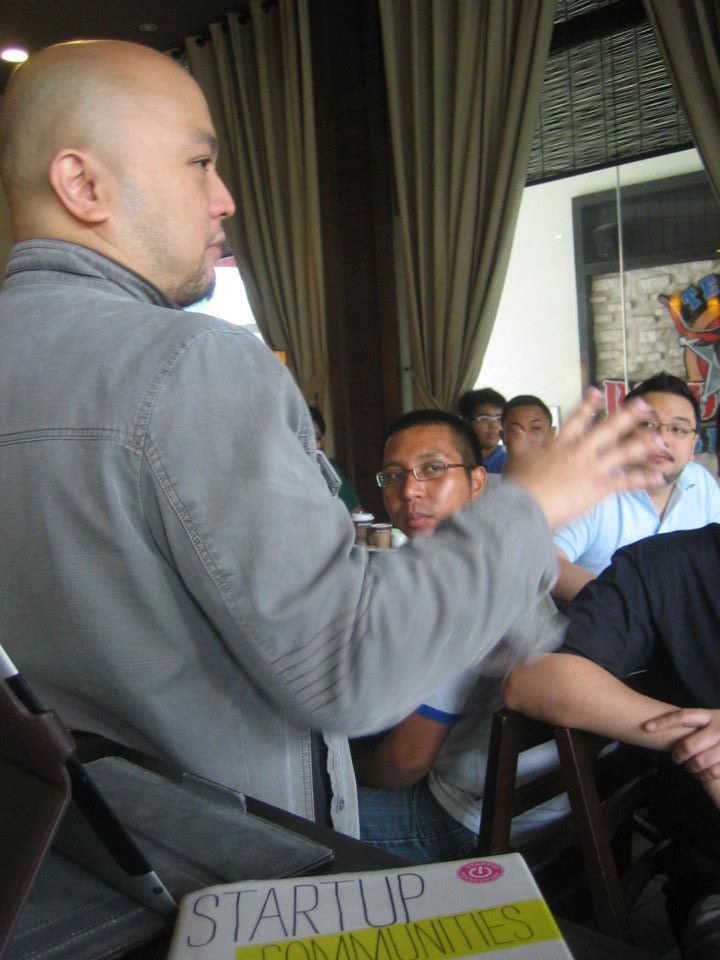
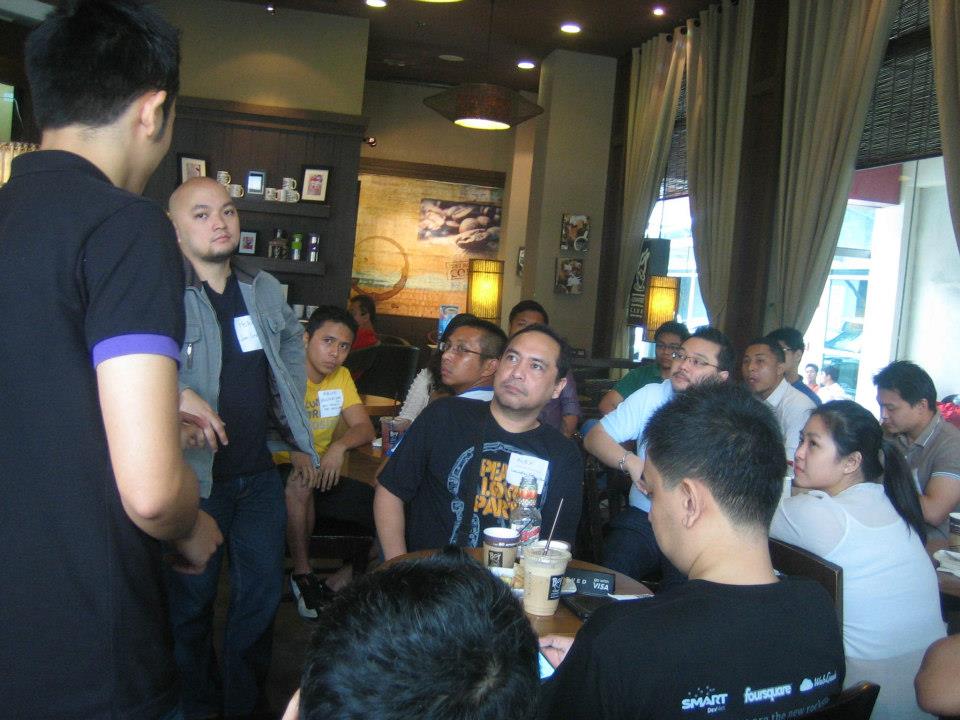
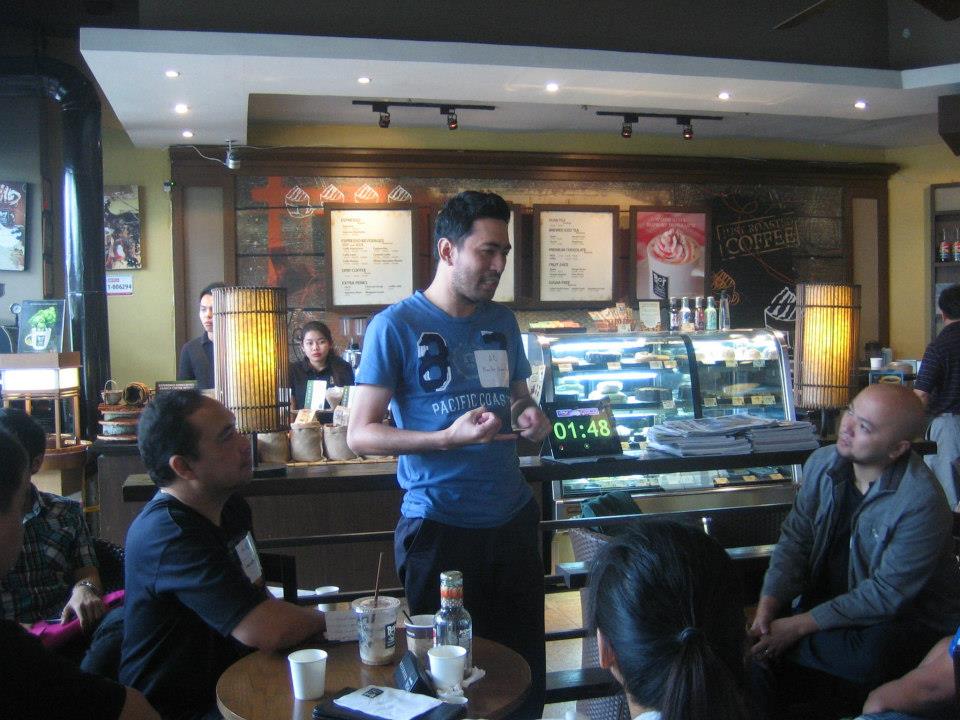
Open Coffee Fun!

Last Saturday was just an awesome experience.

It never fails – get a room full of entrepreneurial people together to talk about startups and the room just erupts with energy.

In the last open coffee, the discussion veered towards mostly finding co-founders and some the more philosophical aspects of doing a startup.

This one was really all about 2 things 1) ideas and 2) helping one another.

“What do you guys think of this idea?”

“I think that will/won’t work because…”

“I know someone who can help you with…”

“Let’s talk later I think I can help you with…”

I thought it was just awesome.

In fact, one of the attendees wanted to do a study on how this burgeoning startup culture is the antithesis of the Filipino crab mentality we are so often accused of.

Thank you so much Bo’s Coffee, for hosting us! The food and coffee were great! (I didn’t know Bo’s had such great breakfast food! As in!)

JGL OPEN COFFEE PRINCIPLES (very much evolving)

1) We are all peers. There is no one higher or lower.

2) We will help each other succeed. There is enough room for everyone. It is never a zero-sum game.

3) Newcomers are very much welcome!

Be sure to join the next one, coming in a month!

open coffee 7
Our gracious hosts!
open coffee
JGL February Open Coffee

open coffee1 open coffee2 open coffee3 open coffee5 open coffee6

ADDENDUM: Learn How To Build Your Startup By JOINING One

Here’s an interesting thing I realized when I was thinking of the previous post :

From my stint in Chikka, I know around 7 people who have developed (or are developing) startups upon leaving the firm.

In my own startup, STORM, a company of around 12-15 people at any given time, 2 people who’ve left the firm have formed their own startups (hello Kiko Loseo and Ope Linchangco!).

Knowing how sparse Filipino startups are, this is no coincidence: working for a startup prepares you to run one.