6 Essential Rules on How to Deliver Kickass Customer Service (Part 1 of 2)

Much of my opinions here are based on my own journey in helping build STORM‘s customer service function. (This is obviously a work in progress) Since STORM services thousands of employees across a growing number of firms, we had to make sure from the onset we were making the right choices as far as customer service is concerned.

Here’s what I’ve been learning on how to build truly differentiated customer service. As a startup or an SME (versus my experience in my previous life in HR of bigger firms), you will have a much greater chance of building a culture that’s TRULY centered on customer service.

First 3 rules below, next 3 up in the next post!

decision

1) At the very beginning, DECIDE that customer service will be a priority

This first tip is the most important one. Your startup HAS TO DECIDE to make customer service a priority. Then you have to commit.

This is much easier said than done.

There will be a lot of cases wherein you will be tempted to look back on this decision and compromise – very typically to save money.

For example, as we have been growing in STORM, we have been increasing the number of people in our customer support group. We follow certain ratios which we believe lead to great customer service: such as “one person should not support more than 1000 people” or “one person should not support more than 3 clients.”

As we experienced further growth however, we inevitably were forced to confront the question: in the name of right “scaling,” do we compromise on our ratios? Do we overload our current team to save a significant amount of money in hiring?

We always went back to our initial decision: since customer service IS a priority, then no, we will not compromise on our ratios and our service levels. We figured, if we truly wanted to make customer service as a differentiating competitive advantage, then we CANNOT compromise.

A short-term, traditional thinker would always opt to choose the money.

If you, however, want to really hone in on customer service, and if you see the strategic value of doing so, then you bite the bullet and spend.

Friends

2) Recruit the right team

This is another tip that’s very hard to actually implement. Here are some of the things I’ve learned in forming a customer-focused servicing team:

– Hire happy people. If you feel bad vibes during the interview process, don’t second-guess your intuition. The airplane test (if you were stuck in an airport, would you enjoy hanging around with this person?) works especially well with customer service.

– Hire empathic people. The book Strengthsfinder has a good description of what to look for. These guys are naturally able to put themselves in the shoes of the client and say the right things.  Hunt for these people.

– Be extra cautious with hiring ex-BPO employees. This seems to be counter-intuitive, after all, aren’t customer service what BPO companies do best? That’s what we thought also – so we hired a number of BPO people for our own customer service team. Then a pattern began to show – we were having problems with them.

Of course, we have to be careful in judging and making hasty generalizations, but this was the pattern we experienced. Perhaps it’s because people from the BPO sector are so used to “traditional” customer service practices – scripts, the faster calls are done the better, having little real freedom to solve problems for the caller – that they get thrown off when we tell them to do something very different. In any case, when you do hire one, you have to make the person realize your definition of “customer service” is vastly different from where they came from.

(for one thing, a company who’s TRULY invested in customer service and considers it a value and its CORE business would NEVER outsource customer service to another company. Think of the companies you would associate with “great customer service” – I bet not one of them outsources it)  

– Make the TEAM do the recruitment. Eventually, as you hire happy and empathic people and putting them on one team, something interesting occurs. By the very nature of their personalities (if you recruited well) and shared work, they become a close-knit group.  Instead of force-feeding people you (or your HR) select in that close-knit group, make this GROUP decide if they feel someone is a fit to join them.

empower

3) Empower and Trust

Once you’ve hired happy, empathic, helpful problem solvers to work in your customer service team, you have to:

Empower  them – they need to be able to have enough resources and accessibility at their disposal that will allow them to REALLY solve problems.

Give them access to decision makers in every department in your firm which affects your service. Give them access to complete client data. Give them enough rope to make calls. Here’s a biggie: give them enough freedom to exercise their natural THOUGHTFULNESS for the clients they service.

If we delivered the wrong item to the customer, aside from apologizing and explaining to her what happened, can we also give the right item to her for free?

If the customer waited 20 minutes for his food, will the customer appreciate a 50% discount? 

In order to be truly effective, your guys need to be able have the freedom to make thoughtful decisions like this.

Once they are sufficiently empowered, you now have to TRUST that they will do the right thing. Then just let them do their jobs. Don’t pressure them in a way that they second-guess their decisions.

NO SCRIPTS. No process map. Nothing canned. (we already know these suck when they are used on us, right?)

Let the good people you hire service your clients uniquely. This is what we expect and want when we call any customer service hotline or go to a service center right? We have a unique problem we need help in solving. We have particular needs. We want information as to what’s REALLY happening. We want people to be honest and upfront. We want people truly talking and trying to solve our problems – not be bombarded by scripts we can smell a mile away.

You want to meet (and exceed) these expectations? Then nothing should be canned. You need to empower problem-solvers and give them the needed leeway to their jobs (and more).

3 more rules next post!

(Know anyone who would especially resonate with this service-centric post? Hit the buttons and share!)

Don’t Be A Customer Service Cliche!

stop

A couple of weeks ago, I was waiting in line at a Toyota Service center, waiting for someone to estimate the costs for the damages done to my car. (by a brake-free 20-wheel truck going down a flyover – but that’s another story) I waited around one hour. Then, someone signalled for me to proceed to a chair in front of an assessment officer’s desk. I waited for around 30 minutes more.

Wait, was there no one at the desk, you ask?

That’s the unbelievable part! There WAS SOMEONE at the desk. I was ignored for 30 minutes as he was doing something else (picture below). Then, once he finished whatever paperwork he was doing, ONLY THEN DID HE LOOK AT ME to say, “Can I help you sir?”

desk

I find it just amazing that virtually ALL companies have “Customer Service” as a Company Value. A number state these values on a huge wall in their offices or sites. This obviously means that Customer Service is something that companies take very seriously right?

In light of this, isn’t it funny how we just brace ourselves when we need to call a customer service hotline, or cue up at some customer service desk? Don’t we all have stories such as the one I narrated above?

(Sadly) We EXPECT bad service.

bad-customer-service
If I only had a ketchup bottle in the picture above…

Please, please, promise me you won’t be a customer service cliche as you service the clients of your startup/business.

Our country now has such low expectations when it comes to being serviced properly. There is a big opportunity to stand out as a provider of awesome customer service.

NEXT POST: Tips on how to build a kickass customer servicing team! 

The Absolutely Crucial Art of Defending Your Dream Time

defending

Do you want to know what’s truly important to you?

There’s really no need for further philosophical / existential analysis.

Here’s a surefire way to know.

Take a look at your calendar for the past month. Take a look at the number of hours you spend on certain tasks.

Where you spend your time will show you an objective view as to what you truly find important.

Do you spend countless hours working overtime? How much time do you spend with your family? Do you spend a lot of time pampering yourself? Video games? TV?

Your calendar says a whole lot about you. 

calendar

In our community, we are encouraged to “defend our prayer time.” That we should spend 15-30 minutes, at a specific time of the day, praying and being with God. We know this will be challenged by the temptation to sleep, watch TV, work, or a hundred other things, which is why we have to vigorously defend the time. Because God is important.

I can’t help but think this also applies to following our career dreams as well. We need to designate a certain time of day. Even just 15-30 minutes a day(for those of us will fulltime jobs which we already know don’t and won’t fulfill us). Because our dreams are important.

I recently talked to someone asking me for advice on how to do a startup part-time. He had an interesting B2B idea which I thought had some potential. I told him it IS possible to start things part-time, but that he would have to work hard and render disciplined, daily effort. I told him we can talk from time to time so I can check up on him. He kept on saying the right things – I want to follow my dreams, I want to pursue what I love, I will do what it takes.

But then when it was time to share with me what research he should’ve garnered, or which potential partners he’s now talked to, he chokes. He says he just too busy.

I would have believed it too, had he avoided adding me in FB, where his reactions to Game of Thrones and the NBA playoffs pop up in my feed.

An NBA game is around 2 1/2 hours. Initial internet research on possible competition can take a mere 30 minutes of smart Googling. Coffee with a potential partner usually takes an hour.

In the time he took to watch ONE basketball game, he could have interviewed two candidates and made the research.

NBA > Dreams.

It sounds funny and simplistic, but if we take a look at our calendars, I’m sure we would also see dozens of “misalignments” between what we SAY are important to us and where we ACTUALLY spend our time.

If your family is important to you, did you sacrifice time from other stuff to be with them?

If your dreams are important to you, how much time a day do you spend working on it?

Just a mere 30 minutes a day of deliberate work on your dream can yield tremendous results.

When I was starting STORM out in 2005, I had a fulltime job and I was pursuing a master’s degree. I had really wanted to do a “business” though, (the term “startup” wasn’t quite popular yet) so I really resolved to find some time. I still remember spending a few minutes every weekday researching on flexible benefit competition, polishing my powerpoint deck, and “profiling” potential partners (I remember having a list of people with their strengths and backgrounds). Sunday mornings (otherwise known as corporate veg-out time) would be sacrificed for morning coffee with potential co-founders. I would drive out to the Starbucks nearest to the homes of my potential partners.

After months of doing this, I finally found partners who were willing to take the leap with me. Then, the project started taking a life on its own. There was momentum (so crucial). Excited, I started finding more and more time to work on my dream. Weekend coffee transformed into weekend planning with my partners. Soon, we would be putting up our share of the money, get SEC-registered, and start. By no means was it smooth sailing after, but I never looked back. Three years after, I took my fated full-time leap.

Is your dream worth sacrificing for and pursuing?

If it is, then take your calendar and start making changes.

Put your time where your mouth is.

(do you know anyone who would especially resonate with this post? be a blessing and share! Sometimes we need to encourage people to take leaps! – Peter)

5 Must-ask Questions for Your Co-Founder Interviews

partnersIf you’ve been reading this blog for awhile now, you already know how much emphasis I put at the process of finding the right partner. Actually, wrong partner selection is THE single reason I’ve failed in multiple previous  startups. Do NOT take this delicate process haphazardly.

To help you with this process, I’d like to share some practical questions you can ask a potential partner during an interview. This is by no means a comprehensive list – these are just a random, practical list of questions I’ve found to be pretty helpful over the years.

Image converted using ifftoany

1) What are your own dreams for this startup?

You want a partner, not an employee. You want someone who will share your startup dream and very importantly, make it something bigger. Your potential partner HAS to have his own take on how to further build on your idea or vision.

Red flag answers:

“Well, uhm, I haven’t really thought of that.”

“It’s your vision, not mine.”

kryptonite

2) I really suck at _______, _________, and _________. What are YOUR weaknesses?

Weaknesses questions are very, very tricky in interviews. People know the question is coming and yet are are still befuddled by it. Moreover, you typically get people who won’t divulge real weaknesses and instead give you duh answers like:

“I work too hard”

or

“I’m a perfectionist.”

or

“I used to be bad with detail, but now it’s no longer a weakness.” (this means its a HUGE weakness!!)

In the co-founder search, the weakness/strength discussion is just so crucial. The whole point of getting a partner or two is to find people who will complement you and account for your weaknesses  (and vice versa).

So you HAVE to have an honest, open conversation about strengths and weaknesses.

The first part of the question, “My weaknesses are…” is designed to make the interviewee more comfortable in divulging her own weaknesses by first divulging your own. Share these truthfully. If you are genuine, your interviewee WILL, more often than not, reciprocate.

Red flag answers:

“I work too hard.”

“I have worked so hard in correcting my weaknesses that now I have none.” (yep, I have gotten this multiple times)

Carrot-on-stick

3) How do you like to get rewarded? 

I like this question precisely because it is a very general question and can lead the conversation where the interviewee chooses. You can then see patterns as far as motivation is concerned. Knowing what will motivate a partner is crucial in ensuring your partner/s stays with you.

For extrinsic rewards, be sensitive to answers which pertain to the timing of when the interviewee would want to get rewarded.

You want people who will believe in your idea and will work for FUTURE monetary rewards. You want to be talking more about equity, success-based rewards, and future plans, instead of negotiating current salary.

Which reminds me of another very strategic question to ask:

pesos

4) What are your current financial obligations?

This is an AWESOME question.

I’ve found that a person’s current financial situation is a HUGE determinant as to whether he would take a leap with you or not. Not only will you get a good picture of this, but this is also a VERY GOOD WAY of determining what the person’s minimum salary can be.

(If the person says “I’m paying around P3000 a month for the phone bill and around P4000 for gas. that’s it.” and then he says later on, “I would require a fulltime salary of P40,000,” then you have a red flag.)

I just am realizing this right now as I type this – I hope I won’t regret posting these when I do future founder interviews…

audition

5) Can you design/program/sell/  ________ for me right now? 

These are the three classic roles for the ideal founding team: a design expert, a programmer (or more generally, your MAKER/PRODUCER), and your pitchman.

How do you know if they can do the role well? Make them exhibit it. Make them audition.

Make the pitcher give you a 5-minute pitch. Ask the programmer to code. Make the designer draw something. Don’t  rely on a portfolio (you’re not sure if they really did it). Rely on what they could produce right there and then. This will take time yes, but believe me, its worth it.

Red flag answers:

“Really? Now?”

Other quick suggestions: 

– NEVER partner from just one interview. Do AT LEAST 3. Ask many references. And then work on a small project together before shelling out any equity. This is not an employee. This is a marriage. Be thorough.

– If its been a long time already and you haven’t found a partner yet? (I know some people who are now at year 3 of the search). Just start and incorporate. The work you will do (assumption: you do good work) WILL attract potential partners. Who knows, you might not even need one.

An Appeal to Generous Hearts – Let’s Help a Fellow Entrepreneur in Need

have a heart

Coming back from lunch last Monday, I was surprised to see someone who has been a frequent attendee at JGL events. Let’s call him Mark (not his real name).

When I began talking to him in our conference room, tears began to well up in his eyes as he narrated his story. This wasn’t going to be another startup brainstorming.

His mom’s kidneys were failing, and she needed to undergo dialysis to properly filter her blood and survive. This would be something permanent – she would need to undergo dialysis three times a week.

Mark and his brother had been scrambling the past few weeks to keep up with the payments. They had resorted to selling appliances and personal belongings.

But now they had nothing else to sell, no loans left to apply to.

Mark was at the end of his rope. He told me that he was supremely embarrassed to ask for help, but that he would do anything for his mom. He was asking me if it were possible to do a short-term loan.

Having gone through almost losing my own mother to meningitis some years ago, and having personally known what financial desperation feels like, I gave Mark some money.

It won’t nearly be enough. Since his mom is confined in a hospital, the dialysis rates are much higher (P5000 a pop) than some other places.

There is light at the end of the tunnel though. Sometime late July, Mark’s HMO coverage would reset, and he would be able to get some needed financial assistance. From now until then though, they would need to pay P15,000 a week. Mark would need around P45000-P60,000 to bridge that gap.

Mark needs our help. With his permission, I am posting this to appeal to your generosity.

There are two ways you can help Mark out.

A) Send Money

Do send it to my account:

BPI Account name: Peter Paul V. Cauton

BPI account no: 3300 2024 53

(do email me a photo of the deposit slip so I can account for the amount properly)

You can also drop it off at the STORM office, Unit 602, Centerpoint Building, Garnet cor Julia Vargas Streets, Ortigas Center. You can look for either me or Angeli.

Any amount helps.

B) You can give Mark some opportunities to earn money on the side

Mark currently works for a BPO firm doing graveyard. He has some time during the day to work with you on some other stuff. Mark is an EXCELLENT communicator and works well with people. He’s entrepreneurial. He’s obviously pretty motivated. If you have something for him, then please send me an email at peter@juangreatleap.com

I’ve always marveled at how incredibly generous and giving this community is.

Let’s step up to the plate and help someone in his hour of desperate need.

Do share this if you can.

June Open Coffee Postscript – This Just Keeps on Getting Bigger

group shot opencoffee
Record number for June! We can’t fit the pictures anymore!

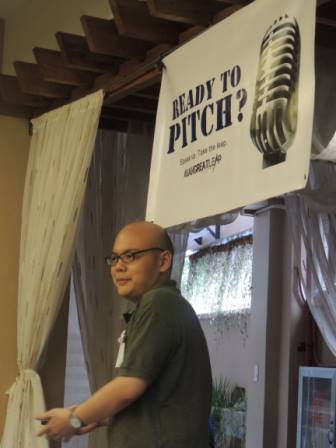
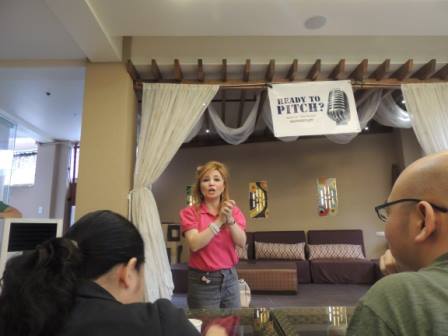
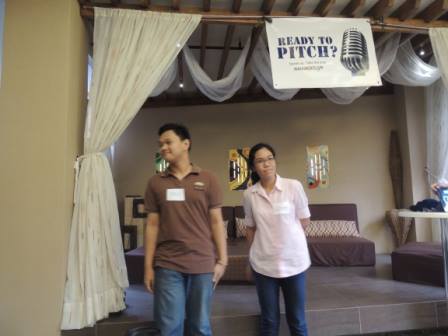
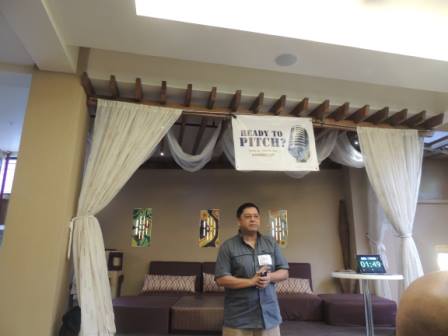
As usual, everyone had a grand time in the June edition of JGL’s Open Coffee series held at the beautiful 47 East compound last Saturday.

It was a good mix of seasoned startup guys (like Joey Gurango, Ari Bancale, Jojy Azurin, Glenn Santos, David Elefant, Jason De la Rosa, Robert Bernabe, Roxanne Aquino, and so many others), newly-minted startup guys, and newbies.

As per Open Coffee tradition, 199jobs.com’s main man Glenn Santos starts things off with some startup news:

As per open coffee tradition, 199jobs.com's main man Glenn Santos starting things out with startup related news...

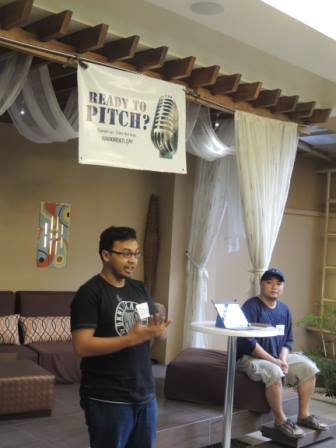
The first pitch is always kind of crucial. There’s usually a bit of hesitation as to who wants to go first.

Not in the June edition though!

Rick Sindiong gets the ball rolling
Rick Sindiong quickly steps to the plate and gets the ball rolling
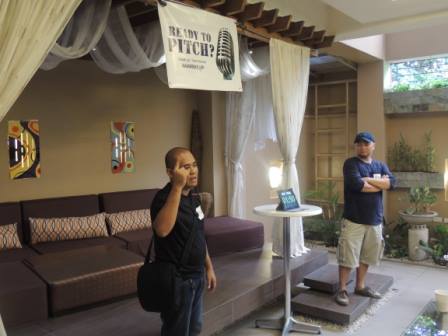
Digital media publisher and freelancing advocate Arianne Chantelle
JGL mainstay Alex Calero pitches

An evident trend I really like is the increase of the number of students. In fact, a college freshman,  Kenley went up to pitch a cool university-based idea.

ADMU Freshman Kenley Tan
DLSU student Charles Uy
Blue Consulting’s Byron Raymundo and Karen Medriano

The pitches veered a bit more tech this time. With dashes of finance, retail, and social enterprise ideas/problems thrown into the mix. (Again, I’m amazed at how much information and help is exchanged in these forums.) The variety of ideas was just amazing. We had people pitching procurement e-commerce sites, angel “brokers” asking if anyone wanted 15 million in funding, asking for co-founders in the development of an IT firm targeting rural banks, asking for help for an entry for a US video production contest, a Japanese food retail play, a unique take combining crowdfunding and CSR, Joey Gurango pitching for more startups to join PSIA’s Launchpad program, and so, so much more.

joey gurango
Joey G. pitching PSIA’s awesome Spring.ph program for entrepreneurs
Dino Alcoseba pitching the idea behind sportscout.ph

While this time, we had no moments of spontaneous beatboxing or singing, I think the pitch of the day came from Myles Jamito, who got the crowd’s imagination buzzing with samples of 3-D printed items.

Myles Jamito
Myles Jamito inciting a host of 3-D printing ideas from the audience

I CANNOT wait for the July edition!

More pics…

Randy Tan of Lookingfour
Randy Tan of Lookingfour does a pitch
DLSU professor and entrepreneur Ren de los santos pitches
Tim Mislos pitching!
47 East's Zar Castro gets the last say!
47 East’s Zar Castro gets the last say!


Do you really need Near Death to finally begin living life?

flatline

A few months ago a friend of mine told me about her recent life-changing plane trip

It was the stuff of nightmares. The plane she was riding in was becoming unstable. So much so that they actually released the gas masks and were given instructions to brace themselves. She thought that was it for her.

Fortunately, no crisis happened.

A different crisis though, was slowly swelling within her.

After her horrendous ordeal, she began questioning everything.

Why still be in corporate if she’s not happy? Why wasn’t she spending as much time with her kids? What did she REALLY want to do? What is her purpose?

She is now in the process of changing her life. Aligning it.

We know stories like this. Of people suddenly sobering up in the face of some near-fatal accident or sickness.

We read about them. We watch movies and TV shows about them.

Yes, we get inspired by them, but how many of us actually ACT accordingly?

I think most of us are caught in the illusion that we have time.

But we don’t really know for sure, do we?

It’s not just because death can visit our doors anytime, but also because time marches methodically. Unrelenting. Unfeeling.

You can continue saying, “I”ll do it this year,” and soon get to realize a whole decade just passed.

It seems only like a year ago that I graduated from college, not the actual 16.

Do we really need a near-death experience to jar us into truly living?

masksPerhaps you can simulate one.

Close your eyes. Use your imagination.

Imagine the gas masks were getting dropped on YOUR trip. Your plane is about to crash.

You are about to die.

Now ask yourself two questions:

1. What do you regret not having done? 

2. Are these the same things you are spending most of your time on now? 

Ponder. Consider. Pray.

Then, act.

Elon Musk’s Must-see Interview and Why You Need To Follow Him

Google “real-life Tony Stark” and the only name you’ll see is ELON MUSK.

Somehow, I think Elon is still under the radar. My wife doesn’t know him. The man on the street won’t know him. He doesn’t have Jobs’s brand.

Yet, I think he’s a much more fascinating entrepreneur than Jobs ever was. (with all the Apple in my house, this is a pretty loaded statement)

Also, I think Elon wins the badass entrepreneurial name battle.

“Elon Musk” > “Steve Jobs”

He DOES sound like someone who would be captain of a martian spacecraft!

If you’re wondering what the fuss is all about, watch the fascinating video below from the recent D11 Conference.

(I’m serious, watch it! Don’t skip over to this part until you do!)

So here’s why I love this guy:

1) Not about the money – its about the impact

You know what I find most amazing in this interview? He’s able to talk about “inter-planetary life” in a business conference with a straight face. While Zuckerberg busies himself trying to find new ways to bill us for talking to people already in our network, Musk is not only trying to get rid of our dependence on fossil fuel, but he’s also saving the human race from extinction via the development of interplanetary travel.

With a straight face.

As noted entrepreneur/VC Mark Suster says, “Elon puts all other entrepreneurs to shame.”

The Tesla Model S
The Tesla Model S

2) He doesn’t go after the easy thing

Attend ANY entrepreneurial event and what you’ll inevitably find is an avalanche of internet ideas. Musk advises us of the opposite thing: get out of the internet, there are too many people there.

After doing Paypal, what ANYONE would have done (in fact, what most of the “Paypal Mafia” did) is to do even more internet startups.

Instead, Musk went after bigger, more difficult fish.

3) The man has balls

Ok, tell me would you create a startup which would threaten to disrupt the main source of wealth of a plethora of Middle Eastern countries?

No?

Disruption typically makes you enemies – those who want to hold on to the status quo. Musk isn’t afraid of disrupting some of the oldest, most entrenched, wealthiest industries.

That takes chutzpah.

4) Atypical heroes

You can tell a lot about a person by asking who his heroes are. When asked of who his heroes are, we were probably expecting one of the great IT guys, perhaps Jobs or Gates (You could tell the interviewers wanted him to reply this way) Instead, Musk quickly went with Tesla (oh gosh if you haven’t read this yet, please do. Tesla rules!), Einstein, Edison, and Newton.

5) Sheer Diversity 

Let’s chronologically talk about the technology Musk tackled: the first truly universal online payment gateway, electric cars, a space exploration/rockets(it still feels weird to type that), and “a cross between a Concorde, a rail gun, and an hockey table.”

How many CEO’s do you see tackle that range of technology?

The truly impressive thing? You just KNOW he immerses himself in the technology and just MAKES himself an expert. We all know LEARNING is a key trait for entrepreneurs , but this is ridiculous.

I want to be an expert in internet payments. Done. Hmmm…electric cars seem really important – I want to reduce our dependence on fossil fuels. I need to be an expert in electric automobiles (which look really good) Done. Space?…

Elon is amazing – the spiritual successor to Steve Jobs and for me, the undisputed occupant of the entrepreneurial Iron Throne. If you are an entrepreneur, you HAVE to follow, learn, and get inspiration from him.

Can’t wait to see what he has for us next.

musk

75 now confirmed for OPEN COFFEE. Register NOW to grab the last slots!

last call

Looks like we’ll be having our biggest open coffee yet! 75 people now confirmed! We have to cap the attendees to a manageable level (too many people doesn’t work for the format used).

We’ll be closing off registration at 100 slots. Do register HERE now to quickly reserve your slot. (I suggest doing it NOW)

I’m excited to see everyone this Saturday, 9:30 am at the magnificent 47 East compound!

Don’t Slip Into The Entrepreneur Entitlement Trap

entitlement

It was one of my most painful learning experiences as an entrepreneur.

Around 3 years ago I was invited to be an investor/co-founder in a mobile startup. We were four people. The resumes of my co-founders were dazzling – Ivy League degrees, corporate stalwarts, multiple successful ventures. I signed up immediately. I also proceeded to make the most sizeable investment I’ve ever made (not my usual fare as a passionate proponent of bootstrapping and  minimum seeding)

We met once a week.

On Skype.

There was no one fulltime among the founders. The company was everyone’s second or even third priority.

The deadlines were soft, chewy, and unaccounted for.

We were burning money per month on expenses. I felt my money burning away.

But hey, we’ll turn it around soon enough though! How can we, the super-awesome Fab Four fail?

Soon enough, that company folded.

I ended up actually paying more money than I invested because it turns out closing an LLC (in the US where the company was registered) is not something cheap.

I fell into the entitlement trap.

This is when I-am-so-awesome gets in our head.

As an entrepreneur, we typically become symptomatic of this when we taste some degree of success.

“Success” here can totally be subjective. To wit:

I’m making a million buck a week! I AM AWESOME!

My FB company page was liked 10 times this week! I AM AWESOME!

My dad founded a big company – my very blood flows with entrepreneurial awesomeness! I AM AWESOME! (and redundant)

We then let it get to our head. We forget why we got there: hard work, entrepreneurial hustle, starting from zero, other people helping out, God.

I have heard/read these actual quotes from entrepreneurs and would-be entrepreneurs:

Our competition sucks. They don’t know what they’re doing. (the very typical adjective I hear a lot regarding competition is “bulok”)

No one in the world can mentor me on this because what I’ll be introducing will be first in the world.

I’m pretty sure I can get funded for this.

This sense of entitlement, this sense of “the world owes me” is quite dangerous for the entrepreneur (and frankly, anyone else).

For me, the two most important traits of an entrepreneur are hard work and learning. This whole new entrepreneurial paradigm that the likes of Steve Blank and Eric Ries are championing revolves around these two traits.

It is also precisely these two traits that entitlement slowly chomps away at:

I am so awesome, I don’t need to work that hard. 

I am so awesome, I don’t need to learn from anyone else. 

Don’t fall into this trap.

It can be easy to fall prey to this because confidence is one trait all entrepreneurs share. We HAVE to be confident if we want to survive in this unforgiving industry.

But let us not confuse confidence with arrogance.

Stay hungry. Stay humble.