Fast-Track Your Startup Dreams By Joining A Successful One

successfail

Learning From Failure Might be a Tad Overrated

By now, we’ve all heard a lot about how important it is to fail, how we need to start failing immediately – in a sense so we can find about what NOT to do the fastest way possible.

Of course, we’ve all seen this happen, so I’m not about to debate its veracity.

There might be an alternative though.

Instead of learning from failure, why not learn from success? Instead of concentrating on what NOT to do, why not focus on WHAT to do?

How can you do this as someone who wants to develop his own startup?

One way is to go join a successful one.

My Chikka Days

When I think about it now, my five-year stint in Chikka really fast-tracked my own startup career. I didn’t exactly realize it then, but it did. 
chikka
I remember the first few weeks I was in Chikka, and coming from 2 very “corporate” companies, it was quite the culture shock. No manager rooms. First-name basis with everyone. A disdain for anything “formal.” (I believe their term for it was “Ponstan.” Long story)

I loved it! It was certainly very different from what I was used to – and I found myself gravitating towards it.

The more time I spent in Chikka, the more interesting things I soaked up. I noticed how then-CEO Dennis Mendiola and then-COO Chito Bustamante worked. Dennis worked on products and strategy. He would do off-the-wall stuff like ask waiters for their opinion on a product during formal meetings. He would leave the execution to Chito – and boy, did he execute. I remember one director describe Chito’s execution style as suave. Chito had a way of getting things done.

As a company, I remember hitting deadlines I never thought we’d hit. We just sort of willed things to happen.

I remember the little traditions. Lechon during a founder’s birthday. Top ten lists during events.

I remember dreaming big.

I actually started conceptualizing STORM at the same time that I was interviewing for Chikka. In retrospect, I think this was awfully good timing. It was the best of both worlds – I was starting my startup part-time while learning from a very good one full-time.

The Advantages of Joining a Startup (specifically if your ultimate goal is to put one up)

1) Learning First-Hand

arn

I can read, say, Disciplined Entrepreneurship and learn all about startup execution. I can memorize the whole thing and still, it could never compare to seeing first-hand how Chito pushed Chikka in executing strategy. Seeing that day-to-day, seeing what it takes – was truly an eye-opening experience. I carried all these lesson with me in developing my own firms.

One caveat here – following this logic, you have to choose a successful one. The whole point is to learn WHAT to do before doing it yourself. This only happens if you join a startup with some degree of success. This can be a bit tricky. Joining a startup which is too early in the game might not give you the “winning” lessons you are seeking. On the other hand, joining a fairly seasoned one might not give you “startup” lessons anymore.

2) Supportive Founders (mostly)

One thing with founders of startups – a good chunk of them will be passionate proponents of entrepreneurship.

So if you ask them, “hey can I do a startup on the side while I work with you fulltime?”

As long as it isn’t a competing product and it doesn’t interfere with your job, I’m guessing a fair number will actually be supportive. This is very different from a number of bigger corporations whom I know frown upon part-time work.

3) Less Risk

less riskThis is a biggie. By definition, a successful startup can probably afford to give you a competitive/semi-competitive salary (in contrast, for a number of startups, salary might not even be a given).

The most common risk in joining a startup is that you sacrifice immediate practical considerations (salary, benefits, position) for future glory. In those first few months/years in running a startup the most important factor is your learning curve(the essence of lean startup thinking). How fast do you learn what the right things are (the right market, the right product, the right strategy).

By joining a startup, you essentially can have your cake and eat it as well: you get to learn loads without necessarily sacrificing practicality.

4) Internal Social Proof

For me, THIS was probably the biggie.

As a startup founder, what I constantly wrangled with was doubt.

Will this even work? Is what I’m doing stupid? Is this worth all the trouble?

Being in Chikka really helped in convincing me that hey, not only is it possible to develop a successful startup (especially back in the mid-2000’s when the startup ecosystem isn’t what it is now), but it is actually quite possible to build one which scales.

That psychological edge can sometimes be all the difference.

Just Touch the Water

ripple

It still amazes me how so many of the largest companies in world started out as some crazy idea in someone’s head.

Then, these individuals began talking about it with another person. Perhaps Larry invited Sergey over for a coffee chat, perhaps Steve started an argument with Woz, Hewlett started brainstorming with Packard, Procter meets with Gamble for the first time, and so on.

As the idea is shared, it separates itself from one individual and takes on a life of its own.

Now, two or more people get excited about it.

More talks are scheduled. More energy is generated. Perhaps more people involved.

Then things get actually tried out.

Soon, papers get signed and boom, a company is borne!

This is a very, very familiar process for me…an idea surfaces between 2 or 3 people, excitement is generated, more meetings are arranged, research is done, things get moving, and soon, papers are signed.

Most startups are borne out of momentum. (sustaining it is an entirely different art)

But that first step is something I know is a barrier for some people.

You have to release your idea into the wild.

I know for a lot of people this is a very natural thing, but I also know that for a lot of people, this can be a very unnatural thing, like the shy kid getting ready to be called for orals.

It’s your idea after all, and to share it is to open yourself up to all sorts of imagined criticism and scorn.

If you have an idea though, an idea which you feel very strongly about, (the one which keeps you up at night) you CANNOT just let it remain stagnant in your head. You’re not doing anyone any favors, certainly not yourself.

You have to overcome.

TALK to people about it. What do your friends think? What do experts think? Heck, what do strangers think?

Go to startup events and talk about it. Talk to entrepreneurs in your field about it (entreps are mostly a helpful bunch)

I’d like to suggest JGL’s monthly open coffee 🙂

If you want to make any sort of ripple, you can’t be afraid of touching the water.

Sometimes, Interest Can Trump Passion

idea

It’s probably THE MOST overused cliche in the entrepreneur world, right?

Find something you are passionate with!

You will never work a day again!

This is true of course. (which is why its a cliche)

I do think though that for some people, this gets in the way because people try to look for their passion in the SUBJECT of the idea, when sometimes, DEVELOPING A STARTUP itself is the passion.

There are a number of entrepreneurs now I talk to who I think face this dilemma.

“Peter, there are these ideas I have which are interesting and I think can make money, but I’m not really sure I’m SUPER passionate about. What I am REALLY passionate about are comic books and food, but I can’t really find an idea in those areas which I think can work yet.”

Look, finding a subject matter which you are really really passionate which CAN be transformed into a profitable venture is a tremendous blessing. It can also prove to be a time-consuming, frustrating endeavor, since a lot of times, the things we are passionate with just cannot be monetized.

But what if the very thing we are passionate with is entrepreneurship itself? Being the guy who calls the shots? Building something and working with people in building it?

If this is the case, then we can find something we are not necessarily passionate about yet, but are interested in. Something we can GROW to be passionate about.

In my case, when I started STORM, I wasn’t like, super passionate about flexible benefits. I didn’t have flexible benefit posters, think about flexible benefits when I woke up in the morning, or named any of my kids Flexter Cauton.

But I WAS interested in it enough that I could talk about it for long periods of time, or read a book about it, or go on the internet and research about it for long periods.

What I REALLY was passionate about is entrepreneurship, building teams, and leading them. These were the things which scratched my primordial existential itches.

So you know what? It worked. Many years after, work still doesn’t feel like work.

So yes, by all means, go search for a passion play. If you don’t find it, don’t fret. There’s a significant chance that you’re passionate about the general elements entrepreneurship itself. In this case, try an interest, something that you know you can GROW to be passionate about. INTEREST is still quite important, no matter how passionate I am about entrepreneurship, I doubt if I’d have enough interest to invest time and energy on say, construction, or fishing.

What’s the most important word in all these?

TRY.


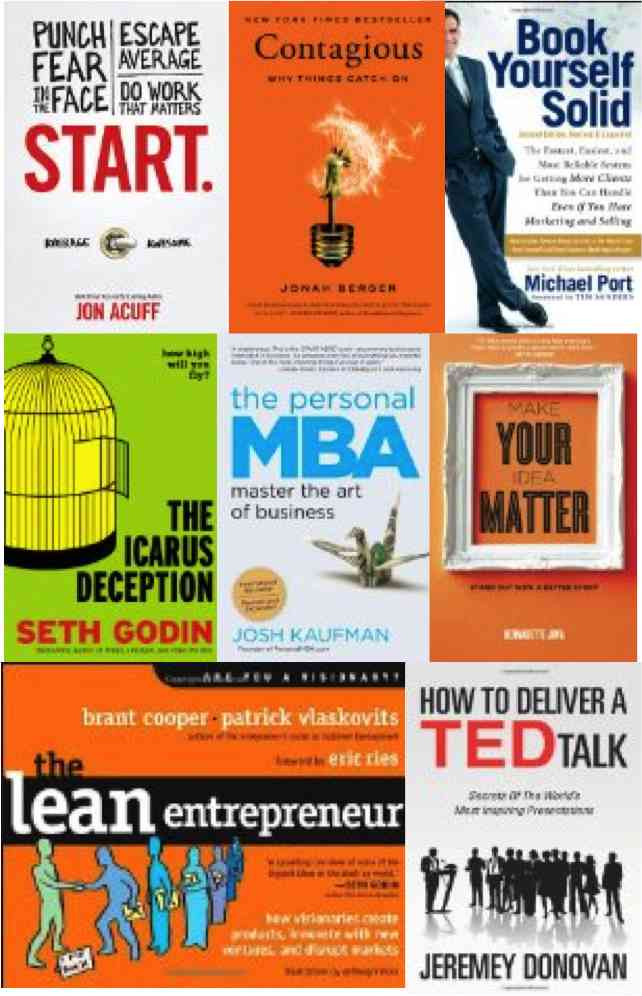
Nine Book Reviews for the First Half of 2013

Haven’t done a book review in awhile!

I have plowed through more than a couple of good books (and some meh ones) over the course of the last few months.

Here’s are some quick recommendations:

1. The Icarus Deception, Seth Godin

As a big Seth Godin fan, this was the book I was drooling about in 2012. So much so that one of the first activities I did in 2013 was to read it. (it was released January 1)

I have to say – I was a bit disappointed (something I never would have imagined I would say for an SG book). The book is mainly about not being afraid to pursue your dreams. If I read it in a vacuum, I probably would have enjoyed and gotten more out of it. But coming from reading ALL of SG’s books, I found this one mostly retreads ideas from his other books. Moreover, his other books (namely, Tribes and Linchpin) were more focused than this one.

Recommendation: If you’re a Seth Godin fanatic, then I know you’re going to read this anyway. I think you’ll feel the same way I did. If you’re new to Godin and want to try one of his books out, I’d pass on this and pick up Linchpin, Tribes, or even We Are All Weird.  

2) The Personal MBA, Josh Kaufman

The best book I’ve read for 2013 so far.

I have actually seen this in bestseller lists, but I’ve avoided it because of the title (not another “pocket MBA”). An entrepreneur highly recommended it to me though, and I gave it a shot.

I’m really glad I did.

The whole riveting first chapter about why NOT to go get an MBA is alone worth the price of  admission.

What the book does is it breaks business down into very simple parts and explains why you don’t need to look at business in a needlessly complex way. It’s an awesome, refreshing way to teach business.

Recommendation: if you are into business, no matter where you are in the spectrum (new, old, want, still in corporate) this is a MUST read. Buy NOW. 

3) Make Your Idea Matter, Bernadette Jiwa

This isn’t so much as a chaper-for-chapter book as it is some kind of guide / resource book. There are different topics – all on how to make your brand and your story better – arranged in self-contained 1-3 pagers (for example, “20 Ways To Tell a Better Brand Story”). I absolutely love formats like this, where you can just open the book anywhere and pick something up. When I finished the book (not a long read), I found myself yearning for more – a sign of great content.

Recommendation: Don’t let the title mislead you  – it’s not really an entrepreneurial-make your-idea-into-reality book. It is a good read / resource book, though, especially if you are in marketing/sales. 

4) The Lean Entrepreneur, Brant Cooper and Patrick Vlaskovits

Just finished this a few days ago. I think it’s the best of the recent “Lean” books I’ve read (being Eric Ries’s Lean Startup and Ash Maurya’s Running Lean). To be fair though, this new book builds on the precepts established in the earlier books, so rather than saying its better than the previous books, perhaps its better to say they expand the knowledge base the other two books established.

What I think the book does a good job of is explaining the concepts well with real-life examples and analogies – which was a must considering “lean startup” could get to be pretty technical.

Recommendation: A must read especially if you are putting up a tech startup (although still very relevant for non-tech) Might be too technical to be a “first book” for a new entrepreneur. 

5) Warren Buffet’s Management Secrets, Mary Buffet and David Clark

I didn’t really know a lot about the “World’s Greatest Investor” so one day in a bookstore I thought I could remedy that by buying a random Warren Buffet book. Did I pick the wrong one. While the book has some fascinating anecdotes about Buffet, I think the book’s main points are quite unremarkable (pick passions, hire good people, don’t live beyond your means, etc…).

Plus, I still don’t know much about Warren Buffet.

Recommendation: Waste of time, if you’ve read ANY other general business book. Pass.

6) Start: Punching Fear in the Face escape average and do work that matter, Jon Acuff

Having enjoyed his previous book, Quitter. I went to Audible and bought his latest work, Start. (I love audiobooks which are read by the authors themselves).

It was an enjoyable “read” – the author writes with a lot of humor and I found myself laughing out loud a couple of times while I listened to the audio during my morning walks.

What did I learn from it? Unfortunately, nothing much when I think about it. The content becomes familiar if you’ve read Godin or Steven Pressfield (the author of the wondrous War of Art and Do The Work), and I think these alternatives do a better job in presenting the same ideas.

Recommendation: There are inspiring moments and the humor is great, but it isn’t a MUST read. If you’ve spare change, go for it. 

7) Contagious, Jonah Berger

Tipping Point 2.0!

The author builds upon Gladwell’s ideas and goes into fascinating detail as to WHY things go viral (6 factors) and how you can design your own campaigns with a much-increased chances of going viral. Tons of relatable examples and researched evidence. Even if you aren’t in web marketing, there’s a lot of stuff you will find useful and immediately applicable: from pricing, to crafting your marketing headlines, to making videos which will get shared. Well worth the time to read.

Recommendation: A must-read for any entrepreneur in today’s ultra-connected environment. 

8) Book Yourself Solid, Michael Port


I don’t like books which read like an informercial. This is one of them.

“If you use my Book Yourself Solid System you will find yourself having more clients than you can possibly handle.”

I think the author references this “system” in every other sentence.

I’m not so sure there’s a readership who likes reading something like this, but its not for me.

Recommendation: I bought this book because a number of freelancers come to me for advice and I thought I could get some insights on helping them get “booked solid.” There are a number of good insights and tips available, but nothing original. Plus, the infomercial quality was just too much for my preferred reading style. (I already bought your book – there’s no need to sell anymore!)  By the third chapter, I was rueing my purchase, but I forced myself to read in the hopes of gaining…something. By the 7th chapter, I just quit. Avoid this book.

9) How To Deliver a Ted Talk, Jeremey Donovan

I love books which are both quick reads AND where you feel you’re a better person than before you read it. This book is one of those. The book talks a bit about the TED format and gives you tips on selecting a great “TED” topic. I’m not really sure these will be useful for me (unless I go on to give one), but what I did find very very useful were the public speaking tips – all very relevant for ANY public speaking endeavor.

Recommendation: If you ever do ANY form of public speaking, this is well worth it, especially considering the not so big investment in time and price.  

bookreview

The Compass, The Anchor, and The Propeller

PR

When we moved into our new office, we were in a momentary quandary about what to do with a good-sized room that was right smack in the middle of the layout.

We could turn it into another meeting room – you could never have enough of those.

Or perhaps a designated interview room?

Incubate a startup idea (or two)? (such a temptation!)

Then, it hit Pao and I at the same time – we just HAVE to turn it into a prayer room.

It’s obviously not the bottom line-friendly alternative, but knowing our history, it just made too much sense to put a prayer room in the middle of the office. This was our little way of honoring the God who has been so faithful to us and our journey.

Prayer has been absolutely essential in my life as an entrepreneur.

I know “prayer” and “entrepreneurship” don’t really mix that well in the eyes of some people, but for me the opposite is quite true – I think prayer is absolutely critical in the life of the (believing) entrepreneur.

compass

COMPASS

“I want to be the CAPTAIN of my own ship!”

This was my battle cry all those years in corporate. Then, one day, I made it happen  –  the big leap.

Then I felt it.

It was very clear to me from day 1 as a “captain.”

…I felt that I had NO CLUE whatsoever on how and where to steer the ship.

That was a HUGE adjustment I had to make. In corporate, everything was (mostly) laid out for me. I had a boss. He had goals and objectives for me. The company had overall goals I had to align myself with. There was an accepted method of doing things.

As an entrepreneur though, everything was MY CALL.

This amount of freedom – without any accountability – is very dangerous.

Sure, you can lead your firm to quick profitability and success, but if you don’t watch it, the subtle costs can lead you to be someone you don’t want to be.

I remember years ago, at a time when we were just starting to turn it around as a startup, we got an opportunity to service a motel chain.

We certainly needed the cash, but after going back and forth on the matter, we declined.

I would probably get a lot of flak from that decision from most entrepreneurial experts (an employee actually questioned me about this), but ultimately, my prayer led me to the conclusion that it wasn’t a project aligned to what I wanted the company to stand for, and ultimately, to what I wanted to stand for.

There are many, many, many other morally ambiguous items which you would have to decide on when you run a firm. These ultimately will have an impact on the company culture you create, and perhaps, more importantly, to who you become. (our decisions make us, after all)

Tread carefully.

This is where prayer has really come in handy for me as a discernment medium. As a much-needed COMPASS, prayer helps me navigate the sea of infinite choices and options I find myself in.

Anchor

ANCHOR

I’m not so sure if I blogged about this before, but I remember many many years ago when I happened to find myself doing some work for one of the richest men in the country.

As I would come to know after a few months working with him, he was – bar none – the most power/money hungry person I’ve ever met.

What I remember mostly were his eyes. There was something about them. Even before I knew about how he was, I remember looking at his blank eyes and finding something off.

They were soulless.

I remember vowing to myself NEVER to walk that path, never to love money that much.

This isn’t easy. It’s an incredibly slippery slope.

When most of an entrepreneur’s time is spent safeguarding and ensuring “bottom line”, it’s very, very difficult not to obsess over it and make it the ONLY target.

This is where prayer comes in as a much-needed anchor. Prayer has helped me, over and over and over, realize that my worth does not lie in money…nor in my startup, for that matter.

It lies with the fact that I am God’s child.

Prayer helps me put things into perspective.

But it does more than that.

I realize now that prayer has become my propeller.

propellerPROPELLER

Without prayer, I would still be in corporate. Without prayer, I wouldn’t have had the right amount of serenity to realize there was a call for me to give back and encourage other people to take their own leaps. Without prayer, there would be no blogging. No JGL.

Prayer is where I draw the necessary strength (the secret – it isn’t mine) to do big, hairy leaps.

The Grand Design

So, my friends and fellow entrepreneurs, never forget and take prayer for granted.

Pray.

Fight for your prayer time. Don’t pray much? Start. Don’t pray much in conjunction to your work as an entrepreneur? Start the integration.

Do you believe we all have a specific purpose here in earth? I do. I believe in a Grand Design. This is why I am so excited about today’s entrepreneur-friendly world. I think we can pursue our truest passions (inextricably linked to our purpose) in a much easier way than it ever was. I think it is much easier now to stop compromising and live up to what OUR grand design is.

The MOST efficient and effective way to figure this out?

Talking often with the Grand Designer.

comanchller

6 Tips to Ensure Your Idea is BIG Enough

Don’t fall into the trap of the small idea. Here are 6 tips on how to avoid doing so.

pill

1) Pick a painkiller

I touched on this a bit in a recent post. A painkiller is something someone very urgently needs. He would be willing to pay for it NOW if you could make the pain go away.

On the other hand, a vitamin is a nice-to-have.

Ask potential customers if your idea is a painkiller or a vitamin.

CHOOSE to go after painkillers. (no matter how sexy an idea the vitamin is, you’re bound to have better success with the painkiller)

Clipart Illustration of a Group Of Businessmen In Colorful Shirts, Carrying Briefcases And Holding Their Resumes Up At A Job Interview

2) Don’t stop with founder credentials

“Hey I like travel! I really could use an app which could tell me where all the best restos and resorts are when I visit a province. And I know you can do killer Android apps. Why don’t we make a Android-based, travel-app?”

For all the talk on lean startup, there are still a lot of entrepreneurs who KNOW about the lean startup model, but still, for some reason, refuse to incorporate even some of its more rudimentary principles. (namely, doing the necessary work to validate before building)

Don’t make your founder credentials the core of your startup (“I love traveling and know about it, he’s an Android apps man, we can make this work, baby!”).

Rather, let SOLVING THE PROBLEM be your core.

What is the problem? Why is it a problem? Who are the people who have this problem? What are the nuances? 

Startups are all about solutions. Solutions are all about problems. Dive deep into the problem set before deciding on anything.

monopolies

3) Look to monopolies or things that just have never improved

Banking. Farming. Education(!). Medicine. Government.

Solve systemic problems in these areas and I guarantee startup success.

I think sometimes – a lot of times –  people take these problems for granted, thinking, “this will never be solved” or “It always be like this.”

So not a lot of people even try.

Big problems? Not a lot of people trying to solve it?

That’s opportunity.

For instance, in HR, compensation and benefits is often regarded as a “boring” category. When we were doing our customer research with STORM as we were starting, we saw why. Everyone had the same “core” benefits – leaves, life insurance, and health insurance. As in EVERYONE had the same thing. And because of a rule called “diminution of benefits” companies couldn’t really change things. People were stuck. Benefits weren’t being used as a competitive advantage for a lot of firms.

We saw this as an opportunity to solve a problem not a lot of people were looking at.

Look around. There are a lot of problems people are taking for granted. Choose one you are interested in and GO DEEP.

(note: this won’t be easy, and in the case of going after monopolies, they do fight back)

dirty

4) Accept that you have to get your hands dirty to identify big ideas

I think one of the reasons why some people just go ahead and ignore lean startup methodologies is that it’s just plain hard.

Customer validation, for example, is harder than it sounds. You have to zero in on a customer segment. Then you have to identify who they are exactly, get their contact details. You have to book interviews with a lot them. They can blow you off. They can completely ignore you. This takes a lot of time and a lot of effort.

From this standpoint,  it’s so much easier to fall into the trap of just going with your original idea and building it immediately.

Do the work. It’s worth it. 

thinkbig

5) Don’t be afraid to think BIGGER

Quick, what’s your startup idea?

IMMEDIATELY ask – how can it be bigger?

Sometimes we can let our original designs limit the potential of an idea.

How can our idea be BIGGER? How can this be sold to a larger market? How can this go global?

Don’t be afraid to dream.

Think of the Social Network. It took Sean Parker to show Zuckerberg his idea could be so much more than a college network.

On that note, don’t be afraid to LOOK for your Sean Parker as well. Ask around – how can this idea be bigger, better? Don’t rely on one person’s (yours) opinion.

glimpse

6) Build for the Future

We live in a world of incredible change, where revolutions now happen on an annual basis.

All the devices you are holding now – your laptop, your tablet, your phone – will be obsolete in 2-3 years. By that time, you might be wearing an iWatch or a rocking Google Glasses.

How will your company hold up in this sort of climate in 2-3 years? Will it grow and evolve with how technology and society are growing and evolving? Will it be considered a dinosaur?

If you are building for the present market, your potential is already capped. Plus you are in danger of being disrupted.

Instead, build for the future. Learn to LOOK for trends, read them correctly (tricky), and build accordingly.

And I think you have to be two steps ahead already.

For example, if you’re building something based on “smartphone prices dropping” or “Filipinos buying increasingly online” then you might be a tad late – there are a number of firms already capitalizing on this. (Witness the number of local online stores sprouting the last few years – while some of them ALREADY are profitable now, that profitability will pale in comparison to what they will earn in a few years riding the trend.)

So look for NEWER trends you can capitalize on.

(Will this post especially resonate with someone you know? Please go and share!)

Avoid the Joneses, They Will Anchor You to Mediocrity

joneses

Aside from my work in STORM and Juan Great Leap, I “incubate” firms.

It’s really just a passion of mine to look for the right ideas, find the right people to pursue them, and then try to build something from nothing. Sometimes it succeeds, sometimes it doesn’t.

So, if you can imagine, a big part of this hobby of mine is constant “founder-hunting.”

There are a great many challenges to “founder-hunting.” (I’ve covered quite a bit of this in this blog.)

Illustrated here is another fairly typical one:

Peter: “So…everything sounds good! This is the % equity you’ll be entitled to as Founding CEO. As for salary, obviously the startup can’t afford your current salary, but we can still squeeze out what I think is a substantial amount, ______.”

Founder: “Uhm…can the salary still be increased?”

Peter: “Dude, we went through the figures. You know this is the safest amount we can muster. Wait, what are you going to pay for? You didn’t get married and suddenly have kids last night, right?”

Founder: “Well, no, but I am paying for a car for the next two years.”

Peter: “Uh…don’t you live like 3 kilometers from your current office?”

Founder: “Yeah, but…doesn’t everyone get a car plan? It was a good deal.”

Peter: And you got a brand new one? (sighs defeatedly)

Founder: “Uh. Yes. I, uhm…also got a studio unit…”

Ah….The car-condo yuppie dream.

Most people I know who take advantage of these “good deals” CANNOT afford them – hence they do a loan. In effect, they give up a large amount of their monthly salary over the next 3-4 years not only to pay for the car, but also to pay for the huge interest expense (bank margin) generated in spreading the loan over 3-4 years.

(You know what, you could have used that money to bankroll a startup that could pay for 5 cars for you in the same amount of years)

People justify this expenditure with the very confident “I will increase my salary by this so and so amount every year, so this amount won’t look so big in a few years.”

Bad, bad move. (salary increases aren’t by any means guaranteed, emergency expenditures ALWAYS happen)

Even if you get buyer’s remorse, say, A DAY AFTER YOU RECEIVE THE CAR, you’re already done for. You will never ever make the same amount of money you just spent because a car’s value plummets disproportionately as a used vehicle.

Then the critical question comes in: okay, why a NEW car? Why a higher model? Why didn’t you stop with the car? Why get a home loan for a condo as well?

Eventually, if you keep asking why, the reasoning for a lot of people  (whether they admit it or not) becomes apparent: it’s to keep up with the Joneses.

New car makes you more popular. The new car is “appropriate for your level.” (that’s what I thought)

Stop.

The Joneses will anchor you. There is no need to keep up with them.

Retain your fiscal flexibility. Fiscal maturity and flexibility are so important to a young entrepreneur. Most  startups cannot survive with immediate high salaries (some cannot with ANY salary), necessitated by unnecessary financial anchors.  Don’t ever destroy your long term dreams by chasing shiny, short-term objects.

Ignore the Joneses.

Dare To Pitch Postscript

group pic

Last Saturday, Juan Great Leap and Hybridigm held Dare To Pitch at the STORM headquarters in Ortigas Center. It was a pitching forum where we invited startups to pitch to VC’s.

No winners, no prizes.

We just wanted deserving entrepreneurs to have a venue where they could pitch to institutional investors. At best, they could get funded, at worst, they WILL get valuable experience, feedback, and contacts.

The event was actually a non-public post-event, where ready attendees of the pitching seminar Pitchcraft could volunteer to do an ACTUAL pitch. There were a few audience slots which we opened up to the JGL subscriber base (there are benefits of becoming a subscriber!),  which were gobbled up quickly.

We then invited veteran VC’s Dan Pagulayan, Managing Director of Angeon Advisors, and Nix Nolledo, renowned local tech investor, to hear the pitches and give feedback.

Strict 5 minutes per pitch.

Pitching startups include: NDFY, Doxcheck, Geek Speak, Rumarocket, Realty Check, Wegen, Matchdrobe, Hack Blitz, Gerry Cruz of Angage, and entrepreneur Alex Calero.

Alex Calero does a demo of his gaming concept

I thought there were generally awesome ideas behind each pitch – most pitches endeavored to solve real problems. VC Dan Pagulayan told me he’d want to further talk to 8 out of the 10 pitches presented, and that he’s really excited with the number of quality pitches presented.

Just some further observations on the event:

1) Value in witnessing pitches

As a very opinionated person, it was tough for me to JUST listen to the proceedings, but I gotta say, I learned a whole lot. Each pitch was basically an attempt to solve a specific problem in a specific area in our world: from OPM, recruitment, turbine engines, to geek couture, it was a thrill for me not only to learn about these different pockets from the pitchers, but also listening in on what the VC panel had to say. Horizon-stretching. 

2) We need to practice with the time limit

7 out of the 10 people who pitched had to be cut off at the 5 minute mark. This for me indicates some lack of practice time. Pitchers have to maximize their airtime. In particular, what usually was part of what is cut is the ACTUAL money pitch: how much the startup needs, where it will go, and what’s in it for the investor. (I think these have to be conveyed quickly at the start)

3) Underlining go-to market strategy

Only a couple of pitches actually explained EXACTLY how the money they were trying to raise would be used in penetrating the market. I’ve seen this in particular with very technical founders who dive into the product, and sometimes miss pointing out how the startup would begin making money, and it intends to scale. For any investor, this is probably THE most crucial part – how exactly is this person going to make my money back?

4) Younger people are getting in on it

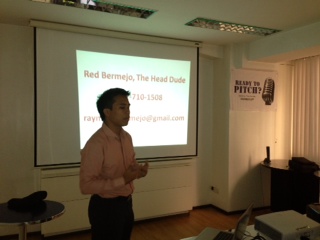
Current Ateneo student Red Bermejo pitching

I’ve seen this trend in our JGL open coffee sessions (do sign up now!), where more and more students pitch and participate. 3 of the 10 pitches were given by current students. I think this is an awesome, awesome development, and I hope it continues to trend up.

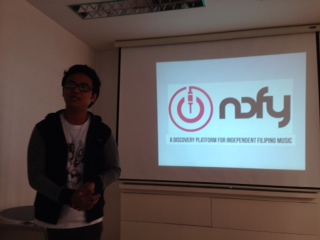
Glen Macadaeg of NDFY
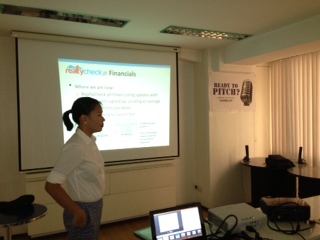
Lara Santico of Realty Check

6 Essential Rules on How To Deliver Kickass Customer Service (part 2 of 2)

(The second of a two-part series on AWESOME CUSTOMER SERVICE, part one can be found here)

Before we proceed to rules 4, 5, and 6, let’s do some definition of terms first.

There are two types of culture in a given organization: there is the EXPRESSED culture, and there is the ACTUAL culture. 

The expressed culture is what you see on Mission-Vision-Values statements or in organization “credos.” It is the culture that companies WANT their companies to be defined by.

The actual culture is, obviously, what your organization is really like.

To hardcore HR practitioners, the technical terms are actually “presumed” vs. “actual” HR. But I think “expressed” is a bit more descriptive than “presumed.” Expressed culture is the culture organizations SAY they have. 

My underlying theory here in these articles is simple: producing documents and expressions are not enough. You need to be able to consciously MANAGE culture to have any effect on the ACTUAL culture.

What does this have to do with customer service?

Everything.

This flows now into rule #4:

By the Horns

4) Take culture by the horns

If you want to deliver kickass customer service, then it has to be ingrained in your ACTUAL culture. For this to happen, you have to consciously create a customer service culture.

You need to talk about it all the time with your employees, and say stuff like, “how do you think this affects our culture?” or “does this employee fit our culture?” or “we can’t do that, it’s against our customer service culture.”

You need to put visual cues on the wall. You need to make “creating a service culture” a key objective for your managers.

If awesome customer service becomes part of the norm, then you will easily see everyone in the organization “policing” themselves.

If everyone literally frowned upon telephones kept ringing, or delivering slow service, or lack of enthusiasm, then guess what – then it won’t happen.

A very powerful tactic is on anchoring a culture on a certain “rallying point.” (think war drums or a coxswain)

This deserves its own rule:

bullseye

5) Create a Customer Service Mantra

Hanep!

This word is what our employees are given as an objective – the customer should be so inclined to express “hanep!” after transacting with them.

Rather than describing to our employees what awesome customer service is with jargon-filled definitions and scenarios, we just ask them to deliver “hanep!” (the second rule is extremely important in making this one happen)

This makes awesome customer service seem very real and very simple to our guys.

lolly

6) Never Fail to Reward and Recognize

Norms are created in an organization largely because of simple operant conditioning – the norm is positively or negatively reinforced.

If rule 2 is strictly followed, the need to do negative reinforcement (punishment) is lessened. We can then concentrate on positive reinforcement. (Much admired billionaire investor Warren Buffet is renowned for never using negative reinforcement and always giving positive reinforcement)

First, you have to REWARD your customer service personnel well. Since you are hiring empathic problem solvers, and not parrots – you have to pay them as such. Incentivize great customer service. Remember rule 1: this is an investment. While perhaps at first you may be paying more than you bargained for, done right should give you a very nice return. Remember, people are starved for good customer service.

Second,  always remember that you should never fail to grab an opportunity to recognize good customer service rendered by your employees. It has been WELL DOCUMENTED that recognition – praising others – goes a long, long way in motivating people. Do this publicly.

Bonus Rule: Read Tony Hsieh’s Delivering Happiness

There was a time we were using scripts and carried on with customer service using practices garnered from BPO firms.

When I finished reading this book, I had a “stop the presses!” moment and met with our team. We needed to change everything. (the audio book’s pretty cool despite Tony’s sleepy-hypnotic voice)

(Know anyone who would especially resonate with this post? Be a blessing and hit those share buttons!)

6 Essential Rules on How to Deliver Kickass Customer Service (Part 1 of 2)

Much of my opinions here are based on my own journey in helping build STORM‘s customer service function. (This is obviously a work in progress) Since STORM services thousands of employees across a growing number of firms, we had to make sure from the onset we were making the right choices as far as customer service is concerned.

Here’s what I’ve been learning on how to build truly differentiated customer service. As a startup or an SME (versus my experience in my previous life in HR of bigger firms), you will have a much greater chance of building a culture that’s TRULY centered on customer service.

First 3 rules below, next 3 up in the next post!

decision

1) At the very beginning, DECIDE that customer service will be a priority

This first tip is the most important one. Your startup HAS TO DECIDE to make customer service a priority. Then you have to commit.

This is much easier said than done.

There will be a lot of cases wherein you will be tempted to look back on this decision and compromise – very typically to save money.

For example, as we have been growing in STORM, we have been increasing the number of people in our customer support group. We follow certain ratios which we believe lead to great customer service: such as “one person should not support more than 1000 people” or “one person should not support more than 3 clients.”

As we experienced further growth however, we inevitably were forced to confront the question: in the name of right “scaling,” do we compromise on our ratios? Do we overload our current team to save a significant amount of money in hiring?

We always went back to our initial decision: since customer service IS a priority, then no, we will not compromise on our ratios and our service levels. We figured, if we truly wanted to make customer service as a differentiating competitive advantage, then we CANNOT compromise.

A short-term, traditional thinker would always opt to choose the money.

If you, however, want to really hone in on customer service, and if you see the strategic value of doing so, then you bite the bullet and spend.

Friends

2) Recruit the right team

This is another tip that’s very hard to actually implement. Here are some of the things I’ve learned in forming a customer-focused servicing team:

– Hire happy people. If you feel bad vibes during the interview process, don’t second-guess your intuition. The airplane test (if you were stuck in an airport, would you enjoy hanging around with this person?) works especially well with customer service.

– Hire empathic people. The book Strengthsfinder has a good description of what to look for. These guys are naturally able to put themselves in the shoes of the client and say the right things.  Hunt for these people.

– Be extra cautious with hiring ex-BPO employees. This seems to be counter-intuitive, after all, aren’t customer service what BPO companies do best? That’s what we thought also – so we hired a number of BPO people for our own customer service team. Then a pattern began to show – we were having problems with them.

Of course, we have to be careful in judging and making hasty generalizations, but this was the pattern we experienced. Perhaps it’s because people from the BPO sector are so used to “traditional” customer service practices – scripts, the faster calls are done the better, having little real freedom to solve problems for the caller – that they get thrown off when we tell them to do something very different. In any case, when you do hire one, you have to make the person realize your definition of “customer service” is vastly different from where they came from.

(for one thing, a company who’s TRULY invested in customer service and considers it a value and its CORE business would NEVER outsource customer service to another company. Think of the companies you would associate with “great customer service” – I bet not one of them outsources it)  

– Make the TEAM do the recruitment. Eventually, as you hire happy and empathic people and putting them on one team, something interesting occurs. By the very nature of their personalities (if you recruited well) and shared work, they become a close-knit group.  Instead of force-feeding people you (or your HR) select in that close-knit group, make this GROUP decide if they feel someone is a fit to join them.

empower

3) Empower and Trust

Once you’ve hired happy, empathic, helpful problem solvers to work in your customer service team, you have to:

Empower  them – they need to be able to have enough resources and accessibility at their disposal that will allow them to REALLY solve problems.

Give them access to decision makers in every department in your firm which affects your service. Give them access to complete client data. Give them enough rope to make calls. Here’s a biggie: give them enough freedom to exercise their natural THOUGHTFULNESS for the clients they service.

If we delivered the wrong item to the customer, aside from apologizing and explaining to her what happened, can we also give the right item to her for free?

If the customer waited 20 minutes for his food, will the customer appreciate a 50% discount? 

In order to be truly effective, your guys need to be able have the freedom to make thoughtful decisions like this.

Once they are sufficiently empowered, you now have to TRUST that they will do the right thing. Then just let them do their jobs. Don’t pressure them in a way that they second-guess their decisions.

NO SCRIPTS. No process map. Nothing canned. (we already know these suck when they are used on us, right?)

Let the good people you hire service your clients uniquely. This is what we expect and want when we call any customer service hotline or go to a service center right? We have a unique problem we need help in solving. We have particular needs. We want information as to what’s REALLY happening. We want people to be honest and upfront. We want people truly talking and trying to solve our problems – not be bombarded by scripts we can smell a mile away.

You want to meet (and exceed) these expectations? Then nothing should be canned. You need to empower problem-solvers and give them the needed leeway to their jobs (and more).

3 more rules next post!

(Know anyone who would especially resonate with this service-centric post? Hit the buttons and share!)